Plant Care
›
Propagation
›
Dwarf Poinciana
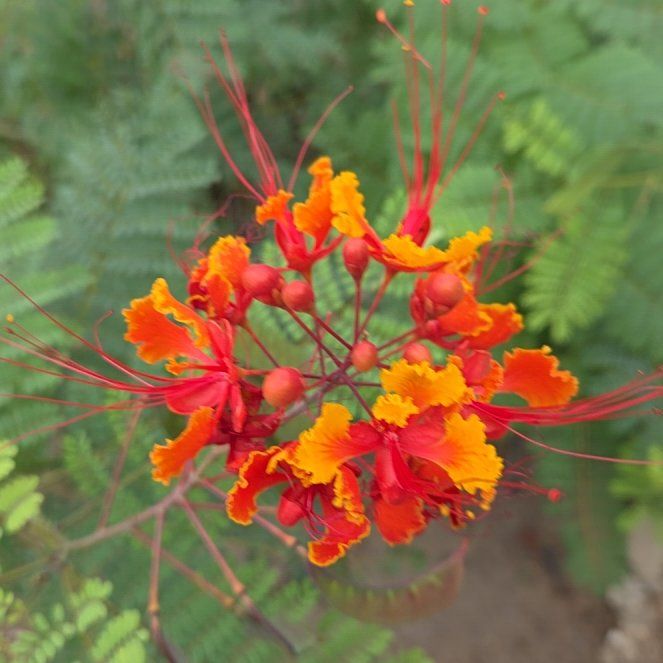
Caesalpinia pulcherrima
Reviewed by Kiersten Rankel M.S.
QUICK ANSWER
Seed sowing after scarification gives high germination in 2 to 4 weeks and is the standard way to grow Mexican Bird of Paradise at home.
Softwood cuttings work in early summer for an exact match to the parent plant but root in 8 to 12 weeks at lower success rates. Seed is the easier path for most growers, while cuttings are worth the effort if you have a particularly nice form to clone.
Softwood cuttings work in early summer for an exact match to the parent plant but root in 8 to 12 weeks at lower success rates. Seed is the easier path for most growers, while cuttings are worth the effort if you have a particularly nice form to clone.
Stay on top of plant care
Get seasonal reminders for watering and fertilizing, personalized for your plants.
Try Greg Free
Pick your method
Tap one to jump to the walkthrough.
From seed
Best for raising many plants quickly from a pod
Softwood cuttings
Best for cloning a parent with a nice flower color or form
From seed
Time
2–4 weeks to germination
Level
Beginner
Success rate
High
You'll need
Mature dry seed pods or fresh-out-of-pod seeds
Small file or sandpaper
Bowl of warm water for soaking
4-inch deep pots with drainage
Standard potting mix with extra perlite
1
Collect seed when pods turn brown
Watch the bean-like pods through summer and fall. Pick them once they are fully brown and brittle, just before they twist open and fling the seeds. Each pod holds 4 to 8 hard dark brown seeds.
2
Scarify the hard seed coat
Caesalpinia seeds have a tough waterproof coat that blocks germination. File or sand a small spot on each seed away from the eye until you see the cream-colored layer underneath. A 10-second pass across coarse sandpaper is usually enough.
3
Soak overnight in warm water
Drop the scarified seeds into a bowl of water that starts around 100 F and let them sit for 12 to 24 hours. Viable seeds will swell to nearly twice their original size. Discard any that stay hard and small after a full day.
4
Sow one inch deep in well-drained mix
Fill 4-inch deep pots with potting mix amended with perlite. Plant one seed per pot at one inch deep. Mexican Bird of Paradise sends down a long primary root early, so deep pots beat shallow trays here.
5
Hold warm at 75 to 85 F
Place pots in a warm bright spot or on a heat mat set to 80 F. Keep the soil evenly moist but not wet. Germination starts at about 10 days and most viable seeds are up by 3 weeks.
Grow seedlings in full sun once they show their second set of true leaves.
Grow seedlings in full sun once they show their second set of true leaves.
6
Transplant when 6 inches tall
Move seedlings to 1-gallon pots once they reach 6 inches with a healthy taproot. Slide them out gently to keep the long primary root straight. Plant out into the ground after the last frost in zones 9 and warmer.
WATCH FOR
Seeds that fail to swell during soaking or that stay un-germinated past 4 weeks. That means scarification was too shallow and water never reached the embryo.
Lift the seeds, file each one a bit deeper until cream tissue shows clearly, and resoak. Properly scarified seeds germinate at 80 percent or better.
Lift the seeds, file each one a bit deeper until cream tissue shows clearly, and resoak. Properly scarified seeds germinate at 80 percent or better.
Softwood cuttings
Time
8–12 weeks
Level
Intermediate
Success rate
Low
You'll need
Sterile sharp pruners
Soft new growth from the current season
Rooting hormone with IBA at 0.3 percent (recommended)
50/50 perlite and peat or perlite and sand
Plastic dome or covered tray
Bottom heat mat at 75 to 80 F
1
Cut in late spring or early summer
Wait until you see flushes of soft green growth, usually May into June. Cuttings taken before this are too soft to handle. Once the wood turns brown and woody, rooting rates drop sharply.
2
Take 4 to 6 inch tip cuttings
Snip just below a node with sterile pruners. Strip the bottom two thirds of leaves off the stem. Cut any remaining large compound leaves in half to reduce moisture loss while roots form.
3
Dip the base in rooting hormone
Tap the bottom inch of the cutting against IBA powder and shake off the extra. Caesalpinia is a legume and roots more reliably with hormone, even though some legumes skip it.
4
Stick into perlite-peat
Open a hole with a pencil to keep the hormone in place. Slide the cutting in so the bottom inch is buried, and firm the medium gently. Space cuttings so leaves do not touch.
5
Cover and put on bottom heat
Place a humidity dome over the tray and set the tray on a heat mat at 75 to 80 F. Mist daily to keep humidity high.
Check for condensation on the dome each morning and prop it open if water pools enough to drip.
Check for condensation on the dome each morning and prop it open if water pools enough to drip.
6
Pot up rooted cuttings at 10 weeks
Tug very gently. Resistance means roots are anchoring. Pot rooted cuttings into 1-gallon pots with potting mix amended with perlite and grow on in dappled shade for the rest of the season. Step up to full sun the following spring.
WATCH FOR
Cuttings going limp and dropping leaves within the first 2 weeks. That is moisture stress because the cuttings are losing water faster than they can absorb it.
Reduce dome ventilation, mist twice a day instead of once, and keep cuttings away from direct sun. Caesalpinia softwood is fragile, and a third of cuttings often fail at this stage even with care.
Reduce dome ventilation, mist twice a day instead of once, and keep cuttings away from direct sun. Caesalpinia softwood is fragile, and a third of cuttings often fail at this stage even with care.
Stay on top of plant care
Get seasonal reminders for watering and fertilizing, personalized for your plants.
Try Greg Free
About This Article

Kiersten Rankel M.S.
Botanical Data Lead at Greg · Plant Scientist
Editorial Process
Propagation methods verified against Caesalpinia pulcherrima growth data from Greg's botanical database, cross-referenced with USDA hardiness zone data and published horticultural research.
319+ Greg users growing this plant
USDA hardiness zones 8a–11b