Plant Care
›
Propagation
›
Red Spider Lily
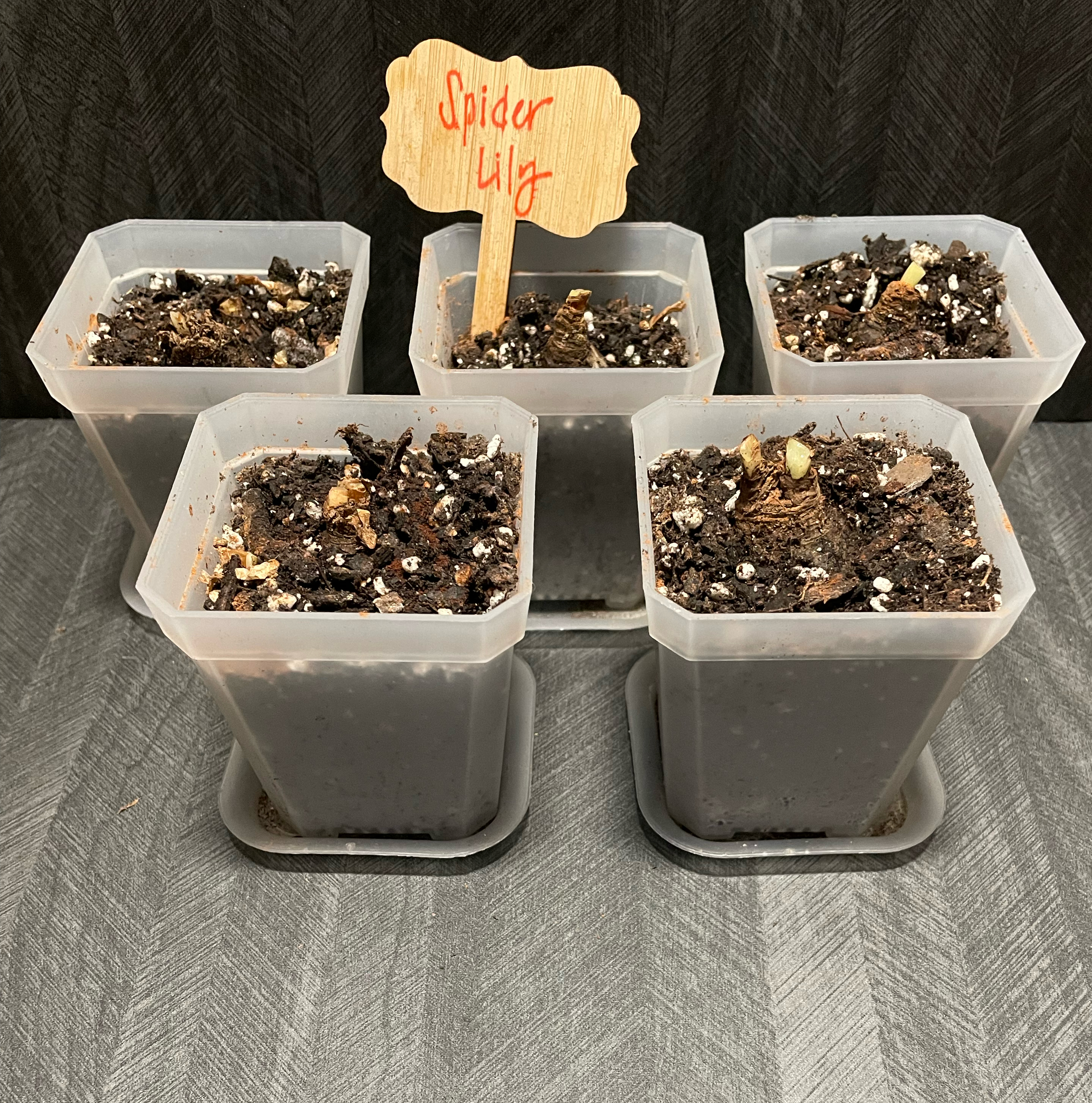
Lycoris radiata
Reviewed by Kiersten Rankel M.S.
QUICK ANSWER
Bulb division of an established clump in summer is the only reliable home method and produces flowering bulbs within 1 to 3 years. Bulb scaling is slower at 12 to 24 months and lower yield but lets you multiply a single prized bulb into many. Red spider lily rarely sets viable seed and is sterile in most home settings, so seed sowing is not a working method.
Stay on top of plant care
Get seasonal reminders for watering and fertilizing, personalized for your plants.
Try Greg Free
Pick your method
Tap one to jump to the walkthrough.
Bulb division
Best for spreading an established clump across the garden
Bulb scaling
Best for multiplying a single prized bulb into many
Bulb division
Time
1–3 years to bloom
Level
Beginner
Success rate
High
You'll need
An established Lycoris clump, 3 or more years old
Garden fork or hand trowel
Sterile pruning shears
Compost or well-drained garden soil
Bulb labels
1
Wait for the dormant window
Lift bulbs in early to midsummer, after foliage dies back and before flower scapes emerge in late summer or early autumn. Lifting during active growth almost always skips the next bloom.
Mid-July to early August is the sweet spot in most US zones.
Mid-July to early August is the sweet spot in most US zones.
2
Lift the entire clump
Drive a garden fork wide of the clump and lever the whole mass upward. Spider lily bulbs sit 4 to 6 inches deep, so dig deep enough to avoid slicing them.
Shake or wash off loose soil so you can see individual bulbs.
Shake or wash off loose soil so you can see individual bulbs.
3
Separate offset bulbs
Gently pull apart the cluster, working with your fingers along natural lines where bulbs cling together. Discard any soft, mushy, or damaged bulbs.
Keep small offset bulbs even if they're only thumbnail-sized, since they bulk up over a few seasons.
Keep small offset bulbs even if they're only thumbnail-sized, since they bulk up over a few seasons.
4
Replant deep and fast
Plant within a few hours so bulbs don't dry out. Set each bulb with the neck just at or barely below soil level in well-drained ground. Space 6 inches apart.
5
Water in and wait
Soak deeply once after planting, then leave alone. Lycoris hates summer water once replanted and bulbs rot if the bed stays wet. Foliage emerges in autumn after the first cool rains.
6
Expect partial blooms next year
Large parent bulbs often skip a year of flowering after being moved. Smaller offsets need 2 to 3 years to reach blooming size. By year 4, the new clump flowers reliably each fall.
WATCH FOR
Bulbs that fail to push foliage in autumn. That is usually a sign of late lifting that interrupted root growth, not bulb death. Leave the bulb in place and check next autumn before assuming it's lost. Lycoris bulbs often skip a full year after disturbance and return on schedule the following season.
Bulb scaling
Time
12–24 months
Level
Advanced
Success rate
Moderate
You'll need
1 or 2 healthy mature Lycoris bulbs
Sterile knife or scalpel
Fungicide powder
Sealable plastic bag
Damp vermiculite or perlite
Small pots with sandy mix
1
Lift and clean a mature bulb
Dig a healthy parent bulb in early summer when the plant is dormant. Brush off soil and trim any old roots back to the basal plate. The bulb should feel firm and heavy.
2
Quarter the bulb
Use a sterile knife to slice down through the bulb from neck to base, dividing it into 4 wedges. Each wedge must include a slice of the basal plate at the bottom, which is where new bulblets form.
Without basal plate tissue, scales don't regenerate.
Without basal plate tissue, scales don't regenerate.
3
Dust with fungicide
Coat the cut surfaces in fungicide powder to prevent rot. Set wedges on a paper towel for an hour so the cuts surface-dry slightly.
4
Bag with damp vermiculite
Place wedges in a sealed bag with barely-damp vermiculite. Store in a warm dark spot at 70 to 75 degrees F. Check monthly for tiny bulblets forming at the base of each scale.
Bulblets appear in 8 to 16 weeks.
Bulblets appear in 8 to 16 weeks.
5
Pot up rooted bulblets
Once bulblets reach pea size with their own roots, plant them just below the surface in small pots with sandy mix. Water sparingly. Keep dry and warm through the first summer dormancy.
6
Grow on for 2 years
Bulblets put up small leaves the first autumn but rarely flower for 3 to 5 years. Move to permanent spots after they reach marble size, usually year 2 or 3.
WATCH FOR
Wedges that turn brown and slimy in the bag within the first month. That is rot from too much moisture or contamination. Dump the failed batch, sterilize tools, dust new wedges more heavily with fungicide, and reduce vermiculite moisture so it feels barely damp, not wet. Scaling has a steep learning curve but improves fast with experience.
Stay on top of plant care
Get seasonal reminders for watering and fertilizing, personalized for your plants.
Try Greg Free
About This Article

Kiersten Rankel M.S.
Botanical Data Lead at Greg · Plant Scientist
Editorial Process
Propagation methods verified against Lycoris radiata growth data from Greg's botanical database, cross-referenced with USDA hardiness zone data and published horticultural research.
131+ Greg users growing this plant
USDA hardiness zones 6a–10b