Plant Care
›
Propagation
›
Fringetree
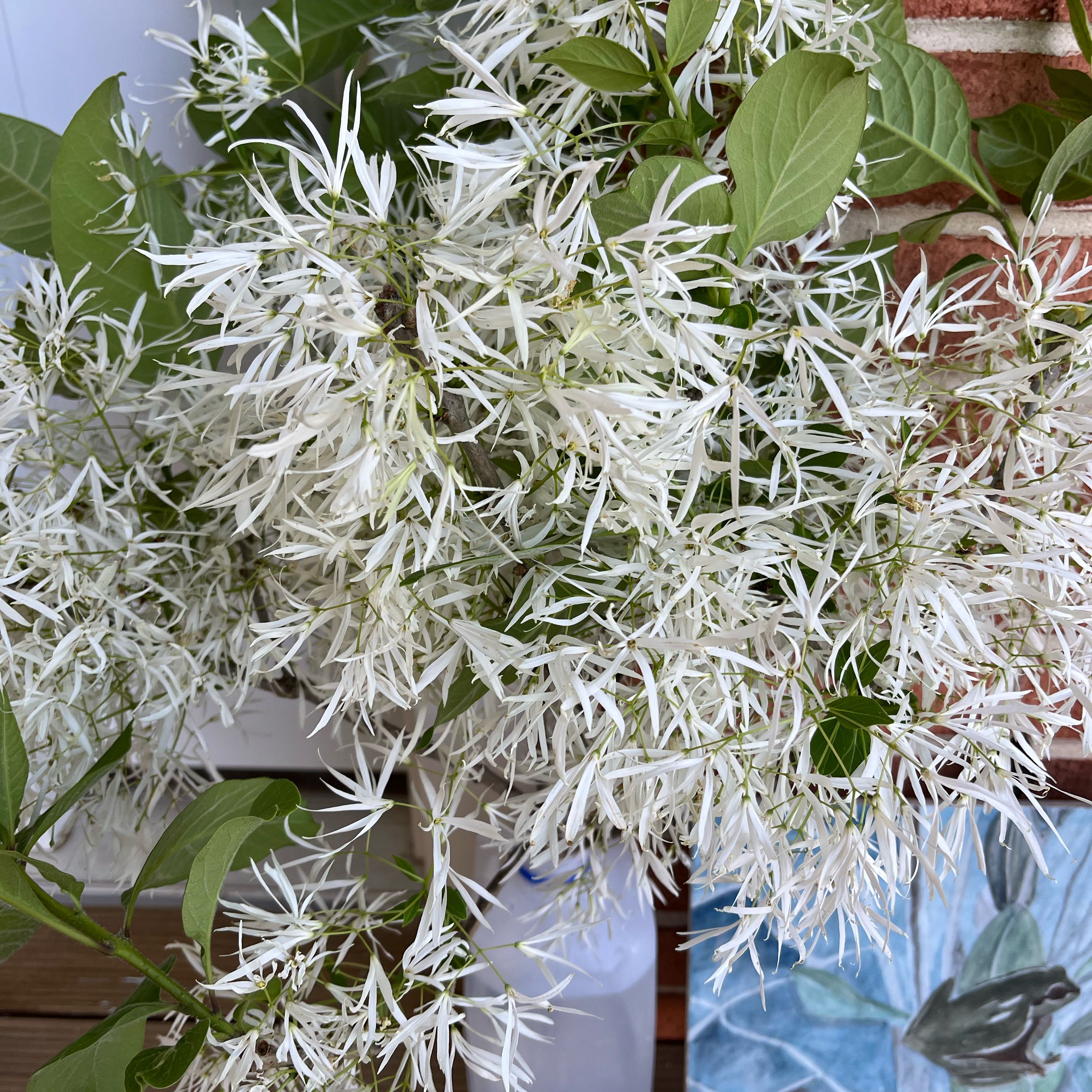
Chionanthus virginicus
Reviewed by Kiersten Rankel M.S.
QUICK ANSWER
Seed is the standard home method for fringetree, but it requires a warm-then-cold double stratification over 8 to 10 months and seedlings reach planting size only in year 2.
Ground layering an outer branch in spring gives you a rooted clone in 12 to 18 months without separating it from the parent until roots form. Stem cuttings are unreliable for fringetree at home and most growers skip them.
Ground layering an outer branch in spring gives you a rooted clone in 12 to 18 months without separating it from the parent until roots form. Stem cuttings are unreliable for fringetree at home and most growers skip them.
Stay on top of plant care
Get seasonal reminders for watering and fertilizing, personalized for your plants.
Try Greg Free
Pick your method
Tap one to jump to the walkthrough.
From seed
Best for growing many trees from a fruiting branch
Ground layering
Best for getting a rooted clone from a low outer branch
From seed
Time
8–10 months stratification + 18 months
Level
Advanced
Success rate
Moderate
You'll need
Ripe fringetree drupes (deep blue-purple, late summer)
Fine mesh sieve and bucket
Damp peat moss or vermiculite
Two sealed labeled bags
Refrigerator and a warm dark cupboard
Seedling tray with drainage
1
Clean seed from the drupes immediately
Soak ripe drupes overnight in water, then mash through a sieve to separate pulp from the hard pit inside. Each drupe holds one seed. Pat seed dry on paper towel.
Fringetree seed loses viability fast once dry. Move to stratification within a few days.
Fringetree seed loses viability fast once dry. Move to stratification within a few days.
2
Start with a warm stratification
Mix the cleaned seed with damp peat moss in a labeled bag and place it in a warm dark spot at 70 to 80 degrees Fahrenheit. Hold for 3 to 5 months. This warm phase tells the embryo to develop the root.
3
Switch to cold stratification
Move the bag to the refrigerator at 35 to 40 degrees Fahrenheit for another 3 to 4 months. The cold phase breaks dormancy of the shoot. Check monthly that the medium has not dried out.
Skipping either stratification phase drops germination to near zero. Fringetree is one of the slowest seeds to break dormancy among eastern native trees.
Skipping either stratification phase drops germination to near zero. Fringetree is one of the slowest seeds to break dormancy among eastern native trees.
4
Sow in spring after the cold phase
Sow seed half an inch deep in a tray of moist potting mix. Set the tray under bright indirect light at 65 to 75 degrees Fahrenheit. Germination is uneven over a 6 to 12 week window.
5
Prick out at 3 inches tall
Once seedlings have 4 true leaves, move each into a 4 inch pot. Grow on under bright shade through the first summer. First-year seedlings stay small.
6
Plant out in year 2 spring
Hold first-year pots in a sheltered spot through winter, then plant out in spring. Expect first flowers in year 7 to 10. Fringetree is slow to mature but worth the wait.
WATCH FOR
Seed that fails to germinate after the full warm-then-cold sequence, even after 12 weeks under germination conditions. That usually means the seed dried out at some point or one stratification phase was too short. Pull the bag out, give it another 8 weeks of cold, and try sowing again. Fringetree seed sometimes takes a second full cycle.
Ground layering
Time
12–18 months
Level
Intermediate
Success rate
Moderate
You'll need
Established fringetree with a flexible low branch
Sharp knife or sterile pruners
Rooting hormone (recommended)
Wire pin or a brick
Compost-amended soil
Mulch
1
Pick a flexible low branch in early spring
Look for a 1 to 2 year old branch that bends down to the ground without snapping. The branch should be 2 to 4 feet long with several side shoots.
2
Wound the branch where it touches soil
About 12 inches back from the tip, scrape a 2 inch strip of bark from the underside of the branch with a sharp knife. Dust the wound with rooting hormone.
The wound is the trigger. Without it, fringetree branches just keep growing along the ground without rooting.
The wound is the trigger. Without it, fringetree branches just keep growing along the ground without rooting.
3
Pin the branch into a shallow trench
Dig a 4 inch deep trench under the wound. Lay the wounded section in the trench and pin it down with a wire staple or a brick. Bend the tip upward so 6 inches of leafy growth points to the sky.
4
Cover with soil and mulch
Backfill with compost-amended soil and mulch 2 inches deep over the buried section. Keep the soil consistently moist through the first growing season. Do not let it dry out.
5
Check for roots after a full year
In the second spring, gently dig down beside the buried section. Roots running from the wound mean the layer is ready to sever. No roots means leave it for another full season, fringetree is slow.
6
Sever and pot up the rooted layer
Cut the layered branch free between the roots and the parent in early autumn. Lift the rooted section with as much soil as possible. Pot up or transplant directly to its permanent spot, then water in deeply.
WATCH FOR
The exposed tip wilting in midsummer of the first year. That usually means the buried section dried out, which stalls root formation. Soak the layer zone with at least 2 gallons of water and add another inch of mulch. If the tip dies back completely, leave the branch buried, sometimes a side shoot from the buried portion takes over and roots in year 2.
Stay on top of plant care
Get seasonal reminders for watering and fertilizing, personalized for your plants.
Try Greg Free
About This Article

Kiersten Rankel M.S.
Botanical Data Lead at Greg · Plant Scientist
Editorial Process
Propagation methods verified against Chionanthus virginicus growth data from Greg's botanical database, cross-referenced with USDA hardiness zone data and published horticultural research.
65+ Greg users growing this plant
USDA hardiness zones 3a–9b