Plant Care
›
Propagation
›
Desert Willow
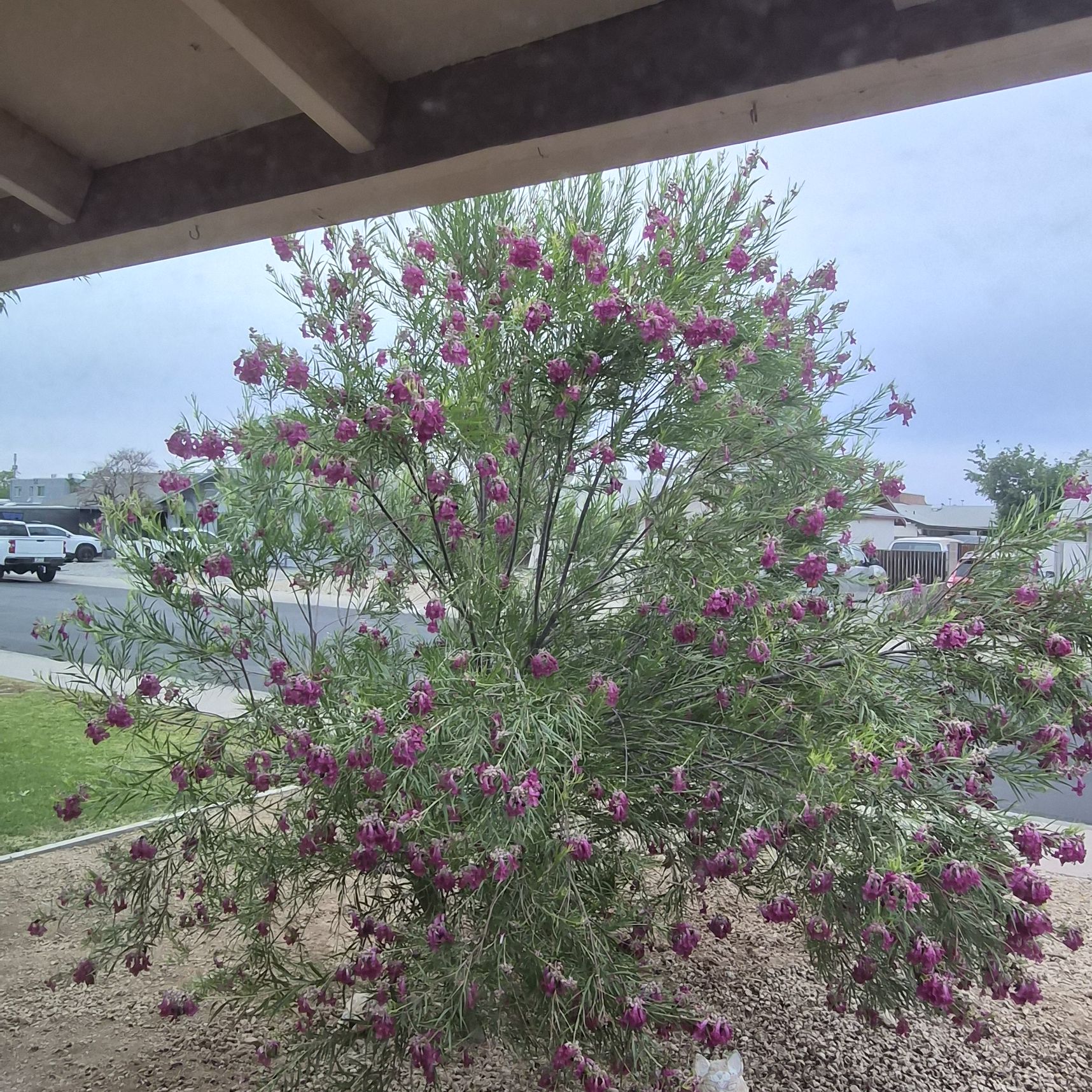
Chilopsis linearis
Reviewed by Kiersten Rankel M.S.
QUICK ANSWER
Softwood cuttings taken in early summer root in 4 to 6 weeks and produce a flowering shrub within two years. Hardwood cuttings taken in winter take 8 to 12 weeks but transplant more reliably to dry soil. Seed sowing is the easiest method but seedlings vary in flower color and bloom up to 5 years after sowing.
Stay on top of plant care
Get seasonal reminders for watering and fertilizing, personalized for your plants.
Try Greg Free
Pick your method
Tap one to jump to the walkthrough.
Softwood cuttings
Best in early summer for fast rooting and clone-true flowers
Hardwood cuttings
Best in winter when the plant is dormant and easier to handle
From seed
Best for filling a yard cheaply with mixed flower colors
Softwood cuttings
Time
4–6 weeks
Level
Intermediate
Success rate
Moderate
You'll need
6 to 8 inch softwood cuttings from current-year growth
Sterile pruning shears
Rooting hormone gel or powder (IBA 0.3 percent)
4-inch pots with cactus mix and perlite (1:1)
Clear humidity dome
Bright shade with morning sun
1
Take cuttings in early summer
Cut 6 to 8 inch shoots from this year's growth that bend without snapping. Take cuttings in the morning while the plant is fully turgid, before desert heat sets in.
Drop them into a damp paper bag immediately so they don't wilt on the way back to your bench.
Drop them into a damp paper bag immediately so they don't wilt on the way back to your bench.
2
Strip lower leaves
Pull off the leaves from the bottom 3 inches and trim the cut end at a 45-degree angle just below a node. Leave only the top 2 or 3 leaf pairs.
3
Dip in rooting hormone
Tap the cut end into IBA 0.3 percent powder and shake off excess. Desert willow roots without hormone but with hormone you'll see take rates jump from 40 to 70 percent.
4
Insert into a fast-draining mix
Push cuttings 2 inches deep into a 1:1 cactus mix and perlite blend. Firm the soil so the cutting stays upright. Avoid peat-heavy mixes since desert willow rots quickly in moist organic media.
5
Cover and place in bright shade
Top with a clear dome and set in dappled shade with no direct afternoon sun. Vent the dome 10 minutes daily. Mist only when the surface looks dry, not on a schedule.
Desert willow cuttings rot more often than they dry out in domes.
Desert willow cuttings rot more often than they dry out in domes.
6
Pot up at week 6
Tug gently. If the cutting resists, roots have formed. Move to a 1-gallon pot with sandy mix and gradually expose to full sun over 2 weeks before planting out.
WATCH FOR
Black or mushy cuttings at the soil line within the first 2 weeks. That is rot from a mix that holds too much water. Pour off any standing water, switch to a coarser perlite-heavy mix, and water only when the surface is bone dry. Desert willow evolved in washes that drain in minutes, not hours.
Hardwood cuttings
Time
8–12 weeks
Level
Beginner
Success rate
High
You'll need
10 to 12 inch hardwood cuttings from last year's wood
Sterile pruning shears
Rooting hormone (recommended)
Sandy garden bed or 1-gallon pots with cactus mix
Mulch (optional)
1
Cut in late winter
Take 10 to 12 inch sections from pencil-thick wood that grew the previous year. The plant should be fully leafless and dormant. Make a flat cut at the bottom and an angled cut at the top so you can tell which end is which.
2
Treat with hormone
Dip the bottom end in rooting hormone. Hardwood cuttings benefit from hormone even more than softwood since the wood is harder to wake up.
3
Stick directly in sandy soil
Push cuttings two-thirds of their length into sandy garden soil or a 1-gallon pot with cactus mix. Only 3 to 4 inches should be visible above ground.
4
Water once and walk away
Soak deeply at planting and then water only every 2 to 3 weeks until you see leaf buds swell. Desert willow hardwood cuttings rot if kept consistently moist.
Mulch lightly to slow evaporation but keep mulch away from the cutting itself.
Mulch lightly to slow evaporation but keep mulch away from the cutting itself.
5
Watch for spring leafing
By mid spring, rooted cuttings will leaf out and grow vigorously. Cuttings that fail to leaf by late spring did not root and can be pulled.
6
Transplant in autumn
Rooted cuttings establish enough roots through summer to move in fall. Wait until the first cool nights and water in deeply at the new spot.
WATCH FOR
Cuttings that leaf out in spring but then collapse a few weeks later. That is the plant burning through stored reserves before roots formed. Reduce watering and provide afternoon shade for the rest of the first summer. Do not transplant until autumn so the new root system has time to develop.
From seed
Time
10–14 days germination
Level
Beginner
Success rate
High
You'll need
Fresh desert willow seed pods (long thin pods)
4-inch deep pots with cactus mix
Spray bottle
Bright sunny window or outdoor spot at 70 to 85 degrees F
Larger pots for transplanting
1
Collect or buy fresh seed
Harvest the long thin pods in autumn after they turn brown but before they split. Store dry until spring or sow immediately in mild winter areas. Desert willow seed needs no stratification.
2
Sow shallowly in warm soil
Press 2 or 3 seeds per pot into cactus mix and cover with just a quarter inch of soil. Mist the surface and keep at 70 to 85 degrees F.
Seeds germinate fastest when nights stay above 65 degrees.
Seeds germinate fastest when nights stay above 65 degrees.
3
Thin to one seedling
After germination, snip extras at soil level so one strong seedling remains per pot. Pulling damages neighboring roots.
4
Grow in full sun
Move pots to direct sun once seedlings have 4 true leaves. Water deeply when the soil dries to the second knuckle. Avoid fertilizer the first season.
5
Pot up at month 3
Move to 1-gallon pots once roots circle the bottom. Continue full sun and deep, infrequent watering.
6
Plant out the next spring
Transplant after the last frost. Expect first flowers in 3 to 5 years. Flower color will be variable since seedlings don't come true to a parent's color.
WATCH FOR
Yellowing leaves and stunted growth on seedlings. That is overwatering, not nutrient deficiency. Let the soil dry between waterings and skip fertilizer entirely the first year. Desert willow grows fast on lean soil and gets weak, floppy growth on rich, moist soil.
Stay on top of plant care
Get seasonal reminders for watering and fertilizing, personalized for your plants.
Try Greg Free
About This Article

Kiersten Rankel M.S.
Botanical Data Lead at Greg · Plant Scientist
Editorial Process
Propagation methods verified against Chilopsis linearis growth data from Greg's botanical database, cross-referenced with USDA hardiness zone data and published horticultural research.
165+ Greg users growing this plant
USDA hardiness zones 7a–11b