Plant Care
›
Propagation
›
Desert Globemallow
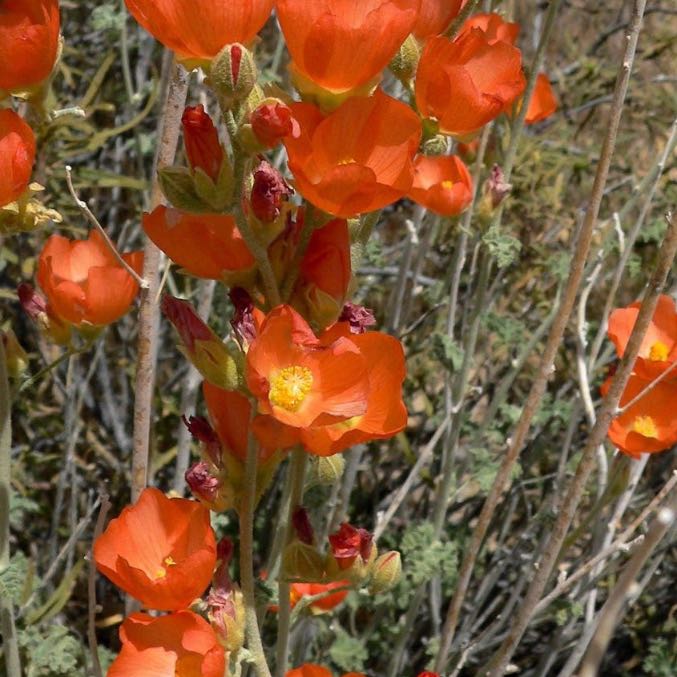
Sphaeralcea ambigua
Reviewed by Kiersten Rankel M.S.
QUICK ANSWER
Seeds give the best results for Desert Globemallow and germinate in 2 to 4 weeks after a hot water soak to break dormancy. Softwood cuttings taken in spring root in 4 to 6 weeks under a humidity dome but rooting is moderate.
Division of established clumps in fall produces instant new plants but only works on plants with multiple crowns.
Division of established clumps in fall produces instant new plants but only works on plants with multiple crowns.
Stay on top of plant care
Get seasonal reminders for watering and fertilizing, personalized for your plants.
Try Greg Free
Pick your method
Tap one to jump to the walkthrough.
From seed
Best for growing many plants at once
Softwood cuttings
Best in spring when new growth firms up
Division
Best for established plants with multiple crowns
From seed
Time
2–4 weeks
Level
Beginner
Success rate
High
You'll need
Fresh Desert Globemallow seeds
Hot water (just below boiling)
Heat-safe bowl
Cell trays or 3-inch pots
Cactus or fast-draining seed mix
Bright sunny spot
1
Pour hot water over the seeds
Place seeds in a heat-safe bowl and cover with water just off the boil. Desert Globemallow has a hard seed coat that blocks germination without scarification. The hot soak softens the coat and signals the seed that conditions are right.
2
Soak overnight
Let the seeds sit in the cooling water for 12 to 24 hours. Seeds that swell to twice their dry size are ready to plant. Discard any that float since those are not viable.
3
Sow in fast-draining mix
Fill cell trays with cactus or fast-draining seed mix. Sow seeds a quarter inch deep and cover lightly. Mist the surface to settle the seeds without washing them out.
4
Place in warm bright light
Set the tray in bright direct light at 70 to 80 degrees F.
Desert Globemallow seedlings need full sun from day one and will stretch and flop if grown in dim conditions.
Desert Globemallow seedlings need full sun from day one and will stretch and flop if grown in dim conditions.
5
Water sparingly
Let the surface dry between waterings. Bottom watering works best to prevent damping off. Sprouts appear in 2 to 4 weeks and germination is uneven, so do not toss the tray early.
6
Pot up and harden off
When seedlings have 4 true leaves, move them to 4-inch pots with a fast-draining native plant mix. Grow on outdoors in full sun for 6 to 8 weeks before planting out. This species develops a deep taproot quickly so transplant before the roots wind around the pot.
WATCH FOR
Tall floppy seedlings that fall over at the base. This means light is too low. Move the tray into direct sun or under bright grow lights immediately. Stretched seedlings rarely recover and usually need to be restarted.
Softwood cuttings
Time
4–6 weeks
Level
Intermediate
Success rate
Moderate
You'll need
Sterile pruners
Rooting hormone (recommended)
Coarse perlite and pumice mix
4-inch pots with drainage holes
Clear plastic dome or bag
Bright indirect light spot
1
Take cuttings in late spring
Choose this year's new growth that has just started to firm up but still bends easily. Cut 3 to 4 inch tips in the early morning when the plant is fully hydrated. Take cuttings before flower buds form, since flowering shoots root poorly.
2
Prep the cutting
Strip leaves from the bottom half and pinch off the soft growing tip. Make a clean cut just below a node with sterile pruners. Dip the cut end in rooting hormone and tap off the excess.
3
Stick into a fast-draining mix
Fill 4-inch pots with a coarse perlite and pumice mix and pre-moisten lightly.
Desert Globemallow cuttings rot easily in heavy soil, so a gritty open medium is the difference between success and a slimy failure.
Desert Globemallow cuttings rot easily in heavy soil, so a gritty open medium is the difference between success and a slimy failure.
4
Cover loosely with a dome
Place pots in bright indirect light at 70 to 80 degrees F and tent a clear bag or dome over the top. Vent the cover for 15 minutes twice a day since this desert plant tolerates less humidity than most cuttings need.
5
Check at 4 weeks
Give a gentle tug at 4 weeks. Resistance means roots have anchored. New leaf growth from the tip is another rooted signal.
6
Pot up and acclimate
Move rooted cuttings into 4-inch pots with native plant mix or cactus mix. Remove the dome over a week to acclimate to dry air. Grow on in full sun outdoors for several weeks before planting out.
WATCH FOR
Black mushy stems at the soil line within the first 2 weeks. This is rot from too much humidity or a wet medium. Pull affected cuttings, increase venting on the dome, and let the mix dry slightly before re-covering.
Division
Time
1–2 weeks
Level
Beginner
Success rate
Moderate
You'll need
Sharp spade or garden fork
Sterile pruners
Bucket of water
Fast-draining native plant mix
1-gallon pots or planting holes ready
Mulch for the new transplants
1
Choose a mature multi-crown plant
Division works only on plants 3 or more years old that have visibly separate crowns at the base. Younger plants have a single taproot and cannot be divided. Plan to divide in fall or very early spring when temperatures are mild.
2
Lift the entire plant
Water the plant deeply the day before to make digging easier. Dig a wide circle 8 to 10 inches out from the crown and lever the rootball up with a spade or fork.
Keep as much of the lateral root system intact as possible since this plant resents major root disturbance.
Keep as much of the lateral root system intact as possible since this plant resents major root disturbance.
3
Separate the crowns
Look for natural divisions where separate stems emerge from their own root mass. Pull crowns apart by hand where possible. Use sterile pruners only when roots are too tangled to separate by hand.
4
Trim damaged roots
Cut off any torn or mushy roots with clean pruners. Each division should have at least 2 to 3 stems and a healthy mass of roots. Discard divisions that are mostly stem with little root since these rarely take.
5
Replant immediately
Plant divisions into prepared holes or 1-gallon pots filled with a fast-draining native plant mix. Set them at the same depth they grew before. Water in deeply once to settle the soil.
6
Water sparingly afterward
Water once a week for the first 2 to 3 weeks while roots re-establish, then taper to the plant's normal dry routine.
Desert Globemallow hates wet feet and will rot if kept moist after division, so resist the urge to baby it.
Desert Globemallow hates wet feet and will rot if kept moist after division, so resist the urge to baby it.
WATCH FOR
Wilting that does not recover after morning watering. The division has lost too many roots to support the foliage. Cut the plant back by half to reduce water demand and shade the crown for a week. Most recover if caught early.
Stay on top of plant care
Get seasonal reminders for watering and fertilizing, personalized for your plants.
Try Greg Free
About This Article

Kiersten Rankel M.S.
Botanical Data Lead at Greg · Plant Scientist
Editorial Process
Propagation methods verified against Sphaeralcea ambigua growth data from Greg's botanical database, cross-referenced with USDA hardiness zone data and published horticultural research.
76+ Greg users growing this plant
USDA hardiness zones 6a–10b