Plant Care
›
Propagation
›
Common Primrose
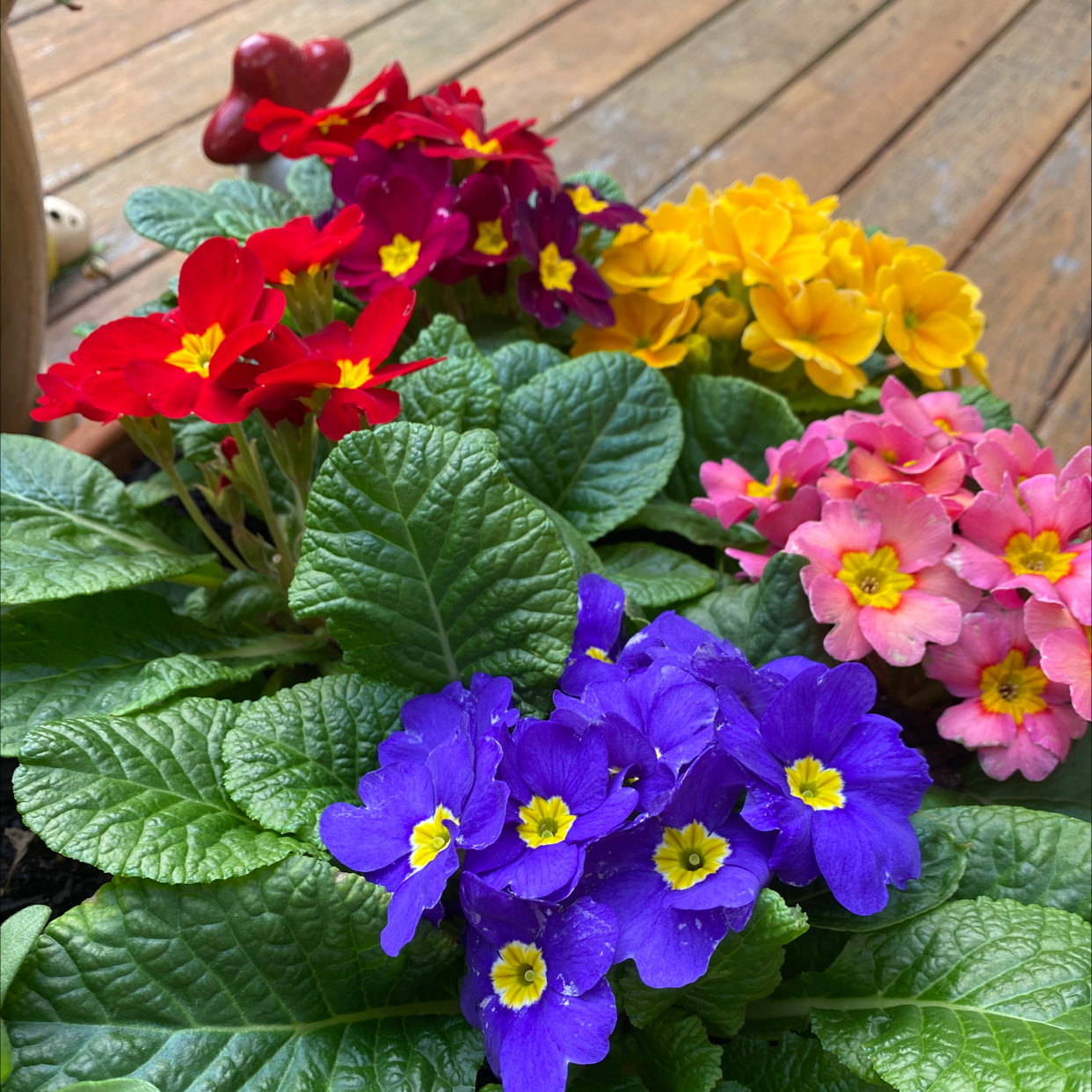
Primula vulgaris
Reviewed by Kiersten Rankel M.S.
QUICK ANSWER
Division of mature crowns is the fastest and most reliable home method and produces settled new plants in 2 to 4 weeks. Root cuttings taken in late autumn produce new plants in 8 to 12 weeks and work well for older clumps that have hollowed out in the center.
Seed sown fresh in late summer germinates in 3 to 6 weeks but takes a full year to flower.
Seed sown fresh in late summer germinates in 3 to 6 weeks but takes a full year to flower.
Stay on top of plant care
Get seasonal reminders for watering and fertilizing, personalized for your plants.
Try Greg Free
Pick your method
Tap one to jump to the walkthrough.
Division
Best for mature clumps after they finish flowering
Root cuttings
Best for older clumps that have hollowed out
From seed
Best when sown fresh in late summer
Division
Time
2–4 weeks to settle
Level
Beginner
Success rate
High
You'll need
Garden fork or hand trowel
Sterile sharp knife
Watering can
Compost or amended garden soil
Light shade cloth (for first week)
1
Wait until flowering finishes
Divide Common Primrose right after the spring bloom ends, usually in late spring or early summer. The plant has stored energy from photosynthesis and recovers fast in cool weather.
Dividing during full bloom or in summer heat causes severe wilt and high losses.
Dividing during full bloom or in summer heat causes severe wilt and high losses.
2
Lift the clump
Slide a garden fork around the base of the clump and lever it up out of the soil. Brush off enough loose soil to see the crown structure clearly.
3
Pull or cut into divisions
Each crown breaks naturally into smaller rosettes, each with its own roots. Pull these apart with your hands. For tighter clumps, slice between rosettes with a sterile knife.
Every division should have at least one healthy crown bud and a section of root.
Every division should have at least one healthy crown bud and a section of root.
4
Trim back the foliage
Cut the leaves back by about half with sharp shears. This reduces moisture demand while the divided roots resettle. The plant looks rough for a couple weeks but bounces back fast.
5
Replant at original depth
Plant each division at the same depth it was growing, with the crown right at soil level. Water thoroughly and firm soil around the roots.
6
Shade for the first week
Drape shade cloth or set a cardboard box over the divisions for 5 to 7 days. New growth from the crowns within 2 to 3 weeks confirms the divisions have settled.
WATCH FOR
Crowns sitting wilted with brown leaf edges a week after dividing. That means the plants are losing more moisture than the disturbed roots can replace. Trim back another quarter of the foliage, mist daily, and keep them shaded for an additional week.
Root cuttings
Time
8–12 weeks
Level
Intermediate
Success rate
Moderate
You'll need
Sterile sharp knife
Mature primrose with thick fleshy roots
Tray of half perlite, half compost mix
Coarse sand or vermiculite (for top dressing)
Cold frame or cool sheltered spot
1
Lift a mature plant in late autumn
In late October or November, lift an established Primula vulgaris that is at least 2 years old. Younger plants do not have root sections thick enough to use as cuttings.
Wash the soil off the roots so you can see them clearly.
Wash the soil off the roots so you can see them clearly.
2
Cut sections of fleshy root
Cut healthy fleshy roots into 1.5 to 2 inch sections with a sterile sharp knife. Make a flat cut at the end closest to the crown and an angled cut at the end farthest from the crown.
The orientation matters. Root cuttings only sprout new growth from the crown end.
The orientation matters. Root cuttings only sprout new growth from the crown end.
3
Replant the parent
Set the parent plant back in the ground at its original depth and water it in. The plant survives the loss of partial roots and continues growing.
4
Set the root sections vertically
Push each root section into a tray of 50/50 perlite and compost mix with the flat (crown) end at the surface and the angled end down. Space sections an inch apart.
5
Top-dress with coarse sand
Cover the surface of the tray with a quarter inch of coarse sand or fine vermiculite. This keeps the cuttings from drying out without holding too much moisture against them.
6
Overwinter in a cold frame
Place the tray in a cold frame or unheated garage where it will stay cool but not freeze hard. Shoots emerge from the crown ends in 8 to 12 weeks. Pot up individually once each shoot has 3 leaves.
WATCH FOR
Root sections turning soft and black with no shoots after 12 weeks. That is rot from a mix that holds too much water in cold conditions. Mix more perlite into next year's batch (60 percent perlite, 40 percent compost) and store the tray slightly drier.
From seed
Time
3–6 weeks to germinate
Level
Intermediate
Success rate
Moderate
You'll need
Fresh Primula vulgaris seeds (from this year)
Seed-starting mix
Shallow seed tray with drainage
Plastic dome or wrap
Cool sheltered location
Refrigerator (for stratification if seeds are old)
1
Use fresh seed if at all possible
Primula seed loses viability fast. Seeds sown in late summer of the same year they were collected germinate at 70 to 80 percent. Year-old seeds drop to 30 percent.
If you have older seed, cold stratify in a damp paper towel in the refrigerator for 4 weeks before sowing.
If you have older seed, cold stratify in a damp paper towel in the refrigerator for 4 weeks before sowing.
2
Prepare a tray of damp mix
Fill a shallow seed tray with seed-starting mix. Pre-moisten the mix with water and let it drain so the surface is damp but not soggy.
3
Surface-sow the seeds
Press the tiny seeds gently onto the surface of the mix. Do not bury them. Primula seed needs light to germinate.
A very light dusting of vermiculite is acceptable but soil burial stops germination.
A very light dusting of vermiculite is acceptable but soil burial stops germination.
4
Cover and keep cool
Cover the tray with a clear plastic dome or loose wrap. Place in a cool spot at 55 to 65 degrees Fahrenheit out of direct sun.
Primula germinates poorly above 70 degrees. A sunny windowsill is too warm. A north-facing window or unheated porch works better.
Primula germinates poorly above 70 degrees. A sunny windowsill is too warm. A north-facing window or unheated porch works better.
5
Wait 3 to 6 weeks for sprouts
Mist the tray surface daily to keep it barely damp. Tiny seedlings emerge between week 3 and 6 in batches over a few days. Vent the dome briefly each day to prevent fungal growth.
6
Pot up at the true leaf stage
Once seedlings have 2 to 3 true leaves at about 6 to 8 weeks old, pot each into its own 2-inch pot of standard potting mix. Plant out in early autumn for blooms the following spring.
WATCH FOR
Seedlings flopping over with thin pinched stems at soil level. That is damping off, a fungal disease that kills primrose seedlings overnight. Improve airflow by venting the dome more often, water from below by setting the tray in a shallow dish, and keep the tray cool to slow fungal growth.
Stay on top of plant care
Get seasonal reminders for watering and fertilizing, personalized for your plants.
Try Greg Free
About This Article

Kiersten Rankel M.S.
Botanical Data Lead at Greg · Plant Scientist
Editorial Process
Propagation methods verified against Primula vulgaris growth data from Greg's botanical database, cross-referenced with USDA hardiness zone data and published horticultural research.
1,189+ Greg users growing this plant
USDA hardiness zones 4a–8b