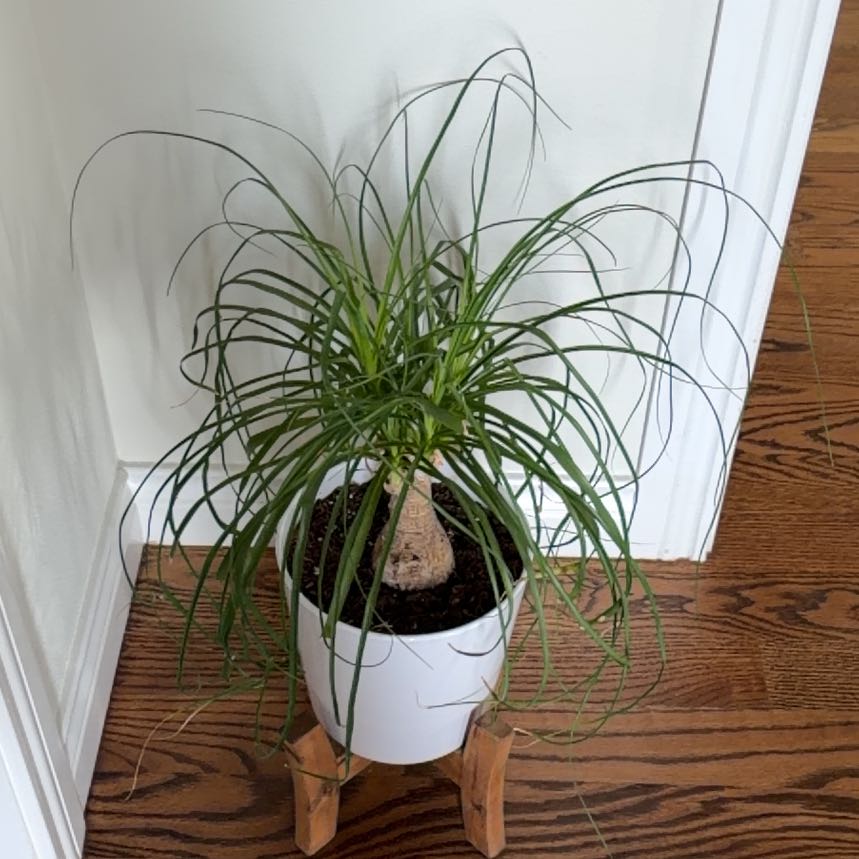
Best Soil for Ponytail Palm
What Soil Does a Ponytail Palm Need?
Ponytail palms are native to the dry scrublands of Mexico, where rainfall is scarce and soil is rocky and fast-draining. Their bulbous caudex holds water reserves, meaning the roots need to dry out fully between waterings , dense or moisture-retentive soil is a fast path to rot.
Standard potting soil holds too much moisture for a ponytail palm and will cause the caudex to rot from the bottom up. You want a mix that drains in seconds and doesn't stay damp for more than a day after watering. Most commercial cactus mixes are a reasonable starting point, but they often contain too much peat or coconut coir , amending with extra perlite or coarse horticultural sand brings the drainage where it needs to be.
The root system is relatively sparse and fibrous, not especially deep-seeking. What the roots need is oxygen and dryness between waterings, not nutrients or organic material. A mix that's roughly two-thirds inorganic material (perlite, coarse sand, pumice) and one-third organic (cactus mix or sandy loam) gives the right balance. Avoid any mix that clumps when wet or smells earthy and rich , that tells you it's holding too much water.
In containers, drainage holes are non-negotiable. Even in a perfect mix, a pot without drainage will waterlog the lower roots. Terra cotta pots help by wicking away excess moisture through the walls, which is ideal for this species.
What Soil Mix Should I Use for My Ponytail Palm?

What pH Does My Ponytail Palm Need?
Ponytail palms prefer a slightly acidic to neutral soil pH in the range of 6.0–7.0. This range keeps the key nutrients available at the root zone without locking them out. You can check your mix with an inexpensive soil pH meter or test strips from a garden center , dip into moistened soil and read within a minute.
When pH drifts below 6.0, the soil becomes too acidic and iron and manganese can become toxic, showing up as dark spotting or tip burn on the leaves. If pH climbs above 7.5, iron becomes unavailable and you may see yellowing between the leaf veins, especially on newer growth. Since ponytail palms are slow feeders, pH problems tend to show up gradually rather than as sudden crashes.
When Should I Replace My Ponytail Palm's Soil?
Ponytail palms are slow growers, so they don't exhaust soil nutrients quickly. A well-constructed mineral-heavy mix can last 3–4 years before needing a full refresh. The main reason to change soil is not nutrient depletion but compaction , over time, even gritty mixes can consolidate and drain more slowly.
The best time to repot and refresh is in spring, just as the plant begins its active growth period. Since ponytail palms dislike being disturbed and have modest root systems, you only need to size up by one pot width at a time. When refreshing, knock off the old mix, inspect the caudex for any soft or discolored spots, and repot into fresh gritty mix.
What Soil Amendments Does a Ponytail Palm Need in the Ground?
Ponytail Palms are native to the dry regions of Mexico and store water in their swollen trunk base. Their roots are adapted to sandy, fast-draining ground and will rot if left in wet soil.
Clay soil needs serious amending for this plant. Mix in large amounts of coarse sand, gravel, and perlite until the soil feels gritty and water passes through almost immediately. Sandy soil is already close to ideal. Just make sure it is not sitting in a low spot where water collects. A sunny, elevated planting spot on a slope or raised bed works best.
Got More Questions?
About This Article
