๐Ÿ’ฉ Ponytail Palm - Fertilizing 101

Beaucarnea recurvata

By the Greg Editorial Team

Jun 08, 20246 min read

This article was created with the help of AI so we can cover more plants for you. May contain errors. See one? Report it here.

Boost your Ponytail Palm's blooming power ๐ŸŒธ with the perfect fertilizer and timing! โฐ

Ponytail palm
  1. ๐ŸŒด Phosphorus-rich fertilizers (like 10-30-20) promote blooming in Ponytail Palms.
  2. ๐Ÿ“… Fertilize monthly during winter, and twice monthly in spring and summer.
  3. โš ๏ธ Over-fertilizing can harm - adjust schedule as needed.

Best Fertilizers for Blooming

Alright, let's talk about the best fertilizers to make your Ponytail Palm burst into bloom.

๐Ÿ’ช The Importance of Phosphorus

First things first, phosphorus is your new best friend. This nutrient is the flower power behind your palm's bloom.

You see, every fertilizer has a N-P-K ratio. That's Nitrogen-Phosphorus-Potassium. For blooming, we're interested in the P. So, a fertilizer with a higher middle number, like Jackโ€™s Classic Blossom Booster Fertilizer 10-30-20, is a good bet.

๐ŸŒฑ Organic Fertilizers

If you're into the organic scene, there are options for you too. Fish emulsion is a favorite among many plant enthusiasts. It's hard to overdo, and it's great for potted plants like our Ponytail Palm.

๐Ÿข Slow-Release Fertilizers

Slow-release fertilizers are another good choice. They're like the slow food movement for plants, delivering nutrients at a steady pace. Look for ones with a balanced ratio, such as 13-13-13 or 14-14-14.

๐ŸŽฏ Specialized Fertilizers

Some plants are a bit picky and need a specialized blend. For instance, tropical fruit trees love a formula rich in potassium. But for our Ponytail Palm, a fertilizer rich in phosphorus is the way to go.

๐Ÿ The Bottom Line

So, whether you're a fan of synthetic or organic, slow-release or specialized, there's a fertilizer out there for your Ponytail Palm. Just remember, phosphorus is key. It's the secret sauce to a blooming Ponytail Palm.

A healthy ponytail palm in a white cat-patterned pot, with long arching leaves, on a windowsill with trees visible outside.

Fertilizing Schedule for Blooming

Let's dive into the nitty-gritty of fertilizing schedules. When it comes to Ponytail Palms, timing is everything.

๐ŸŒฑ Spring and Summer: The Growth Spurt

Spring and summer are the equivalent of a teenager's growth spurt for your Ponytail Palm. It's the time when your plant is actively growing, and hence, it's the best time to feed it.

Fertilize once or twice per month during this period. This is when your plant is soaking up sunlight like a tourist on a beach, and it needs all the nutrients it can get to support this growth.

โ„๏ธ Winter: The Chill Mode

When winter rolls around, your plant is more like a bear in hibernation. It's not growing as much, and hence, doesn't need as much food.

Reduce the fertilization frequency to once a month during this season. It's like your plant is on a diet, and overfeeding it can cause more harm than good.

๐ŸŽ‰ Before and After Blooming: The Celebration

Before and after blooming is like the plant's birthday and Christmas combined. It's a time of celebration, and your plant needs a little extra love.

Apply fertilizer during these periods to give your plant the nutrients it needs to produce those beautiful blooms and recover from the effort.

๐ŸŒฑ Newly Planted or Repotted: The Adjustment Period

If you've just planted or repotted your Ponytail Palm, hold off on the fertilizer for a bit. Your plant needs time to adjust to its new home before you start feeding it.

Wait until a new spear appears before you start fertilizing. It's like waiting for a sign that your plant is ready to start eating solid food.

The Takeaway

Remember, over-fertilizing can be as harmful as under-fertilizing. Too much of a good thing can cause stress to your plant and burn the roots.

So, keep an eye on your plant and adjust the fertilization schedule as needed. Your Ponytail Palm will thank you for it.

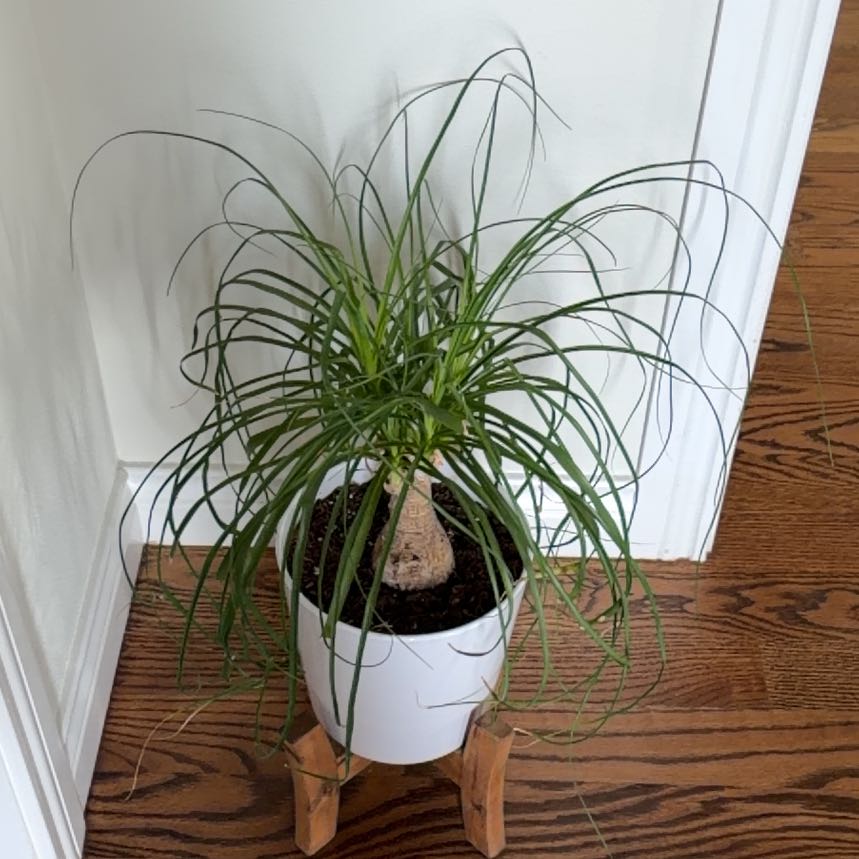
A thriving ponytail palm in a white pot, with long green leaves arching out from a thick base.

Application Techniques for Blooming

๐ŸŒฑ The Basics

Let's get down to the nitty-gritty. Fertilizing your Ponytail Palm is a bit like feeding a fussy toddler. It's all about timing, quantity, and a balanced diet.

๐Ÿ•ฐ Timing is Everything

First off, timing. The best time to fertilize is during the growing season, which typically falls between April and September. This is when your plant is most active and will absorb nutrients like a sponge.

๐Ÿ’ง The Right Dosage

Next up, dosage. You wouldn't force-feed a child, and the same goes for your plant. Over-fertilizing can cause more harm than good, leading to root burn and stress. Stick to a schedule of fertilizing once or twice a month during the growing season and once a month in winter.

๐ŸŒฑ Soil vs. Container

Now, let's talk about application techniques. If your Ponytail Palm is planted in the ground, spread the fertilizer evenly around the base of the plant, extending out to the edge of the canopy. For container-grown plants, apply the fertilizer to the top of the soil and water thoroughly.

๐ŸŒฟ Post-Repotting Care

Just repotted your plant? Hold off on the fertilizer for 3-4 weeks. This gives your plant time to adjust to its new home without the added stress of absorbing nutrients.

โš ๏ธ A Word of Caution

Lastly, a word of caution. Never fertilize a weak or freshly repotted plant. This can cause root burn and add unnecessary stress to the plant. Remember, less is more when it comes to fertilizing your Ponytail Palm.

And there you have it, folks. The ins and outs of fertilizing your Ponytail Palm for optimal blooming. Happy gardening!

Healthy, thriving Ponytail Palm with long, green arching leaves against a bright pink background.

Recognizing Nutrient Deficiencies

๐ŸŒฑ The Yellowing Leaves Conundrum

When your Ponytail Palm starts to look more like a sad, yellowing mop than a vibrant, green ponytail, it's time to sit up and take notice. Yellowing leaves are a cry for help, signaling a nutrient deficiency.

๐ŸŒฟ The Phosphorus Factor

Now, let's talk phosphorus. This nutrient is the life of the plant party, essential for healthy root structures and blooming. Phosphorus deficiency can be a bit of a drama queen, causing your plant to stunt its growth and don a uniform wine-red coloration or a light yellow-green hue.

๐Ÿƒ Other Nutrient Deficiencies

But let's not forget about other potential nutrient deficiencies. Nitrogen deficiency, for instance, can turn your plant pale, with leaves curling upwards and growth slowing down. If you see tiny purple spots on leaves, stems, and branches, it's time to ring the nitrogen alarm bells.

๐ŸŒฟ Addressing Deficiencies

So, what's the plan of action? First, don't panic. Second, reach for a slow-release fertilizer. It's like a nutrient buffet for your plant, releasing the good stuff over a longer period. Yes, it may take a month or two before your plant starts strutting its stuff again, but patience is key here.

๐ŸŒฑ The Dosage Dilemma

Remember, when it comes to fertilizer, more is not always merrier. Too much can cause problems, so always follow the packaging instructions.

๐ŸŒฟ The Importance of Acclimation

Finally, let's not forget about acclimation. If you've recently moved your plant or brought it home, it might just be throwing a bit of a tantrum. Give it time to adjust and keep an eye on its nutrient intake.

In the end, recognizing and addressing nutrient deficiencies is all about paying attention to your Ponytail Palm's needs and responding accordingly. It might take a bit of time and effort, but the reward of a healthy, blooming plant is well worth it.

โš ๏ธ Safety First

This content is for general information and may contain errors, omissions, or outdated details. It is not medical, veterinary advice, or an endorsement of therapeutic claims.

Always consult a qualified healthcare professional before using any plant as food, medicine, or supplement.

Never eat any plant (or feed one to pets) without confirming its identity with at least two trusted sources.

If you suspect poisoning, call Poison Control (800) 222-1222, the Pet Poison Helpline (800) 213-6680, or your local emergency service immediately.

Spotted an error? Please report it here.

Boost your Ponytail Palm's blooming power ๐ŸŒผ with the right fertilizers, and let Greg's custom reminders keep you on track from the tips in this article!


You Might Also Want to Know...

What is the ponytail palm?

The ponytail palm is a unique succulent plant native to eastern Mexico that resembles a palm tree.

How does the ponytail palm store water?

The ponytail palm stores water in its large bulbous trunk, which acts as a water reservoir.

How should I water my ponytail palm?

You can water your ponytail palm by either watering over the soil with a watering can or placing the plant directly under the tap until water runs out from the drainage holes.

Can I bottom water my ponytail palm?

Yes, you can bottom water your ponytail palm by filling a tray or bowl with water and allowing the soil to come into contact with the water for about 10 minutes.

How often should I fertilize my ponytail palm?

You should fertilize your ponytail palm less frequently than other plants, following the instructions on the package of an all-purpose liquid fertilizer or green plant's fertilizer.

Can I use fertilizer sticks for my ponytail palm?

Yes, you can use fertilizer sticks or another form of slow-release fertilizer for your ponytail palm, adjusting the number of sticks based on the pot size and fertilizer concentration.

How do I know if my ponytail palm needs repotting?

Signs that your ponytail palm needs repotting include wobbly or top-heavy growth, roots growing out of the drainage holes, and water running straight through the pot without wetting the soil.

How do I repot my ponytail palm?

To repot your ponytail palm, gently loosen the soil and roots, add soil to the bottom of the new pot, place the root ball in the pot, and add soil around it, leaving about an inch from the soil to the top edge of the pot.

How should I clean my ponytail palm?

You can clean your ponytail palm by misting it with lukewarm water, placing it in the shower, or dusting it off with a feather duster.

Where should I place my ponytail palm?

Place your ponytail palm in a bright location with access to bright light, but be cautious of direct sunlight to prevent leaf burn. Gradually introduce it to more intense light to avoid shocking the plant.