What's Wrong with My Polka Dot Plant?

Common Polka Dot Plant Problems
Leggy stems
Polka Dot Plant grows rapidly even in dim conditions, which sounds like a good thing but isn't. In low light, the fast growth gets channeled into long, bare stems with widely spaced, smaller leaves rather than the compact, colorful mound this plant is known for. The stretching can go from tidy to floppy in just a few weeks.
When Polka Dot Plant starts to flower, it sends up small upright spikes and redirects energy from leaf production to seed-making. The stems below the spikes stop branching, foliage shrinks, and the plant begins its natural decline. Flowering is the plant's signal that it is finishing its lifecycle, but removing spikes early delays this significantly.
Wilting
Polka Dot Plant has broad, thin leaves with no water-storage capacity and a shallow, fibrous root system. It loses moisture fast and collapses dramatically when the soil runs dry, often within hours in a warm room. The dramatic wilt looks alarming, but the plant recovers quickly once it gets a thorough drink.
Polka Dot Plant also wilts when its fine, soft roots are rotting in waterlogged soil and can no longer move water upward. The giveaway is soil that feels wet while the plant looks thirsty. Polka Dot Plant's shallow roots have very little tolerance for prolonged moisture and rot faster than many houseplants.
Yellow leaves
Polka Dot Plant's fine, fibrous roots have almost no tolerance for staying wet. In waterlogged soil they rot quickly, and the plant pulls nutrients back from the oldest leaves first. Yellowing starts at the base of the plant and climbs upward, with soil that stays damp long after watering.
Polka Dot Plant grows fast and sheds its oldest interior leaves as it pushes new growth at the tips. A few yellowing leaves low on the stem in an otherwise healthy, actively growing plant is normal. If the stem tips are producing fresh spotted leaves and only the bottom leaves are yellow, nothing is wrong.
Faded spots
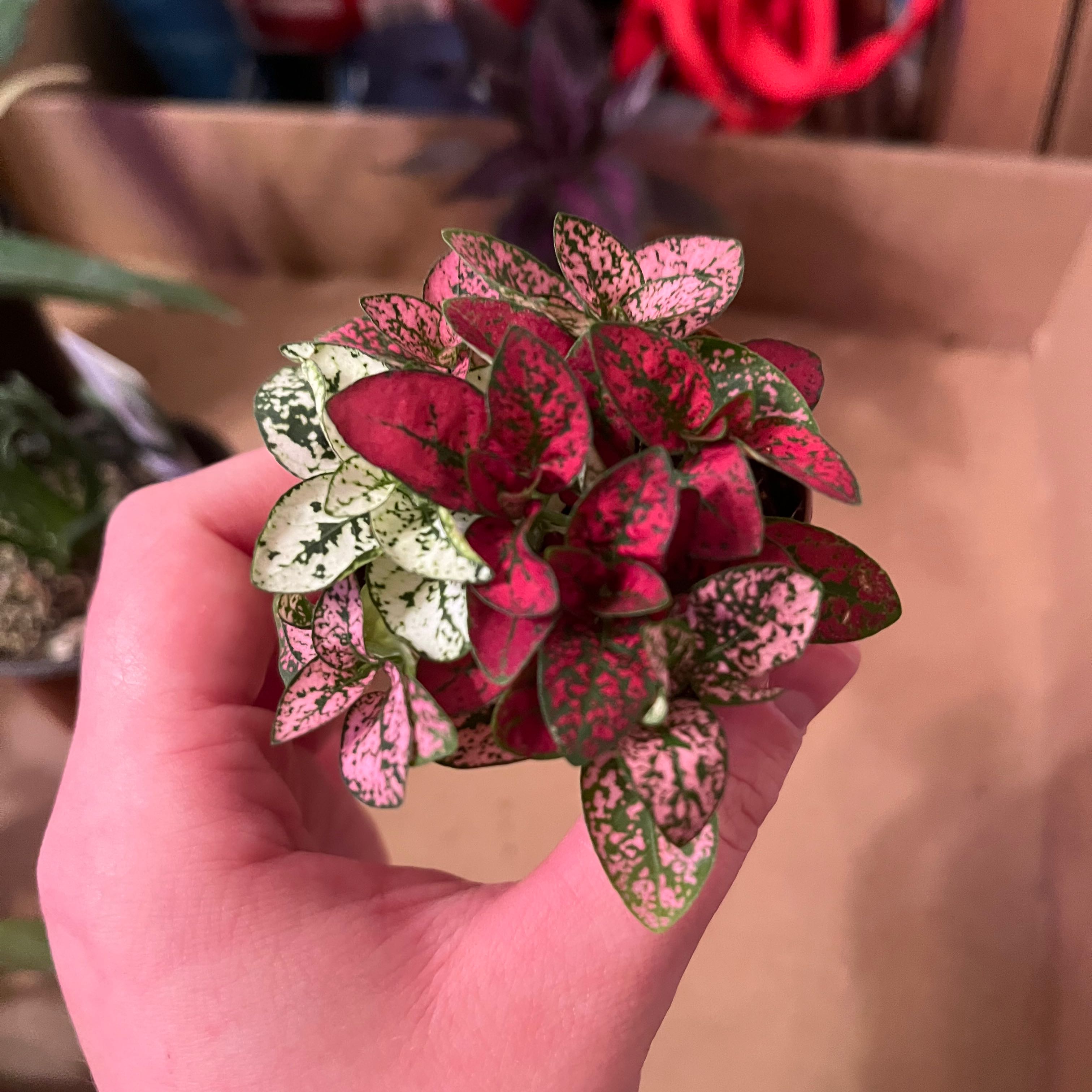
The pink, white, and red spots on Polka Dot Plant are pigments that require good light to maintain. In a dim spot, the plant gradually reduces those pigments and shifts toward plain green. Because this plant grows fast, the fading shows up quickly in new leaves rather than just the old ones. The spotted pattern that makes this plant distinctive can disappear within a month in a poor location.
Pests
Spider mites are the most common pest on Polka Dot Plant indoors. Dry air is the trigger, and this plant's large, soft, moisture-rich leaves are prime targets. Look for pale stippling on the upper leaf surface and fine webbing on the undersides and at branching points. Infestations build fast in dry rooms.
Soft-bodied green or black insects clustered on new growth and stem tips. Polka Dot Plant's soft, succulent stems and constantly flushing new growth are exactly what aphids look for. A large colony leaves sticky honeydew on the broad leaves, which attracts mold.
Tiny white insects that lift off in a cloud when you brush the foliage. Whiteflies are drawn to Polka Dot Plant's large, tender leaves and often arrive on plants that spend time outdoors or near open windows. They feed on leaf undersides and leave behind honeydew that can coat the patterned leaves.
Preventing Polka Dot Plant Problems
About This Article
