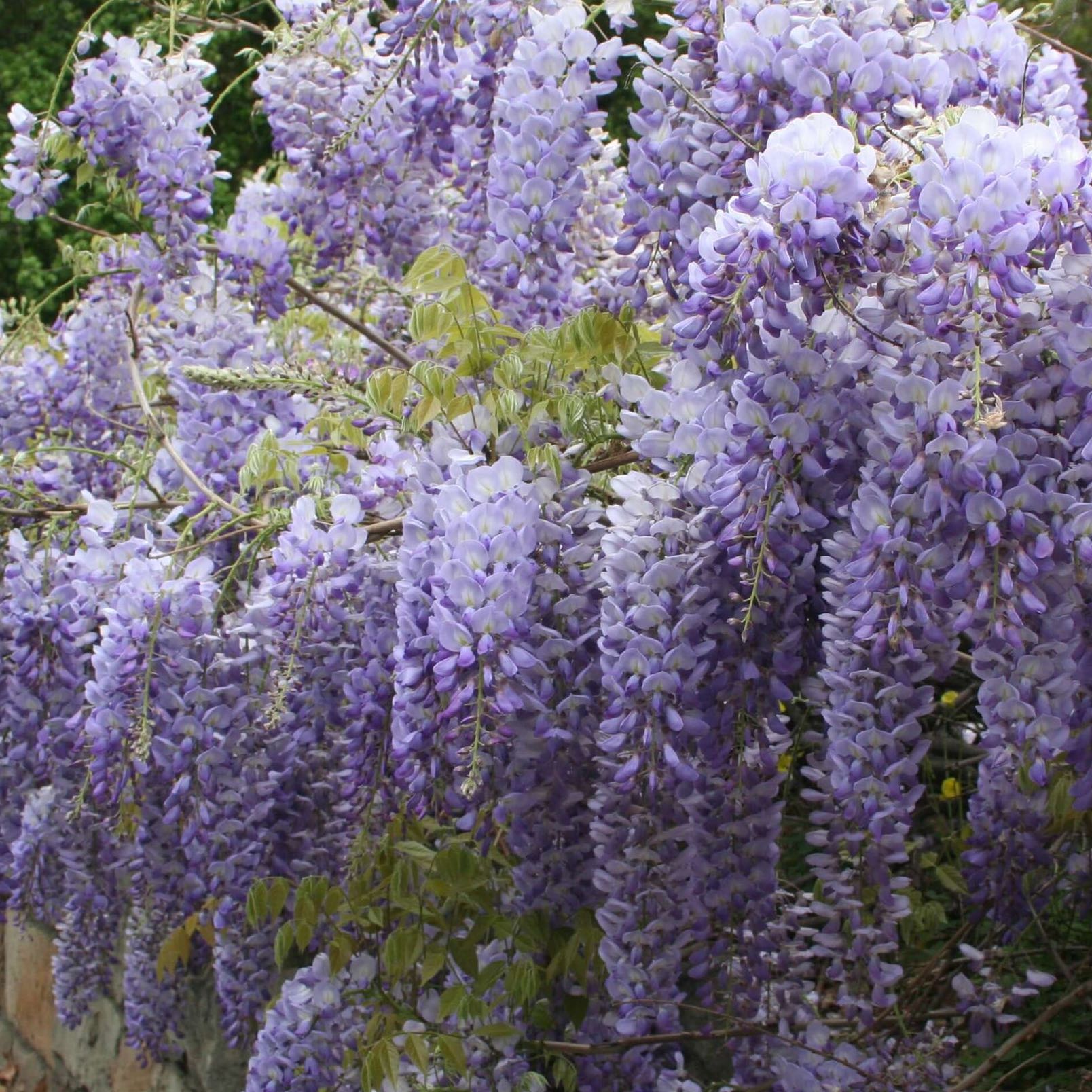

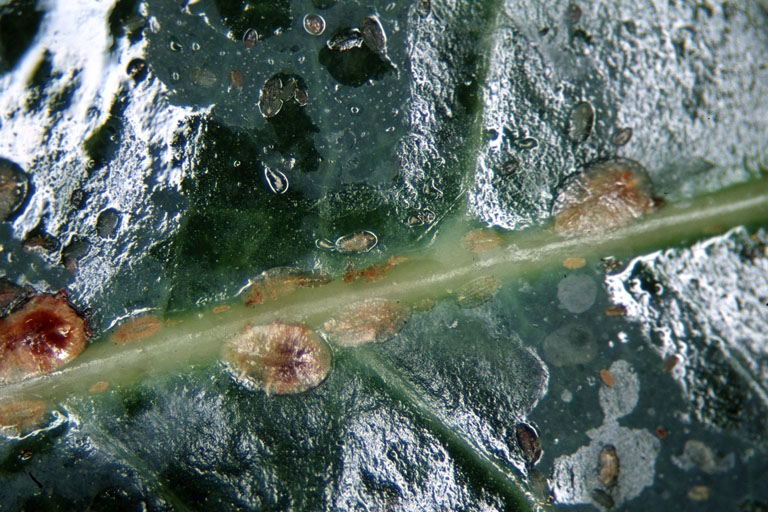
Scale insects
Hard or soft brown bumps glued to the woody twining stems and along older branches, 2 to 5 mm wide. Look like tiny barnacles on bark. Mature wisteria with thick wrist-sized vines builds up heavy scale colonies in the bark crevices and along the wrap of the twining stems.
Patches of bumps thickening on older wood. A sticky shiny film coats lower leaves and the ground or porch below. Black sooty mold grows on the residue. Heavy colonies weaken the whole vine, reduce flower raceme size the next spring, and can kill smaller side branches outright.
Dormant horticultural oil in late winter
In late February before bud break, mix dormant-strength horticultural oil (Bonide All Seasons, ~$15) per label directions.
Spray every twining stem and branch until the oil drips off the bark. Pay attention to the wraps where stems coil around their support.
Repeat once 10 to 14 days later. The oil suffocates overwintering scale and crawlers before they spread to new spring growth.
Scrub heavy clusters with a stiff brush
On mature woody vines, work a stiff bristle brush along the affected stems to physically dislodge scale clusters. The bark is tough and tolerates aggressive scrubbing. Follow with horticultural oil to kill survivors. Best done in late winter when the vine is leafless and the scale is easier to see.
Hard-prune badly infested side branches
Cut out heavily encrusted older branches during the annual hard pruning that wisteria already needs. Bag and dispose of the cuttings. Do not compost. Wisteria's aggressive growth habit means the vine recovers quickly from heavy structural pruning.


