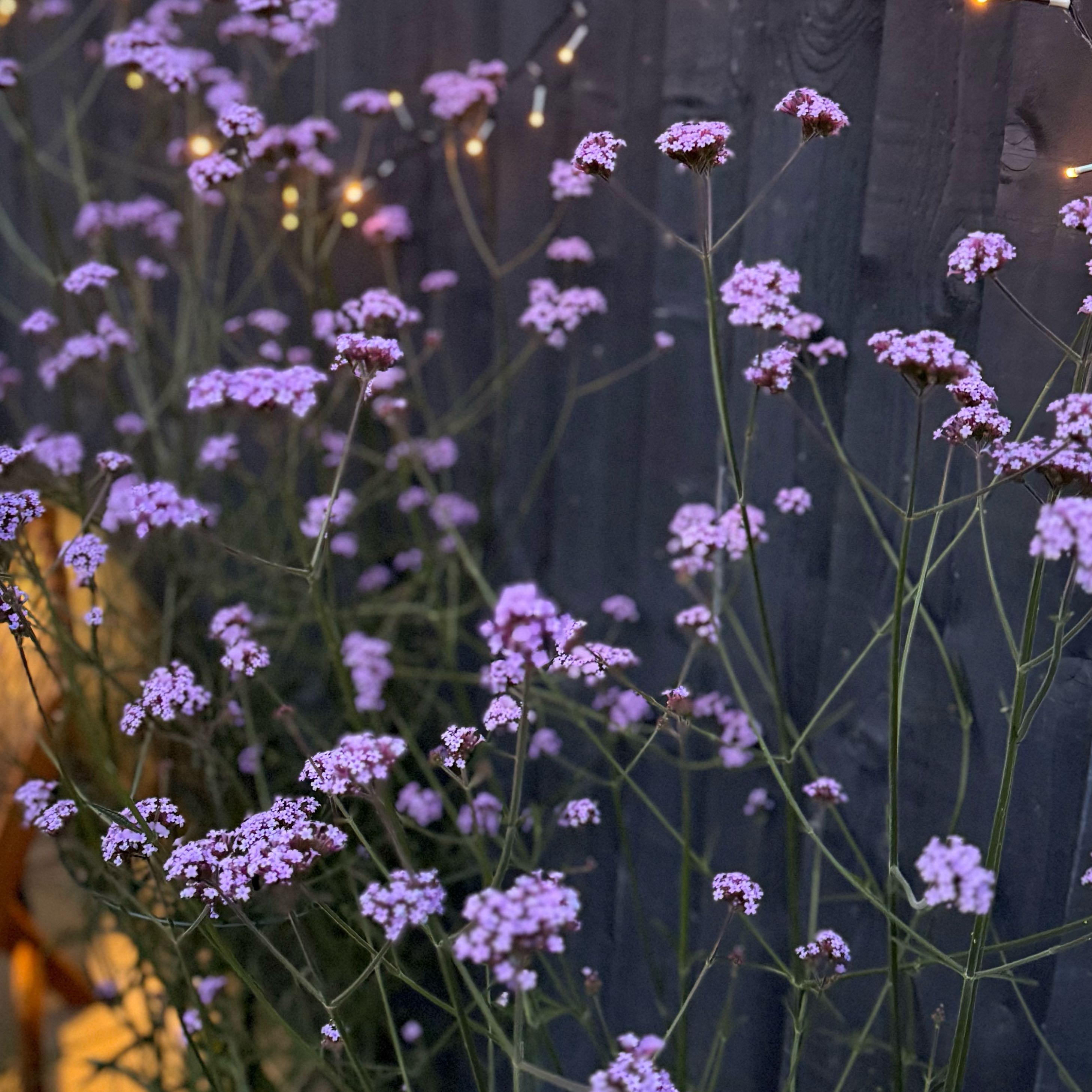
Verbena

What's Eating Your Verbena?

Verbena spp.
Reviewed by Kiersten Rankel M.S.
Quick Answer

For verbena, the most likely culprits are aphids clustered on tender new growth and flower clusters, and spider mites that defoliate stressed plants fast in hot dry summer weather. Thrips scar the developing flower clusters and can vector viruses. Whiteflies cluster on leaf undersides, the same family-wide pressure that hits its lantana cousins.

Stay on top of plant care
Get seasonal reminders for watering and fertilizing, personalized for your plants.
Try Greg Free

What does the damage look like?

Tap the closest match to jump straight to the fix.

Pests, ranked by impact

Spider mite infestation on a stem with fine silk webbing and pale speckled leaf damage

Spider mites

Damage
High
Removal
Moderate
What it looks like

Almost invisible without a hand lens. Yellow-green to red-orange specks on the underside of the small serrated leaves, especially along the leaf-stem joints. Hot dry summer weather sends populations through the roof on stressed verbena.

What the damage looks like

Tiny pale dots tiny pale dots the upper leaf surface, then bronze patches that spread across the opposite-leaf pairs. Fine webbing strung between leaves and flower clusters in heavy infestations. Defoliates a stressed verbena in two to three weeks and stops the bloom show cold.

How to get rid of them
Option 1

Shower the foliage with a hose every 3 days for 2 weeks

Hold a hose nozzle 12 inches from the plant and blast the underside of every leaf for 30 seconds. Mites can't reattach quickly when knocked off, and the moisture slows survivors. Verbena tolerates a hard rinse well. Repeat every 3 days for 2 weeks through the hot summer stretch.

Option 2

Neem oil at dusk, every 5 days for 3 rounds

1

Mix 2 tablespoons cold-pressed neem oil and 1 teaspoon dish soap per gallon of water.

2

Spray the underside of every leaf and into the flower clusters at dusk to avoid burning the small petals.

3

Repeat every 5 days for 3 rounds. That covers the full egg-to-adult life cycle.

Option 3

Water deeply at the base in summer

A verbena under drought stress is a verbena that gets defoliated. Deep-water at the soil line once or twice a week through summer instead of light frequent sprinkling. Stronger plants resist mite outbreaks because they keep leaf turgor up and stay less attractive to feeding.

Slender adult thrips (Frankliniella sp.) on a flower petal

Thrips

Damage
High
Removal
Hard
What it looks like

Skinny yellow-brown to black insects, 1 to 2 mm long, with fringed wings. Hide deep inside the developing flower clusters and along the underside of young serrated leaves. Slip between unopened buds before you can see them, even with a hand lens.

What the damage looks like

Silvery scarring and brown streaks on the small 5-petal tubular flowers. Buds open distorted or fail to open at all. Tiny black specks of frass between the petals. Thrips can also vector tospoviruses to verbena, which show up as ringspots and mottling on leaves and never reverse.

How to get rid of them
Option 1

Blue sticky traps near the flower clusters

Hang blue sticky traps (Trappify or similar, ~$10 for a pack) at flower-cluster height around the planting. Thrips are attracted to blue more than yellow, and the traps catch the adult flying stage before they lay eggs in the next bloom flush.

Option 2

Spinosad spray on the flower clusters, every 7 days for 3 rounds

1

Spinosad (Captain Jack's Deadbug Brew or Monterey Garden Insect Spray, ~$12 to $15) reaches thrips inside flower clusters where contact sprays can't.

2

Spray the flower clusters and surrounding new growth at dusk. Bees and butterflies are off the plant by then, and spinosad is much safer to pollinators after it dries.

3

Repeat every 7 days for 3 rounds to break the egg-to-adult cycle.

Option 3

Pull and bag any plants showing virus symptoms

Verbena with ringspot or mottle patterns on the serrated leaves is virus-infected and won't recover. Pull the whole plant, bag it, and put it in the trash. Do not compost. Replace with a fresh plant after the surviving thrip pressure has been knocked back.

Cluster of silverleaf whiteflies (Bemisia tabaci) on the underside of an eggplant leaf

Whiteflies

Damage
High
Removal
Hard
What it looks like

Tiny white moth-like insects, 1 to 2 mm long, that lift in a cloud when you brush the plant. Cluster on the underside of leaves along the lower-third of the stem, with the same family-wide pressure that hits verbena's lantana cousins. Larvae are flat scale-like ovals that don't move.

What the damage looks like

A sticky shiny film on leaves and on the soil below the plant, often with black sooty mold. Yellow speckled leaves that drop early. Flower clusters thin out as feeding stress builds. Whiteflies vector geminiviruses that show up as leaf curl and yellow vein patterns and don't reverse.

How to get rid of them
Option 1

Yellow sticky traps at canopy height

Hang yellow sticky traps (Trappify or similar, ~$10) right at canopy height around the planting. Whiteflies are strongly attracted to yellow, and the traps cut the adult population before they lay eggs on leaf undersides. Replace the traps when they fill up.

Option 2

Insecticidal soap on leaf undersides, every 4 days for 3 weeks

1

Use ready-to-use insecticidal soap (Safer Brand, ~$10) and spray the underside of every leaf along the lower-third of the stem where whiteflies cluster.

2

Spray at dusk so the soap dries on the bug instead of evaporating in midday heat.

3

Repeat every 4 days for 3 weeks. Eggs hatch on a rolling cycle and need ongoing pressure.

Option 3

Pull and bag any leaf-curl virus plants

Verbena with curled, yellow-veined, or stunted leaves is likely virus-infected and serves as a reservoir for the rest of the planting. Pull the whole plant, bag it, and put it in the trash. Replace only after the whitefly population has been knocked down.

Dense colony of aphids clustered on a plant stem

Aphids

Damage
Medium
Removal
Easy
What it looks like

Tiny pear-shaped insects, 1 to 3 mm long, in shades of green, brown, or black. Cluster densely on the tender new growth tips and on the developing flower clusters where the small 5-petal tubular blooms are forming. Spring and early summer are peak aphid season.

What the damage looks like

New shoots curl and distort as aphids drain sap. A sticky shiny film coats leaves and the developing flower clusters below the colony. Black sooty mold grows on the residue over a few weeks. Heavy spring pressure thins the bloom and slows the next flush of color.

How to get rid of them
Option 1

Strong water blast every 2 to 3 days for 2 weeks

Hold a hose nozzle 12 inches from the affected new growth and spray at high pressure. Most aphids dislodge and don't make it back to the plant. Repeat every 2 to 3 days for 2 weeks. The fastest, cheapest fix and skips chemicals around butterflies and bees.

Option 2

Insecticidal soap on the new growth tips at dusk

Spray ready-to-use insecticidal soap (Safer Brand, ~$10) directly on the aphid clusters at the new growth tips and the bud forming areas. Spray at dusk after pollinators have left. Repeat every 5 to 7 days for 2 weeks until the clusters break.

Option 3

Plant alyssum or yarrow within 3 feet

Plant sweet alyssum or yarrow inside 3 feet of every group of verbena. These flowers attract ladybugs and lacewings, which feed on aphids and keep pressure low without sprays. Established plantings reduce aphid outbreaks for the rest of the season.

Stay ahead of all of them

Four habits that keep verbena pests rare and easy to catch.
1

Underleaf and flower-cluster check, every Sunday

Spider mites, thrips, and whiteflies all hide on the underside of the small serrated leaves and deep in the developing flower clusters. A weekly 30-second scan catches colonies while they're still on one stem.

2

Water at the base, deeply, in summer

Spider mites explode on drought-stressed verbena. Soak the soil at the base once or twice a week through summer instead of light frequent watering. A well-watered plant resists mite outbreaks and keeps blooming through August.

3

Plant alyssum, yarrow, or dill within 3 feet

Companion plants pull in ladybugs and lacewings that knock back aphids before clusters get big. The pollinator-favorite blooms on verbena bring butterflies and bees in, and the companion plants extend the beneficial-insect support without sprays.

4

Pull and bag virus-symptom plants on sight

Thrips and whiteflies vector viruses that show up as ringspots, leaf curl, or yellow vein patterns and don't reverse. Removing infected plants right away protects the rest of the planting and stops the pest reservoir from refilling.

Stay on top of plant care
Get seasonal reminders for watering and fertilizing, personalized for your plants.
Try Greg Free

About This Article

Kiersten Rankel M.S.
Botanical Data Lead at Greg · Plant Scientist
About the Author
Kiersten Rankel holds an M.S. in Ecology & Evolutionary Biology from Tulane University. A certified Louisiana Master Naturalist, she has over a decade of experience in science communication, with research spanning corals, cypress trees, marsh grasses, and more. At Greg, she curates species data and verifies care recommendations against botanical research.
See Kiersten Rankel's full background on LinkedIn.
Editorial Process
Pest identification and treatment guidance verified against Verbena spp. field reports from Greg's botanical database, cross-referenced with university extension sources and published horticultural research.