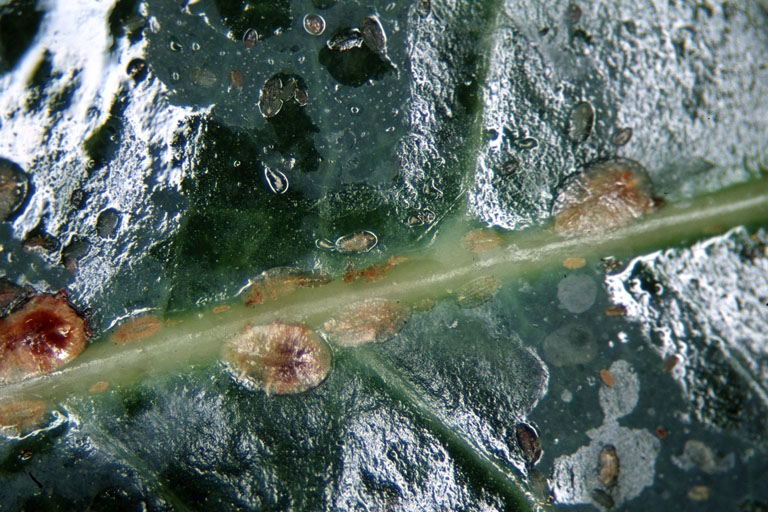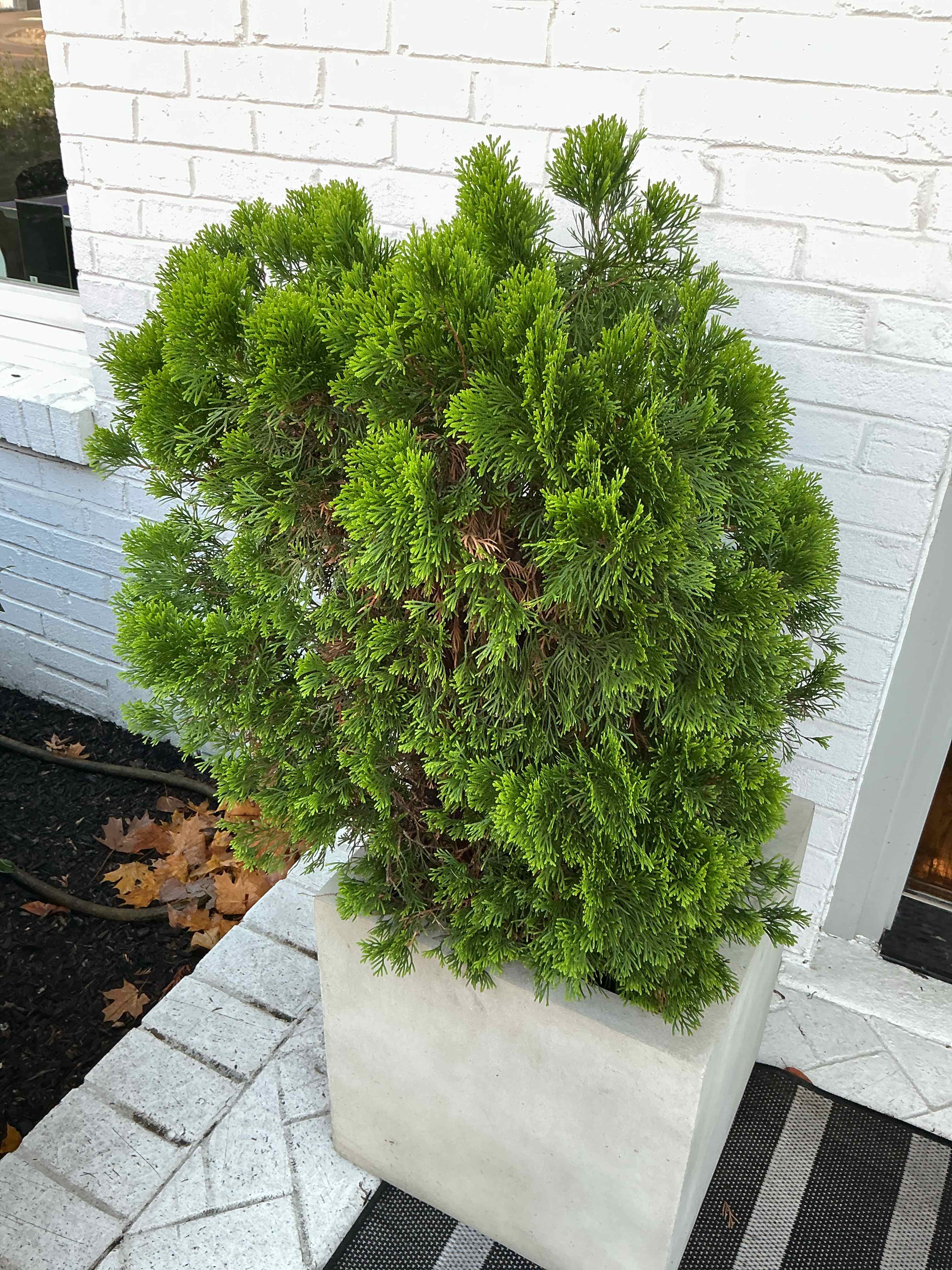


Spider mites
Spruce spider mites (Oligonychus ununguis) are almost invisible to the eye, less than 0.5 mm. They cluster on the inner side of the scale-like overlapping needles, especially on south and west-facing sections of the pyramidal canopy. Hot dry summer weather drives population booms.
Tiny pale dots across the scale-like needles, then bronze and rust-colored patches that spread to whole sections of the canopy. Damaged foliage doesn't recover and stays brown. Heavy infestations defoliate entire 2 to 4 foot sections within a few weeks of summer drought.
Hose blast the canopy weekly through hot dry stretches
Run a strong jet of water from a hose nozzle through the inside of the canopy from bottom to top. Mites get knocked off and rarely make it back to the foliage. Hit the south and west-facing sides hardest. Repeat weekly during any dry stretch over 85 degrees. Costs nothing and keeps populations from exploding.
Horticultural oil at dusk, every 7 days for 3 rounds
Mix horticultural oil (Bonide All Seasons, ~$15) per the label rate, usually 2 to 4 tablespoons per gallon.
Spray the inner foliage of affected sections at dusk to avoid sun-scorch on the oil-coated needles.
Repeat every 7 days for 3 rounds to catch eggs hatching in the dense scale-needle layers.
Deep water the root zone through summer drought
Stressed arborvitae lose moisture through the foliage faster than the roots replace it, and that dry tissue is exactly what spider mites prefer. Soak the root zone with a hose at the dripline for 20 minutes once a week through any drought stretch. Mulch 2 to 3 inches deep over the root zone to hold moisture.