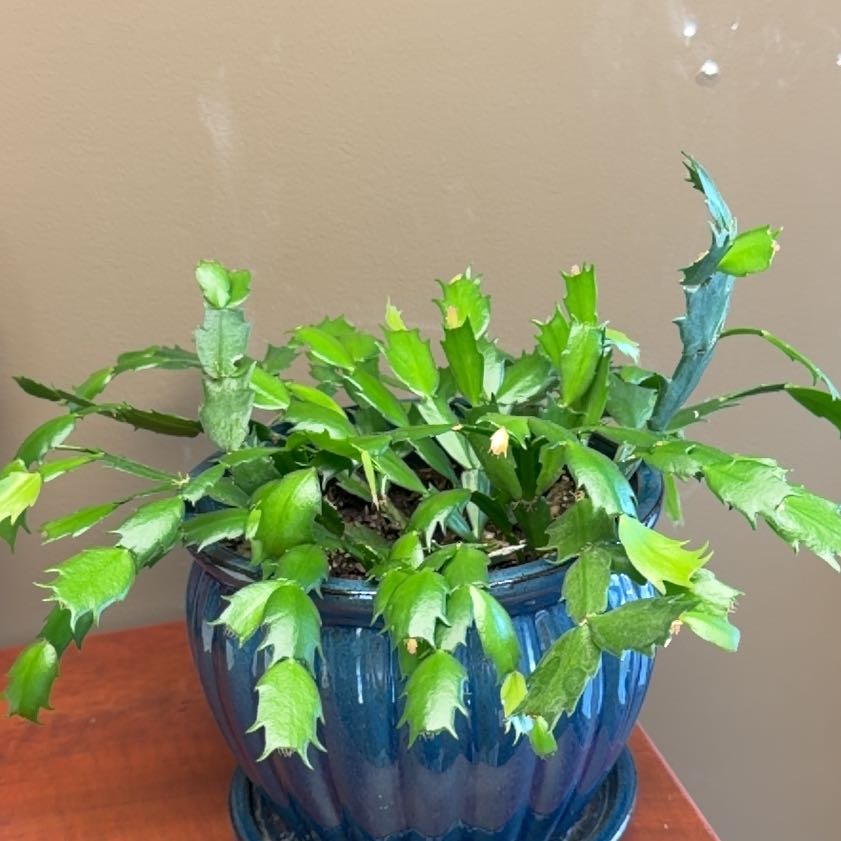
Assorted Schlumbergera

What's Eating Your Christmas Cactus?

Schlumbergera spp.
Reviewed by Kiersten Rankel M.S.
Quick Answer

For Christmas cactus, the most likely culprits are mealybugs (cottony tufts hidden where stem segments join) and spider mites that flare up in dry winter heat. Scale shows up as brown bumps on the flat segment surfaces. Fungus gnats signal soggy soil, the same condition that rots the epiphytic root system.

Stay on top of plant care
Get seasonal reminders for watering and fertilizing, personalized for your plants.
Try Greg Free

What does the damage look like?

Tap the closest match to jump straight to the fix.

Pests, ranked by impact

Cluster of long-tailed mealybugs (Pseudococcus longispinus) showing the white cottony wax on a leaf

Mealybugs

Damage
High
Removal
Hard
What it looks like

Soft white insects covered in cottony fluff, 2 to 4 mm long. Cluster deep in the segment junctions where one stem segment meets the next, and tuck around the terminal flower buds. The segment creases hide them so well that infestations are usually weeks old before anyone spots them.

What the damage looks like

White cottony specks tucked into segment junctions. A sticky shiny film on the segments below the cluster. Affected segments turn dull, shrivel, or drop off at a junction. Heavy infestations stop flower bud formation and ruin the winter bloom the plant is grown for.

How to get rid of them
Option 1

Snip off heavily infested segment chains and root the rest

1

Find segment chains with visible mealybug colonies in the junctions and pinch each one off cleanly at a healthy junction. Schlumbergera is built to break at junctions, so this does not wound the plant.

2

Bag and bin the infested cuttings. Do not compost.

3

If a chain has only a couple of bugs, cut a clean tip segment from it, let it callus on the counter for 2 days, then push it into damp succulent mix to root a fresh plant from the saved tip.

Option 2

Cotton swab dipped in 70% isopropyl alcohol

Dab every visible mealybug, working swabs deep into each segment junction. The alcohol melts the waxy coating and kills on contact. Pull segments gently apart to reach colonies hidden in the creases. Repeat every 3 days for 3 weeks to catch newly hatched eggs.

Option 3

Insecticidal soap + neem oil rotation, 4 weeks

Spray ready-to-use insecticidal soap (Safer, ~$10) into every segment junction at lights-out. Alternate weekly with neem oil. Continue 4 weeks because eggs keep hatching in the protected junction pockets and need ongoing pressure.

Spider mite infestation on a stem with fine silk webbing and pale speckled leaf damage

Spider mites

Damage
Medium
Removal
Moderate
What it looks like

Almost invisible without a hand lens. Pale specks running along the segment edges and the underside of segments. Winter forced-air heat dries the flat segments out and triggers a population boom right when the plant is trying to set buds.

What the damage looks like

Segments look faded, dull, or rusty rather than glossy green. Fine webbing strung between segments, especially at the junctions and around terminal buds. Heavy infestations cause buds to abort before they open and segments to drop at the slightest bump.

How to get rid of them
Option 1

Shower the segments weekly for 3 weeks

Move the plant to the shower or sink. Spray cool water along every segment, top and bottom, for 30 seconds. Mites cannot reattach quickly when knocked off and the rinse humidity slows survivors. Let the soil drain fully before returning the plant to its spot. Repeat weekly for 3 weeks.

Option 2

Neem oil at lights-out, every 5 days for 3 rounds

1

Mix 2 tablespoons cold-pressed neem oil and 1 teaspoon dish soap per gallon of water.

2

Spray top and bottom of every segment at lights-out. Pay special attention to segment junctions where mites cluster.

3

Repeat every 5 days for 3 rounds. That covers the full egg-to-adult cycle.

Option 3

Move the plant away from heat vents

Christmas cactus is an epiphyte from humid Brazilian cloud forests. Forced-air heat blowing across the segments creates the dry climate mites need to breed fast. A spot 5 feet from any vent, near a humidified room or grouped with other plants, removes the trigger.

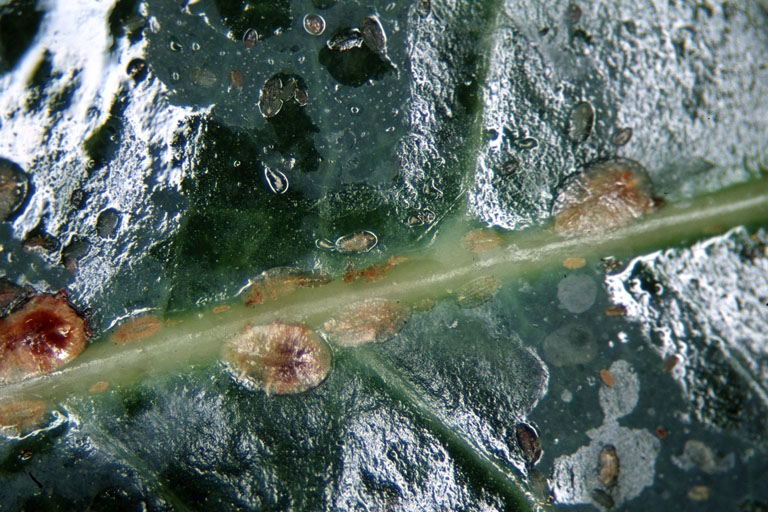
Brown soft scale (Coccus hesperidum) clustered on a plant stem

Scale insects

Damage
Medium
Removal
Moderate
What it looks like

Hard or soft oval brown bumps stuck to the flat surfaces of segments and along segment edges, 1 to 3 mm wide. Look like tiny barnacles glued in place. Don't move because their feet are sealed under a waxy shield.

What the damage looks like

Yellowed patches around each cluster on the flat segment. A sticky shiny film on segments below, sometimes with sooty black mold. Heavy infestations cause segments to drop one by one over months and stop the plant from forming buds.

How to get rid of them
Option 1

Scrape with a fingernail or soft toothbrush

Scale insects are stuck under a waxy seal. Scrape every visible bump off the flat segments. Each one removed is one less egg-layer. Schlumbergera segments are firm enough to take a fingernail without bruising.

Option 2

Cotton swab + 70% alcohol, weekly for 3 weeks

After scraping, dab any remaining bumps with a cotton swab dipped in 70% isopropyl alcohol. The alcohol penetrates the waxy seal and kills the insect. Repeat weekly for 3 weeks to catch newly hatched crawlers walking along segments to fresh feeding spots.

Option 3

Horticultural oil spray, weekly for 3 weeks

Spray horticultural oil (Bonide All Seasons, ~$15) on every segment surface. Smothers crawlers and adults. Apply at lights-out, every 7 days for 3 weeks.

Adult dark-winged fungus gnat (Sciaridae) close-up

Fungus gnats

Damage
Medium
Removal
Easy
What it looks like

Tiny dark flies, 1 to 3 mm long, hovering near the soil and flying up when you water. Larvae are barely-visible white worms in the top inch of damp soil. The adults are a nuisance, but their presence is the real warning.

What the damage looks like

Adults are mostly a nuisance, but their presence is the real warning. Fungus gnats only thrive in damp soil, the same conditions that rot Christmas cactus roots. As an epiphyte the plant wants to dry between waterings, so soggy soil rots roots from below and softens segments from above.

How to get rid of them
Option 1

Let the soil dry to the bottom before watering again

Stick a wooden chopstick to the bottom of the pot. Only water when it comes out dry. The top inch dries fast and kills new larvae and eggs, while the bottom drying matches what Christmas cactus roots actually want. The segments may feel slightly soft when the plant is truly thirsty, which is the signal to water again.

Option 2

Yellow sticky traps near the soil

Stick yellow cards (Trappify, ~$10) just above the soil surface. Adults stick to them on takeoff and landing. Catches the breeding population while drying out the soil kills the larvae.

Option 3

Mosquito Bits sprinkled on soil

Mosquito Bits (Bt-i, ~$15) is a bacteria-based larvicide that kills fungus gnat larvae specifically. Sprinkle a tablespoon on the soil surface and let it work in with the next watering. Safe for Christmas cactus, pets, and beneficial soil microbes.

Common myth

Drench the soil with hydrogen peroxide.

It kills larvae but also kills the beneficial fungi and bacteria the roots need. Worse, drenching the pot is the opposite of what Christmas cactus wants. The fix is letting the soil dry out, not soaking it again.

Stay ahead of all of them

Four habits that keep Christmas cactus pests rare and protect the winter bloom.
1

Segment junction check, every month

Mealybugs hide in the creases where one segment meets the next, which is also where buds form. A monthly 60-second scan with the segments gently fanned apart catches colonies before they reach the bud cycle.

2

Quarantine new houseplants for 2 weeks

Mealybugs and scale travel home from the nursery on the plant you bought. Two weeks of isolation catches anything before it spreads to your Christmas cactus, which is especially vulnerable because pests in the segment junctions are so hard to spot.

3

Keep the plant 5 feet from heating vents

Forced-air heat dries the flat segments and triggers spider mite booms in winter, the same season the plant is trying to set buds. A spot away from vents, ideally near other plants for shared humidity, removes the trigger before it starts.

4

Water only when the segments feel slightly soft

Christmas cactus is an epiphyte and wants to dry out between waterings. Slightly pliable segments mean the plant is genuinely thirsty. Watering on a calendar instead keeps the soil too damp, which invites fungus gnats and rots the roots that hold the whole plant up.

Stay on top of plant care
Get seasonal reminders for watering and fertilizing, personalized for your plants.
Try Greg Free

About This Article

Kiersten Rankel M.S.
Botanical Data Lead at Greg · Plant Scientist
About the Author
Kiersten Rankel holds an M.S. in Ecology & Evolutionary Biology from Tulane University. A certified Louisiana Master Naturalist, she has over a decade of experience in science communication, with research spanning corals, cypress trees, marsh grasses, and more. At Greg, she curates species data and verifies care recommendations against botanical research.
See Kiersten Rankel's full background on LinkedIn.
Editorial Process
Pest identification and treatment guidance verified against Schlumbergera spp. field reports from Greg's botanical database, cross-referenced with university extension sources and published horticultural research.