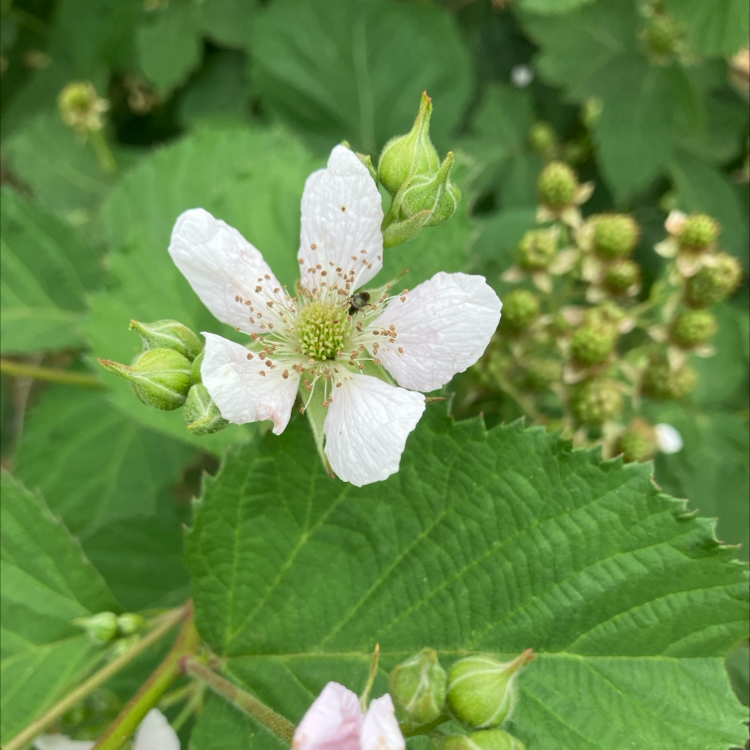
Blackberry

What's Eating Your Blackberry?

Rubus fruticosus
Reviewed by Kiersten Rankel M.S.
Quick Answer

For blackberry, the most likely culprits are spotted-wing drosophila (tiny flies that lay eggs in ripening drupelets and ruin the harvest), Japanese beetles skeletonizing leaves June through August, and birds stripping ripe fruit overnight. Aphids cluster on new primocane tips and bud stalks. Spider mites flare in hot dry summer weather.

Stay on top of plant care
Get seasonal reminders for watering and fertilizing, personalized for your plants.
Try Greg Free

What does the damage look like?

Tap the closest match to jump straight to the fix.

Pests, ranked by impact

Small leaf weevil resting on a green leaf

Spotted-wing drosophila

Damage
High
Removal
Hard
What it looks like

A small fruit fly 2 to 3 mm long. Males have a single dark spot on each wingtip. Females have a serrated egg-laying tube that punctures unbroken ripening fruit, which sets SWD apart from vinegar flies that only feed on already-damaged fruit. Active from first ripening through frost.

What the damage looks like

Drupelets soften and collapse within a day of ripening. Tiny pinprick scars on the berry surface mark egg-laying sites. Cut a soft berry open and white maggots wriggle inside the drupelets. Fruit fermentes on the cane and the whole harvest can be lost within a week of the first picking.

How to get rid of them
Option 1

Mesh netting on canes from green fruit through harvest

Drape fine insect mesh (~1 mm openings, ProtekNet or similar, ~$30 to $50) over the trellised canes once berries reach green-fruit stage and seal at the base. The mesh is fine enough to exclude SWD adults yet still lets light and rain through. The single most effective home defense for blackberry harvests.

Option 2

Pick daily and refrigerate within an hour

1

Walk the row every morning once the first drupelets ripen. Pick every berry that gives to gentle pressure, even slightly soft ones.

2

Drop overripe or damaged fruit into a sealed bag in the trash, never on the ground or in the compost. Fallen fruit breeds the next generation.

3

Refrigerate harvested berries within an hour. Cold below 36F stops larval development inside any fruit that was already infested.

Option 3

Apple cider vinegar traps to monitor populations

1

Fill a deli cup with 1 inch of apple cider vinegar plus a drop of dish soap. Punch 6 holes 3 mm wide near the top.

2

Hang one trap per 10 feet of canes at fruit height starting 2 weeks before the first ripe berries.

3

Check weekly. Tiny dark flies in the cup mean SWD pressure is on. Tighten netting and shorten harvest intervals when you see them.

American robin perched on a branch eating a berry

Birds

Damage
High
Removal
Moderate
What it looks like

Robins, mockingbirds, catbirds, starlings, and waxwings all target ripe blackberries. They feed at first light and can clear a row in a morning. The fruit is the entire harvest target, which puts birds at the top of the threat list every July and August.

What the damage looks like

Ripe fully-black drupelets disappear overnight while green and red berries are left behind. Sometimes a half-pecked berry hangs on the cane with only a few drupelets eaten. Bird droppings stain leaves and the trellis. Damage spikes the day berries turn fully black.

How to get rid of them
Option 1

Bird netting over the trellis at first color change

Drape 3/4 inch bird netting (Bird-X or Dalen, ~$15 to $30) over the canes the day berries start turning red. Anchor the bottom edge to the ground with landscape staples. The most reliable defense, and the same netting can stay on through harvest and protect against SWD if you upgrade to fine insect mesh instead.

Option 2

Reflective scare tape strips along the row

Tie holographic scare tape (Bird-X Irri-Tape, ~$10) at 4 foot intervals along the trellis. The flashing motion deters most songbirds for 1 to 2 weeks before they habituate. Move strips around weekly or pair with netting for full-season protection.

Metallic green and copper Japanese beetle (Popillia japonica) on a lantana flower

Japanese beetles

Damage
High
Removal
Moderate
What it looks like

Half-inch metallic green and copper beetles that feed in groups on leaves through June, July, and August. Active in the eastern and midwestern US. Cluster on the upper canes in the morning sun, often piled on top of each other on a single leaf or flower.

What the damage looks like

Leaves chewed between the veins into a lace skeleton. Heavy feeding strips primocane leaves bare and cuts next year's floricane production. Beetles also feed on flowers and unripe drupelets, scarring the fruit. Damage peaks midsummer right when fruit is sizing.

How to get rid of them
Option 1

Hand-pick into soapy water at dawn

1

Walk the canes within an hour of sunrise when beetles are sluggish and clustered.

2

Hold a jar of soapy water under each cluster and tap the cane. Beetles drop straight in.

3

Repeat every morning through July and August. Daily removal cuts populations faster than any spray and prevents the pheromone trail that pulls in more beetles.

Option 2

Neem oil spray on primocanes, every 5 days

1

Mix 2 tablespoons cold-pressed neem oil and 1 teaspoon dish soap per gallon of water.

2

Spray primocane leaves at dusk, top and bottom, on a calm day under 85F.

3

Repeat every 5 days through peak beetle weeks. Avoid spraying open flowers to protect bees that pollinate the floricanes.

Option 3

Skip pheromone bag traps near the canes

Pheromone traps pull in more beetles than they catch. If a neighbor uses one, ask them to place it 30 feet downwind from your blackberries. Hand-picking and netting protect the canes without drawing the entire neighborhood's beetle population to your trellis.

Dense colony of aphids clustered on a plant stem

Aphids

Damage
Medium
Removal
Easy
What it looks like

Tiny pear-shaped insects 1 to 3 mm long, in shades of green or pink. Cluster densely on the soft growing tips of new primocanes and along the bud stalks where flowers are forming. Spring through early summer is peak aphid season on blackberry.

What the damage looks like

New primocane tips curl, twist, and yellow as aphids drain sap. A sticky shiny film coats the upper leaves and bud stalks below the cluster. Black sooty mold grows on the residue. Aphids also vector blackberry viruses, which is the reason to act even when damage looks minor.

How to get rid of them
Option 1

Strong water blast every 2 to 3 days for 2 weeks

Hold a hose nozzle 12 inches from the affected primocane tips and spray at high pressure. Most aphids dislodge and don't make it back to the cane. Repeat every 2 to 3 days for 2 weeks. The fastest, cheapest fix and works without disrupting the bees that need to pollinate floricane blooms.

Option 2

Insecticidal soap on cane tips, every 5 days

Spray ready-to-use insecticidal soap (Safer or Bonide, ~$10) on cane tips and bud stalks at dusk. Soap kills on contact and breaks down within hours, which keeps it safe for pollinators visiting flowers nearby. Repeat every 5 days for 2 to 3 rounds.

Option 3

Interplant alyssum or yarrow within the bramble

Plant alyssum, dill, or yarrow within 3 feet of the canes. These attract ladybugs and lacewings, which feed on aphids. Established plantings keep aphid pressure low without sprays and last for years in the same row.

Spider mite infestation on a stem with fine silk webbing and pale speckled leaf damage

Spider mites

Damage
Medium
Removal
Moderate
What it looks like

Almost invisible without a hand lens. Yellow-green to red-orange specks on the underside of leaves and where leaf petioles meet the cane. Hot dry summer weather above 85F triggers a population boom on blackberry, especially on canes against fences or walls that trap heat.

What the damage looks like

Tiny pale dots stipple the upper leaf surface, then bronze patches spread between the veins. Fine webbing strung between the leaf and the cane in heavy infestations. Affected leaves drop early, which weakens primocanes and cuts next year's floricane fruit set.

How to get rid of them
Option 1

Shower the canes weekly for 3 weeks

Hose the underside of every leaf for 30 seconds per cane on a warm morning. Mites can't reattach quickly when knocked off, and the moisture slows survivors. Repeat weekly for 3 weeks. The simplest fix when summer heat first triggers an outbreak.

Option 2

Neem oil at dusk, every 5 days for 3 rounds

1

Mix 2 tablespoons cold-pressed neem oil and 1 teaspoon dish soap per gallon of water.

2

Spray the underside of every leaf at dusk, paying attention to leaf-petiole junctions where mites cluster.

3

Repeat every 5 days for 3 rounds. That covers the full egg-to-adult life cycle in summer heat.

Option 3

Mulch deeply and water the row consistently

Spread 3 inches of straw or wood chip mulch out to the trellis line. Water deeply once or twice a week so canes never go fully drought-stressed. Heat-and-drought stressed blackberries are the canes mites target first. Consistent moisture is the cheapest long-term defense.

Stay ahead of all of them

Four habits that keep blackberry pests rare and the harvest yours.
1

Net the trellis before the first berry colors

SWD and birds both target ripening fruit, and both arrive within a day of the first color change. Mesh netting installed before that day blocks both pests for the whole harvest. Fine 1 mm insect mesh handles SWD too.

2

Pick every morning during harvest

Daily picking removes ripe and overripe fruit that would otherwise breed the next SWD generation. Drop any soft, scarred, or fallen berries into a sealed bag, never on the ground or in compost. Cold-store the harvest within an hour.

3

Walk the canes Sunday morning, scan tips and undersides

Aphids cluster on primocane tips. Spider mites hide on leaf undersides. Japanese beetles sun on the upper canes. A 2-minute Sunday scan catches all three before they multiply across the row.

4

Prune out spent floricanes after harvest

Floricanes die after fruiting and harbor overwintering pests and disease. Cut them to the ground each fall and burn or bag them. The remaining primocanes carry next year's crop and stay cleaner without the dead canes nearby.

Stay on top of plant care
Get seasonal reminders for watering and fertilizing, personalized for your plants.
Try Greg Free

About This Article

Kiersten Rankel M.S.
Botanical Data Lead at Greg · Plant Scientist
About the Author
Kiersten Rankel holds an M.S. in Ecology & Evolutionary Biology from Tulane University. A certified Louisiana Master Naturalist, she has over a decade of experience in science communication, with research spanning corals, cypress trees, marsh grasses, and more. At Greg, she curates species data and verifies care recommendations against botanical research.
See Kiersten Rankel's full background on LinkedIn.
Editorial Process
Pest identification and treatment guidance verified against Rubus fruticosus field reports from Greg's botanical database, cross-referenced with university extension sources and published horticultural research.