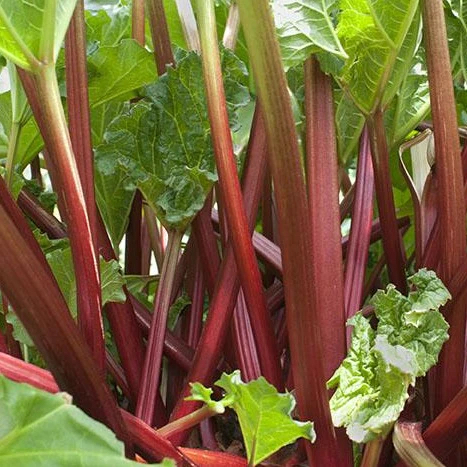
Garden Rhubarb

What's Eating Your Rhubarb?

Rheum rhabarbarum
Reviewed by Kiersten Rankel M.S.
Quick Answer

For rhubarb, the most likely culprit is the rhubarb curculio, a gray weevil that bores into the edible stalks and ruins the harvest. Aphids cluster on new growth and along the central rib of expanding leaves. Slugs chew the lower stalks and leaf bases at night, especially in damp ground beds.

Stay on top of plant care
Get seasonal reminders for watering and fertilizing, personalized for your plants.
Try Greg Free

What does the damage look like?

Tap the closest match to jump straight to the fix.

Pests, ranked by impact

Small leaf weevil resting on a green leaf

Rhubarb curculio

Damage
High
Removal
Moderate
What it looks like

A gray-brown weevil about 12 mm long with a long curved snout, often dusted in yellow pollen. The classic species-specific rhubarb pest. Climbs up the stalks in late spring and bores into the petiole and crown. Easy to spot once you know to look for them.

What the damage looks like

Round puncture holes in the red stalks, sometimes weeping a sticky amber sap. Bored stalks split, scar, and rot from the wound down. Heavy attack ruins the harvest target because the edible part of the plant is what they damage.

How to get rid of them
Option 1

Hand-pick adults from stalks every morning in spring

1

Walk the patch every morning from late April through June. Adults are active at the crown and along the stalks in daylight.

2

Pick the gray weevils off by hand. They drop and play dead when disturbed, so cup a hand below before you grab.

3

Drop into a jar of soapy water. Repeat daily until you stop finding new adults, usually 2 to 3 weeks.

Option 2

Cut and discard any bored stalks

Pull or cut affected stalks at the crown the moment you see the round bore holes. Bag and discard. Do not compost because larvae can complete development inside the cut stalk. Removing wounded stalks early stops the next generation from emerging in your patch.

Option 3

Clear curly dock and wild dock within 30 feet

Curly dock and other wild Rumex species are the curculio's alternate host. Pull every wild dock within 30 feet of the rhubarb patch in early spring before the weevils move over. Cosmos planted nearby also draws curculio away from rhubarb and can be cut and discarded with the weevils on it.

Dense colony of aphids clustered on a plant stem

Aphids

Damage
Medium
Removal
Easy
What it looks like

Tiny pear-shaped insects 1 to 3 mm long, in shades of green or black. Cluster on the soft new growth at the center of the crown and along the thick central rib of expanding leaves. Most active in cool spring weather as the new flush comes up.

What the damage looks like

New leaves come up curled, puckered, and yellow as aphids drain sap from the central rib. A sticky shiny film coats the leaf and the stalks below. Black sooty mold can grow on the residue. The toxic leaves are not the harvest, so damage there is cosmetic, but heavy pressure slows stalk production for the season.

How to get rid of them
Option 1

Strong water blast every 2 to 3 days for 2 weeks

Hold a hose nozzle 12 inches from the affected new growth and spray at high pressure. Most aphids dislodge and don't make it back to the plant. Repeat every 2 to 3 days for 2 weeks. The fastest, cheapest fix and works without chemicals on a food crop.

Option 2

Insecticidal soap on the central ribs at dusk

Spray ready-to-use insecticidal soap (Safer Brand, ~$10) onto the underside of new leaves and along the central rib at dusk. Aim for the cluster, not the whole plant. Repeat every 5 days for 2 rounds. Soap is approved for food crops and breaks down quickly.

Option 3

Plant alyssum or yarrow within 3 feet of the patch

Alyssum, dill, and yarrow draw ladybugs and lacewings, which feed on aphids. A small planting near the rhubarb patch keeps aphid pressure low without sprays and lasts the whole season.

Large red-brown slug (Arion rufus) crawling on a rhubarb leaf

Slugs

Damage
Medium
Removal
Moderate
What it looks like

Soft, slimy mollusks 1 to 4 inches long in gray, brown, or black. Active at night and on damp overcast days. Hide under mulch, boards, and in the shaded ground around the crown during the day. Worse in damp ground beds and in cool wet springs.

What the damage looks like

Ragged holes chewed in the lower leaves and along the base of stalks where they emerge from the crown. Silvery slime trails on the soil and leaf surface in the morning. Damage at the stalk base can scar the harvest, but plants usually push new stalks and recover.

How to get rid of them
Option 1

Iron phosphate slug bait around the crown

Scatter iron phosphate bait (Sluggo or Garden Safe Slug & Snail Bait, ~$15) in a ring around the crown after rain or evening watering. Iron phosphate is approved for food crops and safe around pets. Reapply every 2 weeks through wet spring weather.

Option 2

Beer trap and morning hand-pick

1

Sink a shallow tuna can or jar lid level with the soil within 3 feet of the crown.

2

Fill with cheap beer at dusk. Slugs are drawn to the yeast and drown overnight.

3

Empty and refill every morning for 2 weeks. Pick up any slugs hiding under nearby boards or mulch at the same time.

Option 3

Pull mulch back from the crown

Slugs hide under heavy mulch at the soil line. Pull mulch back 6 inches from the crown so the soil around the stalk bases dries out between waterings. The dry zone is hostile to slugs and exposes any that try to cross it during the day.

Stay ahead of all of them

Four habits that keep curculio out of your stalks and the patch productive for years.
1

Pull wild dock within 30 feet, every spring

Curly dock and other wild Rumex species are the rhubarb curculio's alternate host. A spring weed-out before the weevils emerge cuts the local population off at the source and protects the patch all season.

2

Crown and stalk-base check, every morning in spring

Curculio adults are active in daylight on the stalks from late April through June. A 30-second look at the crown each morning catches them while they're still picking off easily and before they bore in.

3

Harvest stalks regularly through spring

Smaller stalks are sweeter and oversized stalks split and let curculio bore in. Pull stalks every 7 to 10 days through the spring flush. Regular harvest keeps the crown producing fresh tender stalks that pests find harder to attack.

4

Divide crowns every 4 to 5 years in fall

Old congested crowns produce thin stalks and harbor slugs and curculio in the gaps. Lift and split the crown into pieces with 2 to 3 buds each in fall. Replant in fresh ground with compost. The renewed planting is healthier and easier to scout.

Stay on top of plant care
Get seasonal reminders for watering and fertilizing, personalized for your plants.
Try Greg Free

About This Article

Kiersten Rankel M.S.
Botanical Data Lead at Greg · Plant Scientist
About the Author
Kiersten Rankel holds an M.S. in Ecology & Evolutionary Biology from Tulane University. A certified Louisiana Master Naturalist, she has over a decade of experience in science communication, with research spanning corals, cypress trees, marsh grasses, and more. At Greg, she curates species data and verifies care recommendations against botanical research.
See Kiersten Rankel's full background on LinkedIn.
Editorial Process
Pest identification and treatment guidance verified against Rheum rhabarbarum field reports from Greg's botanical database, cross-referenced with university extension sources and published horticultural research.