Peach Tree

What's Eating Your Peach Tree?

Prunus persica
Reviewed by Kiersten Rankel M.S.
Quick Answer

For peach trees, the most likely culprits are peach tree borers tunneling into the lower trunk (the most damaging by far), oriental fruit moth caterpillars boring into shoot tips and ripening fruit, and plum curculio weevils leaving crescent scars on developing peaches. Scale insects can decline whole branches, while aphids and Japanese beetles attack new growth and summer leaves.

Stay on top of plant care
Get seasonal reminders for watering and fertilizing, personalized for your plants.
Try Greg Free

What does the damage look like?

Tap the closest match to jump straight to the fix.

Pests, ranked by impact

White spittlebug foam mass on a plant stem

Peach tree borer

Damage
High
Removal
Hard
What it looks like

Cream-white caterpillar an inch long with a brown head, the larva of a clearwing moth that mimics a wasp. Tunnels inside the lower trunk and root crown from soil line up to about 12 inches. Adults are rarely seen because the damage stays hidden under the bark.

What the damage looks like

Globs of clear amber gum mixed with reddish-brown sawdust oozing from the lower trunk and root flare. A single borer can girdle a young tree. Heavy attacks kill whole scaffold branches and collapse mature trees over 2 to 3 seasons.

How to get rid of them
Option 1

Probe and dig out larvae each spring and fall

1

Scrape away gum and loose bark from the lower trunk in early spring and again in October.

2

Push a stiff wire (a straightened coat hanger works) into each fresh hole until you crush the larva.

3

Mound 2 to 3 inches of fresh soil over the root flare after probing to discourage the next generation of egg-laying moths.

Option 2

Permethrin trunk spray in late June and again in August

Spray permethrin (Bonide Borer-Miner Killer, ~$18) on the lower 18 inches of trunk and the surrounding soil. Time the first spray for late June when adult moths emerge, and a second spray 6 weeks later for the second flight. The barrier kills hatching larvae before they bore in. Skip if the tree is in flower or if you keep beekeepers nearby.

Option 3

Pheromone mating disruption ties for orchard-scale prevention

Hang Isomate-P pheromone ties (~$30 for a pack that covers 4 trees) at chest height in May. The pheromone confuses male moths and prevents mating, so few eggs ever land on your trunks. Works best when neighbors are also treating, otherwise outside moths can still find your tree.

Macro photo of a caterpillar resting on a green leaf

Oriental fruit moth

Damage
High
Removal
Hard
What it looks like

Pinkish-white caterpillar half an inch long with a dark brown head, the larva of a small grayish moth. First-generation larvae bore into tender shoot tips in spring. Later generations move to developing fruit and tunnel toward the pit. Three to four overlapping generations per year in most peach-growing zones.

What the damage looks like

Spring shoot tips wilt and droop in a shepherd's-crook shape, then die back 4 to 6 inches. By midsummer, gum oozes from small entry holes on the fruit shoulder near the stem. Cutting a peach open reveals brown frass-packed tunnels around the pit. Infested fruit drops early or rots on the tree.

How to get rid of them
Option 1

Prune wilted shoot tips weekly through May and June

Walk the tree every 7 days during spring shoot growth. Snip off any wilted, drooping shoot tips 4 to 6 inches below the dead wood. The larva is still inside the cut piece. Bag and trash the prunings. Do not compost. This breaks the first generation before larvae move to the fruit.

Option 2

Spinosad spray on developing fruit, every 10 days

1

Mix Spinosad (Captain Jack's Deadbug Brew or Monterey Garden Insect Spray, ~$12 to $15) per label rate.

2

Spray developing fruit and surrounding leaves at dusk starting at petal fall and continuing every 10 days through harvest.

3

Stop sprays 1 day before harvest. Spinosad targets caterpillars while sparing most beneficials when applied at dusk.

Option 3

Hang pheromone traps in March to time sprays

Hang two oriental fruit moth pheromone traps (Scentry or Trece, ~$12 each) in the canopy by mid-March. Check weekly. The first big trap catch tells you the moth flight has started, so you can time spinosad sprays 7 to 10 days later when eggs hatch. Replace lures every 6 to 8 weeks.

Small leaf weevil resting on a green leaf

Plum curculio

Damage
High
Removal
Hard
What it looks like

Small dark brown weevil a quarter inch long with a long curved snout and bumps on the wing covers. Adults overwinter in leaf litter and fly to the tree at petal fall. Females cut a crescent slit into young fruit and lay an egg under the flap. Active dawn and dusk, drops to the ground when disturbed.

What the damage looks like

Distinctive crescent-shaped scars on developing peaches, sometimes called the curculio's signature. Many infested fruit drop from the tree in May or June while still small. Survivors carry brown rot spores from the entry wound and rot on the branch as harvest nears.

How to get rid of them
Option 1

Tarp-and-jar shake every morning at petal fall for 3 weeks

1

Spread an old sheet or tarp under the tree in early morning when curculios are sluggish.

2

Whack each scaffold branch with a padded stick. Adults play dead and drop onto the tarp.

3

Sweep them into a jar of soapy water. Repeat every morning for 3 weeks starting at petal fall, when the migration peaks.

Option 2

Surround WP kaolin clay spray, weekly through June

Mix Surround WP kaolin clay (~$25 for 25 lb) at 1 cup per gallon and spray the entire tree to a white film starting at petal fall. The clay irritates the weevil and prevents egg-laying. Reapply weekly and after every rain through June. Wash fruit before eating, the clay is food-safe but unpleasant.

Option 3

Pick up and bag every dropped fruit through June

Walk under the tree every 2 to 3 days from petal fall through late June. Bag every dropped fruit and trash it (do not compost). Most drops contain a live larva that would otherwise mature in the soil and emerge as next year's adult. Sanitation alone can cut next-year pressure in half.

Brown soft scale (Coccus hesperidum) clustered on a plant stem

Scale insects

Damage
High
Removal
Hard
What it looks like

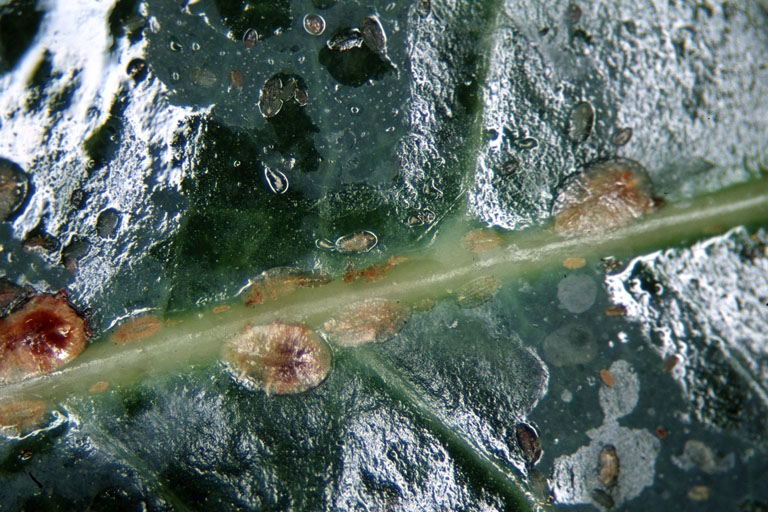
San Jose scale and white peach scale form gray or whitish crusty bumps 1 to 2 mm wide, glued to bark on scaffold branches and twigs. Don't move because they're locked in place under a waxy shield. A heavily encrusted branch looks dusted with ash. Crawlers (the mobile young stage) hatch in late spring.

What the damage looks like

Gray crusty patches on bark with a reddish ring around each bump where sap is being drained. Affected branches lose vigor and produce smaller leaves and fruit. A whole scaffold branch can decline and die back over 1 to 2 seasons. Heavy bark coverage signals the tree is in serious trouble.

How to get rid of them
Option 1

Dormant oil spray in late winter, before bud swell

1

Mix dormant horticultural oil (Bonide All Seasons, ~$15) at the dormant rate listed on the label.

2

Spray every twig, branch, and trunk surface to runoff on a calm day above 40 F, before buds break in late February or March.

3

The oil suffocates overwintering scale under the waxy shields. This single timing is the most effective scale spray of the year.

Option 2

Summer oil targeted at the crawler hatch in late May

Wrap a piece of double-sided sticky tape around an infested branch in early May. When tiny yellow specks appear stuck to the tape, the crawlers are hatching. Spray summer-rate horticultural oil within 7 days, while crawlers are still mobile and unprotected. Repeat once 10 days later to catch stragglers.

Option 3

Prune out the worst-encrusted branches in winter

Cut off any branch where bark is more than half covered in scale. Bag and trash the prunings. Removing the heaviest reservoirs gives the rest of the tree a fighting chance. Sterilize pruners with rubbing alcohol between cuts to avoid spreading bacterial canker through fresh wounds.

Dense colony of aphids clustered on a plant stem

Aphids

Damage
Medium
Removal
Easy
What it looks like

Small pear-shaped insects 1 to 3 mm long, pale green or black depending on the species. Cluster densely on new growth flushes in spring and again in late summer. Hide along the underside of young leaves and on the soft tips of new shoots.

What the damage looks like

New leaves curl, twist, and yellow as aphids drain sap from the soft tissue. A sticky shiny film coats leaves and the ground or pavement below the tree. Black sooty mold grows on the residue over a few weeks. Spring damage can deform new growth for the rest of the season but rarely kills the tree.

How to get rid of them
Option 1

Strong water blast on new growth, every 2 to 3 days for 2 weeks

Hold a hose nozzle 12 inches from the affected new growth and spray at high pressure. Most aphids dislodge and don't make it back to the canopy. Repeat every 2 to 3 days for 2 weeks. The fastest, cheapest fix and works without touching beneficials.

Option 2

Insecticidal soap spray on shoots, every 5 days for 2 weeks

Spray ready-to-use insecticidal soap (Safer Brand, ~$10) on the underside of leaves and along new shoot tips at dusk. The soap kills on contact and breaks down within hours, so it doesn't persist to harm pollinators. Reapply every 5 days for 2 weeks, focusing on the spring flush.

Option 3

Plant alyssum and yarrow under the canopy

Plant sweet alyssum, dill, or yarrow within 6 feet of the trunk. These attract ladybugs, lacewings, and parasitic wasps that feed on peach aphids. Established plantings keep aphid pressure low without sprays and last for years, which fits a long-lived fruit tree well.

Metallic green and copper Japanese beetle (Popillia japonica) on a lantana flower

Japanese beetles

Damage
Medium
Removal
Moderate
What it looks like

Half-inch metallic green beetles with copper-colored wing covers, often clustered in feeding groups on the upper canopy. Active on warm sunny days from late June through August in zones 4 to 9. Drop and play dead when the branch is shaken.

What the damage looks like

Lacy skeletonized leaves with all the soft tissue chewed away between the veins. Damage is most visible on the upper, sun-exposed canopy where beetles prefer to feed. A mature peach tree usually shrugs off summer skeletonizing, but young trees can lose enough leaves to slow the next year's fruit set.

How to get rid of them
Option 1

Hand-pick into soapy water at dawn, daily through July

1

Walk the tree at dawn while beetles are sluggish from cool overnight temperatures.

2

Hold a wide jar of soapy water under each cluster and tap the branch. Beetles drop straight in.

3

Empty the jar and repeat daily through the 4 to 6 week peak flight (typically late June through July).

Option 2

Neem oil spray on the upper canopy, every 7 days

Spray neem oil (Bonide Captain Jack's Neem Max, ~$12) on the upper canopy at dusk. Neem deters feeding and disrupts the beetle's ability to lay eggs. Reapply every 7 days during peak flight. Spray at dusk to spare bees and other pollinators that visit during the day.

Option 3

Skip beetle traps within 50 feet of the tree

Pheromone traps (Spectracide, ~$10) attract more beetles than they catch and concentrate damage near the trap. If a neighbor hangs traps, ask them to position the traps at the far end of their yard, not near your peach. The closer the trap, the worse the feeding damage on the tree.

Stay ahead of all of them

Four habits that keep peach tree pest pressure low through every stage of the year.
1

Trunk and root-flare check every 2 weeks, May through October

Peach tree borers strike low on the trunk where damage stays hidden. A 30-second look at the lower 12 inches catches gummy sap and sawdust within days of an attack, while a single larva is still pickable with a wire.

2

Dormant oil and orchard cleanup every January

Spray dormant horticultural oil before bud break to suffocate overwintering scale. Rake and bag every leaf, mummified fruit, and twig under the tree. Plum curculio and brown rot both overwinter in the leaf litter, and a clean orchard floor cuts next year's pressure dramatically.

3

Pheromone traps to time sprays in spring

Hang oriental fruit moth and peach tree borer pheromone traps by mid-March. The first big trap catch tells you adults are flying, so sprays land 7 to 10 days later when eggs hatch and larvae are vulnerable. Calendar spraying without traps wastes product and money.

4

Watch for peach leaf curl in early spring

Peach leaf curl is the number one disease of peach trees, not a pest, but it weakens the tree and makes pest damage worse. Spray a copper fungicide once in late fall after leaf drop and again before bud swell in February. Curled, puckered, reddish leaves in spring mean the spray window was missed.

Stay on top of plant care
Get seasonal reminders for watering and fertilizing, personalized for your plants.
Try Greg Free

About This Article

Kiersten Rankel M.S.
Botanical Data Lead at Greg · Plant Scientist
About the Author
Kiersten Rankel holds an M.S. in Ecology & Evolutionary Biology from Tulane University. A certified Louisiana Master Naturalist, she has over a decade of experience in science communication, with research spanning corals, cypress trees, marsh grasses, and more. At Greg, she curates species data and verifies care recommendations against botanical research.
See Kiersten Rankel's full background on LinkedIn.
Editorial Process
Pest identification and treatment guidance verified against Prunus persica field reports from Greg's botanical database, cross-referenced with university extension sources and published horticultural research.