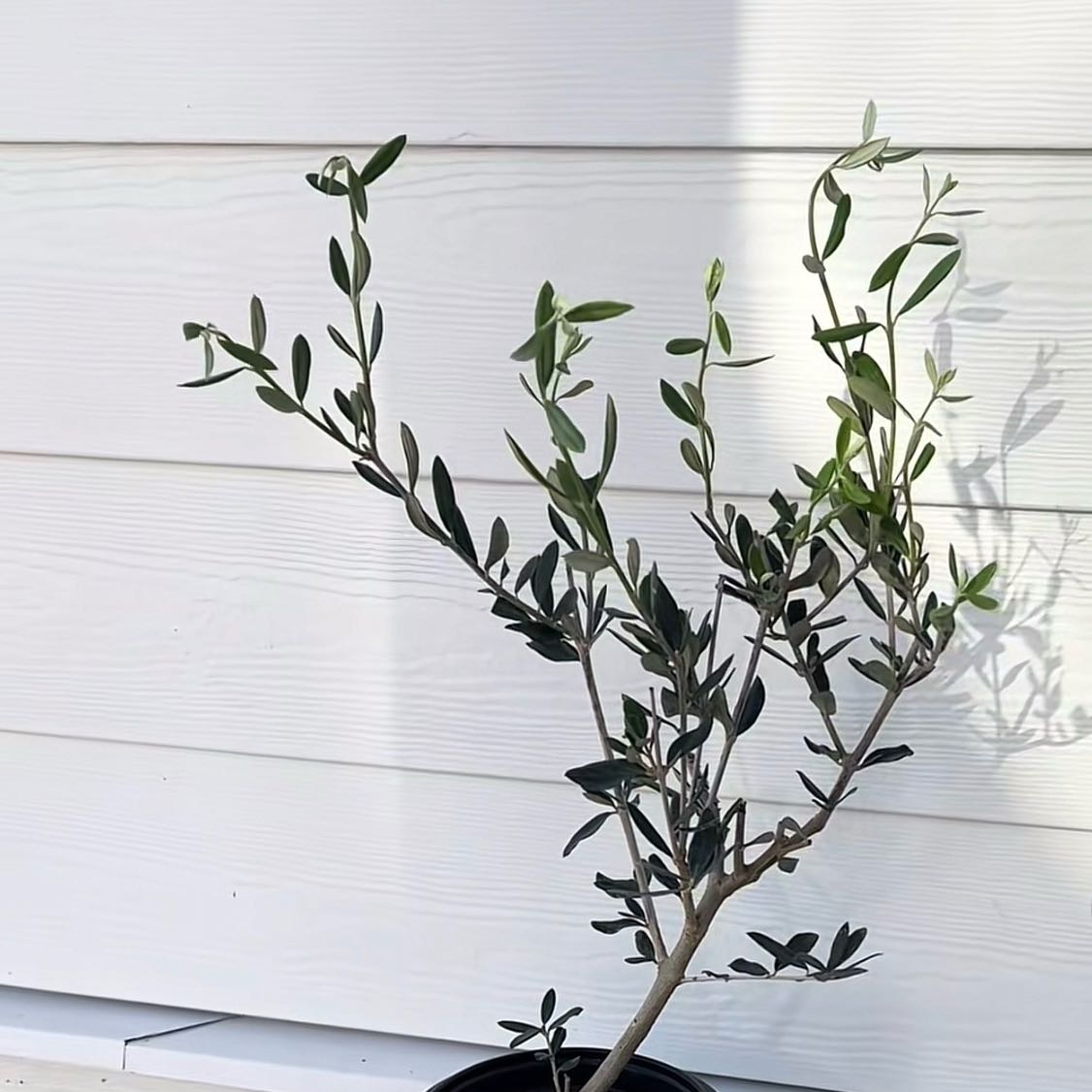
Olive Tree

What's Eating Your Olive Tree?

Olea europaea
Reviewed by Kiersten Rankel M.S.
Quick Answer

For olive trees, the most likely culprits are black scale (raised black domes with an H-shaped mark on twigs and branch undersides) and olive fruit fly (puncture marks on green olives that shrivel from the larvae inside). Olive scale appears as tiny grayish bumps along bark and silver leaves. Aphids cluster on spring growth flush, and spider mites flare in drought-stressed summer heat.

Stay on top of plant care
Get seasonal reminders for watering and fertilizing, personalized for your plants.
Try Greg Free

What does the damage look like?

Tap the closest match to jump straight to the fix.

Pests, ranked by impact

Brown soft scale (Coccus hesperidum) clustered on a plant stem

Scale insects

Damage
High
Removal
Hard
What it looks like

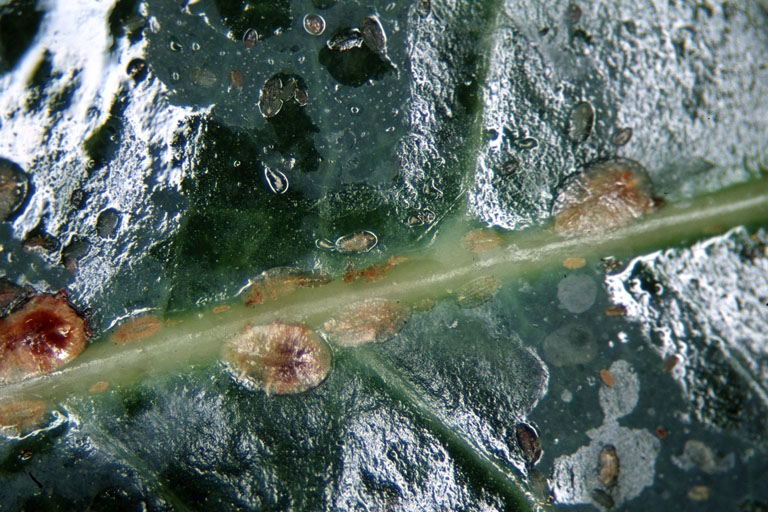
Raised dark brown to black dome-shaped insects 3 to 5 mm wide, glued to twigs and the underside of branches. The diagnostic feature is a clear H-shaped ridge on top of each dome. Often clustered along the gnarled woody stems and at the base of leaf clusters where airflow is poor.

What the damage looks like

Sticky honeydew on leaves and the ground below, then black sooty mold that dulls the silver-green canopy that growers prize. Yellowed leaf drop and weakened twigs in heavy infestations. The tree slowly thins out over a season or two if left alone.

How to get rid of them
Option 1

Horticultural oil spray, twice 14 days apart

Spray horticultural oil (Bonide All Seasons, ~$15) to thorough coverage on twigs and the underside of branches in late spring or early summer when crawlers are active. Repeat once 14 days later. The oil suffocates crawlers and softens the waxy adult shells. Spray in the cool of morning so the oil doesn't bake onto silver leaves in Mediterranean sun.

Option 2

Prune for airflow before treating

1

Thin the interior canopy in late winter so light and air reach every branch.

2

Cut out the densest clusters and any branches with heavy black dome buildup.

3

Open canopies dry the bark surface fast and let oil sprays actually reach scale colonies. Black scale loves still humid air.

Option 3

Encourage natural predators outdoors

Parasitic wasps (Metaphycus species) and lady beetles control black scale where insecticide use is minimal. Skip broad-spectrum sprays. Plant alyssum or yarrow within 6 feet of the tree to give beneficials nectar and shelter. Established plantings keep scale pressure low for years without ongoing intervention.

Small leaf weevil resting on a green leaf

Olive fruit fly

Damage
High
Removal
Moderate
What it looks like

A 4 to 5 mm dark fly with clear wings and a yellow patch on the back. Adults are rarely seen. Damage comes from larvae tunneling inside developing olives. A serious problem for fruit growers in California and the Mediterranean. Less of a concern if you grow the tree only for the silver foliage.

What the damage looks like

Small dark puncture marks on green olives in late summer. The fruit then shrivels, softens, or rots from the inside as the larva feeds. Cut a damaged olive open and you'll find a cream-colored maggot or a brown gallery. A heavy infestation destroys the entire harvest.

How to get rid of them
Option 1

Yellow sticky traps with GF-120 spinosad bait

1

Hang yellow sticky traps (Trappify, ~$10) at chest height around the canopy in early July to monitor adult flies.

2

Once you catch flies, spray GF-120 NF Naturalyte (~$30) bait droplets on the underside of branches every 7 days through harvest.

3

The bait attracts and kills adult flies before they lay eggs in fruit. You only need a small amount sprayed in droplets, not full coverage.

Option 2

Bag developing fruit clusters

For a small backyard tree, slip fine-mesh organza bags over fruit clusters in early July when olives are still pea-sized. Cinch the bag at the stem. Adult flies can't reach the fruit to lay eggs. Tedious for big trees but reliable for a single backyard specimen.

Option 3

Strip and bin fallen and infested fruit

Pick up every dropped olive and strip any visibly punctured fruit from the tree. Bag and bin them. Do not compost. Larvae pupate in soil under the tree, so leaving fallen fruit feeds next year's fly population. Sanitation alone cuts pressure dramatically over 2 to 3 seasons.

Dense colony of aphids clustered on a plant stem

Aphids

Damage
Medium
Removal
Easy
What it looks like

Tiny pear-shaped insects 1 to 3 mm long, in pale green or black. Cluster densely on the soft tips of spring growth flush, where new silver leaves are still tender. Spring is peak aphid season on olive trees. Mature woody growth is rarely affected.

What the damage looks like

New leaf tips curl, twist, and yellow as aphids drain sap. A sticky shiny film coats the new growth and the ground below. Black sooty mold grows on the residue over a few weeks. Damage stays cosmetic on established trees but stunts new shoots on young saplings.

How to get rid of them
Option 1

Strong water blast every 2 to 3 days for 2 weeks

Hold a hose nozzle 12 inches from the affected new growth and spray at high pressure. Most aphids dislodge and don't make it back. Repeat every 2 to 3 days for 2 weeks during the spring flush. Cheapest and fastest fix and avoids any spray on the tree.

Option 2

Insecticidal soap on new growth

Spray ready-to-use insecticidal soap (Safer, ~$10) on the underside of new leaves and on cluster tips at dusk. Soap kills on contact and dries off without residue. Repeat once a week for 3 weeks through the peak spring flush. Skip when bees are active mid-day.

Spider mite infestation on a stem with fine silk webbing and pale speckled leaf damage

Spider mites

Damage
Medium
Removal
Moderate
What it looks like

Almost invisible without a hand lens. Tiny yellow-green or red specks on the underside of the narrow lance-shaped leaves and where leaves meet the twig. A drought-stressed tree in hot dry summer weather is exactly the climate spider mites need to breed fast.

What the damage looks like

Tiny pale yellow dots scattered across the upper leaf surface, then a dull bronze cast that mutes the silver-green canopy. Fine webbing strung between leaf clusters in heavy infestations. Affected leaves drop. A well-watered tree shrugs off light pressure.

How to get rid of them
Option 1

Deep water the tree on a Mediterranean cycle

Soak the root zone deeply once every 2 to 3 weeks during summer (more frequent for trees in pots). Olive trees evolved for deep infrequent rain. A consistent soak knocks down drought stress, which is what spider mite populations feed on. Healthy trees rarely show heavy mite damage.

Option 2

Spray foliage with cool water in the morning

Mist the underside of leaves with a hose every 3 to 4 days during a dry summer heat wave. Spider mites can't reattach quickly when knocked off and the rinse humidity slows survivors. Olive leaves tolerate water on the surface as long as you spray in the morning so leaves dry before night.

Option 3

Neem oil at dusk, every 5 days for 3 rounds

1

Mix 2 tablespoons cold-pressed neem oil and 1 teaspoon dish soap per gallon of water.

2

Spray the underside of every leaf and into leaf clusters at dusk so the oil doesn't bake on in midday sun.

3

Repeat every 5 days for 3 rounds. That covers the full egg-to-adult mite life cycle.

Stay ahead of all of them

Four habits that keep olive tree pests rare and protect both the silver canopy and the fruit harvest.
1

Prune for airflow in late winter

Black scale and olive scale both love still humid pockets in dense canopies. A thinning cut every February opens light and air to every branch and lets future oil sprays actually reach the scale. Open canopies also reduce sooty mold buildup.

2

Monitor green olives in late summer

Walk the tree weekly from late July through harvest and check 10 to 20 olives for tiny puncture marks. Catching the first olive fruit fly damage means you can start GF-120 bait or bag fruit before the population explodes. Late detection means a lost harvest.

3

Water deeply but infrequently

Olive trees evolved for the Mediterranean cycle of soaking rain followed by dry weeks. A deep soak every 2 to 3 weeks keeps the tree drought-relaxed and resistant to spider mites. Frequent shallow water stresses the tree the same way drought does.

4

Strip fallen fruit and clean under the tree

Olive fruit fly larvae drop into the soil under the canopy to pupate. Picking up fallen olives and pruning out punctured fruit before they fall breaks the cycle. Two clean seasons in a row drops fly pressure dramatically for the next year.

Stay on top of plant care
Get seasonal reminders for watering and fertilizing, personalized for your plants.
Try Greg Free

About This Article

Kiersten Rankel M.S.
Botanical Data Lead at Greg · Plant Scientist
About the Author
Kiersten Rankel holds an M.S. in Ecology & Evolutionary Biology from Tulane University. A certified Louisiana Master Naturalist, she has over a decade of experience in science communication, with research spanning corals, cypress trees, marsh grasses, and more. At Greg, she curates species data and verifies care recommendations against botanical research.
See Kiersten Rankel's full background on LinkedIn.
Editorial Process
Pest identification and treatment guidance verified against Olea europaea field reports from Greg's botanical database, cross-referenced with university extension sources and published horticultural research.