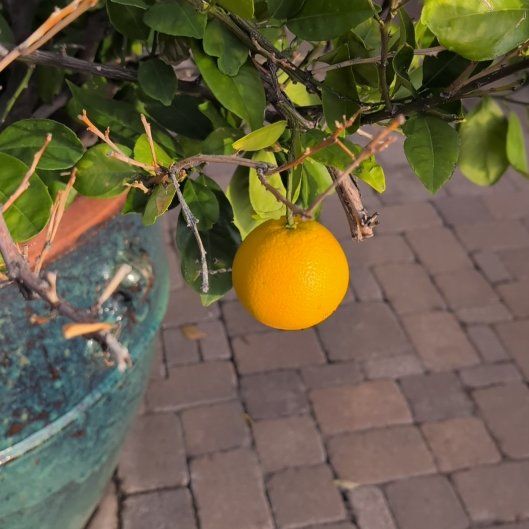
Meyer Lemon Tree

What's Eating Your Meyer Lemon Tree?

Citrus x limon 'Meyer'
Reviewed by Kiersten Rankel M.S.
Quick Answer

For Meyer lemon, the most likely culprits are scale insects (brown bumps with sticky residue on stems and leaf undersides) and spider mites (pale specks and webs, especially indoors in winter heat). Aphids cluster densely on spring growth flushes. Mealybugs hide as cottony white tufts deep in leaf-petiole joints, often with sooty mold below.

Stay on top of plant care
Get seasonal reminders for watering and fertilizing, personalized for your plants.
Try Greg Free

What does the damage look like?

Tap the closest match to jump straight to the fix.

Pests, ranked by impact

Brown soft scale (Coccus hesperidum) clustered on a plant stem

Scale insects

Damage
High
Removal
Hard
What it looks like

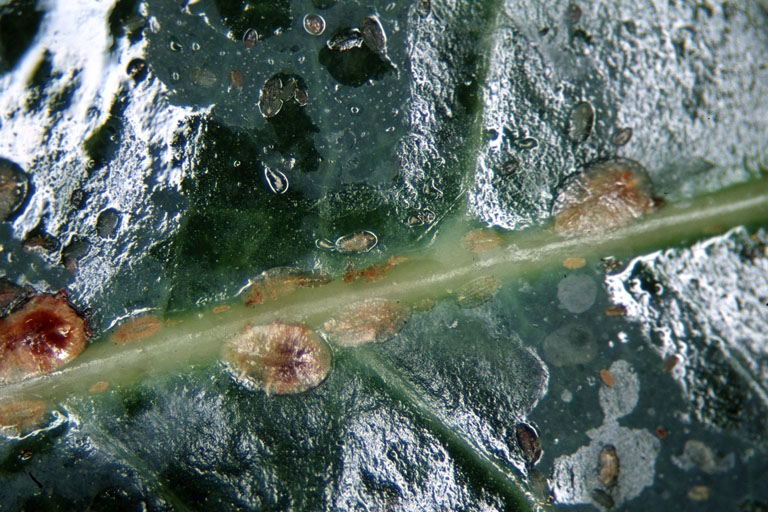
Hard or soft brown bumps stuck to leaf undersides, stems, and along the central vein, 1 to 4 mm wide. Look like tiny barnacles. Don't move because they're glued in place. Often appear with a glossy sticky film and black sooty mold on leaves below.

What the damage looks like

A sticky shiny film on leaves and the floor or pot rim below. Black sooty mold grows on the residue over weeks. Yellowed leaves around each cluster. Heavy infestations cause leaf drop and reduce the tree's fruit set for a full season.

How to get rid of them
Option 1

Scrub and oil weekly for 4 weeks

1

Wet the affected stems and leaf surfaces with horticultural oil (Bonide All Seasons, ~$15).

2

Scrub gently with a soft toothbrush to dislodge bumps and break the waxy seal.

3

Spray a final coat of oil and leave on. Repeat weekly for 4 weeks to catch newly hatched crawlers.

Option 2

Imidacloprid soil drench for indoor non-fruiting trees

Drench the soil with imidacloprid granules (Bonide Annual Tree & Shrub, ~$30). The systemic moves up through the tree and kills scale through the sap. Skip this if your tree is bearing fruit you plan to eat or if it's flowering for pollinators. Use only on indoor or non-bearing trees.

Option 3

Isolate and inspect new growth every 2 weeks

Move the tree at least 6 feet from other citrus or houseplants. Crawlers (the mobile young stage) spread to adjacent leaves and other plants. A 30-second inspection of new growth every 2 weeks catches reinfestation early.

Spider mite infestation on a stem with fine silk webbing and pale speckled leaf damage

Spider mites

Damage
High
Removal
Moderate
What it looks like

Almost invisible without a hand lens. Yellow-green to red-orange specks running along the underside of leaves and where leaf petioles meet the stem. Indoor heated air through winter dries citrus leaves and triggers a population boom.

What the damage looks like

Tiny pale yellow dots along the central vein, then bronze patches that spread across the upper leaf surface. Fine webbing strung between the petiole and stem in heavy infestations. Affected leaves drop, weakening the tree's fruit set the next season.

How to get rid of them
Option 1

Shower the foliage weekly for 3 weeks

Move the tree to the shower or take it outside on a warm day. Spray cool water on the underside of every leaf for 30 seconds. Mites can't reattach quickly when knocked off, and the rinse humidity slows survivors. Citrus tolerates a hard rinse well. Repeat weekly for 3 weeks.

Option 2

Neem oil at lights-out, every 5 days for 3 rounds

1

Mix 2 tablespoons cold-pressed neem oil and 1 teaspoon dish soap per gallon of water.

2

Spray the underside of every leaf at lights-out, paying attention to the petiole-stem junction where mites cluster.

3

Repeat every 5 days for 3 rounds. That covers the full egg-to-adult life cycle.

Option 3

Raise winter humidity above 50%

Run a humidifier near the tree for 50 to 60% relative humidity through winter. Citrus evolved in subtropical climates and wants the moisture anyway. Hot dry indoor heating is exactly the climate spider mites need to breed fast.

Cluster of long-tailed mealybugs (Pseudococcus longispinus) showing the white cottony wax on a leaf

Mealybugs

Damage
High
Removal
Hard
What it looks like

Soft white insects covered in cottony fluff, 2 to 4 mm long. Cluster in leaf-petiole joints, where new leaves emerge from the central crown, and along the underside of broad leaves. Slow-moving and often missed because the cottony masses look like white debris.

What the damage looks like

White cottony tufts visible in leaf joints and stem nodes. A sticky shiny film on leaves below the cluster, often with sooty mold. New leaves emerge stunted or yellowed. Severe infestations cause flower drop and reduce fruit set for the year.

How to get rid of them
Option 1

Cotton swab dipped in 70% isopropyl alcohol

Dab every visible mealybug with a cotton swab dipped in 70% alcohol. The alcohol melts the waxy coating and kills on contact. Pull leaves apart gently to reach colonies in the central crown and at leaf-petiole joints. Repeat every 3 days for 3 weeks to catch newly hatched eggs.

Option 2

Insecticidal soap and neem oil rotation, 4 weeks

Spray ready-to-use insecticidal soap on the underside of leaves and into leaf joints at lights-out. Alternate weekly with neem oil. Continue for 4 weeks because eggs hatch in protected pockets over time and need ongoing pressure.

Option 3

Isolate from other citrus and houseplants

Move the tree at least 6 feet from other plants. Mealybugs spread by crawling. Wipe nearby pots, the windowsill, and any tools that touched the infested tree.

Dense colony of aphids clustered on a plant stem

Aphids

Damage
Medium
Removal
Easy
What it looks like

Tiny pear-shaped insects 1 to 3 mm long, in shades of green, brown, or black. Cluster densely on spring flush new growth and on the soft underside of young leaves. Spring is peak aphid season for citrus.

What the damage looks like

New leaves curl, twist, and yellow as aphids drain sap. A sticky shiny film coats leaves and below the affected branch. Black sooty mold grows on the residue over a few weeks. Heavy spring infestations weaken bloom and fruit set for the year.

How to get rid of them
Option 1

Strong water blast every 2 to 3 days for 2 weeks

Hold a hose nozzle 12 inches from the affected new growth and spray at high pressure. Most aphids dislodge and don't make it back to the tree. Repeat every 2 to 3 days for 2 weeks. The fastest, cheapest fix and works without chemicals.

Option 2

Neem oil spray at dusk, every 5 days for 3 rounds

1

Mix 2 tablespoons cold-pressed neem oil with 1 teaspoon dish soap per gallon of water.

2

Spray the underside of every leaf and along new growth tips at dusk.

3

Repeat every 5 days for 3 rounds. Covers the egg-to-adult cycle.

Option 3

Companion plant alyssum or yarrow outdoors

For outdoor trees, plant alyssum, dill, or yarrow within 3 feet of the tree. These attract ladybugs and lacewings, which feed on aphids. Established plantings keep aphid pressure low without sprays and last for years.

Common myth

Spray malathion to kill aphids fast.

Malathion kills aphids but also kills the bees and pollinators Meyer lemon needs for fruit set. Citrus aphids quickly evolve resistance to broad-spectrum sprays. Stick with water blasts or neem oil that target aphids without wiping out the beneficials.

Distinctive squiggly silvery serpentine mines from leafminer larvae on a leaf

Leafminers

Damage
Low
Removal
Hard
What it looks like

The larva of a tiny silvery moth, 4 mm long. The adult moths are rarely seen. Damage comes from the larva tunneling between the upper and lower leaf surfaces of new growth. Outdoor problem in zones 9 to 11, especially in late summer.

What the damage looks like

Distinctive squiggly white or silvery trails on new leaves. The trails widen as the larva grows. Affected leaves curl, distort, and stay malformed for life. Damage doesn't kill the tree but reduces vigor and looks alarming on young trees.

How to get rid of them
Option 1

Prune affected new growth as soon as you see trails

Cut off and discard infested new shoots when trails first appear. The larva is inside the leaf and continues feeding until it pupates. Removing the affected growth removes the larva. Bag and dispose. Do not compost.

Option 2

Spinosad spray on new growth, every 7 days

1

Spinosad (Captain Jack's Deadbug Brew or Monterey Garden Insect Spray, ~$12 to $15) soaks into the leaf surface enough to reach miners.

2

Spray every flush of new growth at dusk, top and bottom of every young leaf.

3

Repeat every 7 days through the summer flush season (typically August to September in zones 9 to 11).

Option 3

Time fertilizer to discourage late-summer flushes

Citrus leafminer attacks new growth, not mature leaves. Avoid heavy nitrogen feeding in late summer when the moth population peaks (August to September). Use a balanced citrus fertilizer in early spring instead. The early flush hardens off before the moths arrive.

Stay ahead of all of them

Four habits that keep Meyer lemon pests rare and easy to catch.
1

Joint and underleaf check, every Sunday

Mealybugs, scale, and spider mites all hide where the leaf petiole meets the stem and on the underside of leaves. A weekly 30-second scan catches colonies while they're still local to one branch.

2

Quarantine new citrus and houseplants for 2 weeks

Most pests come home from the nursery on the plant you bought. Two weeks of isolation away from your other citrus catches mealybugs, scale, and mites before they spread to an established tree.

3

Wipe leaves with a damp cloth monthly

Meyer lemon leaves are smooth and broad and clean up well. The wipe catches dust, early spider mites, and scale crawlers before they multiply. A clean tree also photosynthesizes better and sets more fruit.

4

Track new growth flushes through the year

Most pests target the soft new growth. Watch spring flushes for aphid clusters. Watch late-summer outdoor flushes for citrus leafminer trails. Watch winter indoor leaves for spider mite specks. Spotting pressure on the flush keeps it small.

Stay on top of plant care
Get seasonal reminders for watering and fertilizing, personalized for your plants.
Try Greg Free

About This Article

Kiersten Rankel M.S.
Botanical Data Lead at Greg · Plant Scientist
About the Author
Kiersten Rankel holds an M.S. in Ecology & Evolutionary Biology from Tulane University. A certified Louisiana Master Naturalist, she has over a decade of experience in science communication, with research spanning corals, cypress trees, marsh grasses, and more. At Greg, she curates species data and verifies care recommendations against botanical research.
See Kiersten Rankel's full background on LinkedIn.
Editorial Process
Pest identification and treatment guidance verified against Citrus x limon 'Meyer' field reports from Greg's botanical database, cross-referenced with university extension sources and published horticultural research.