

Spider mites
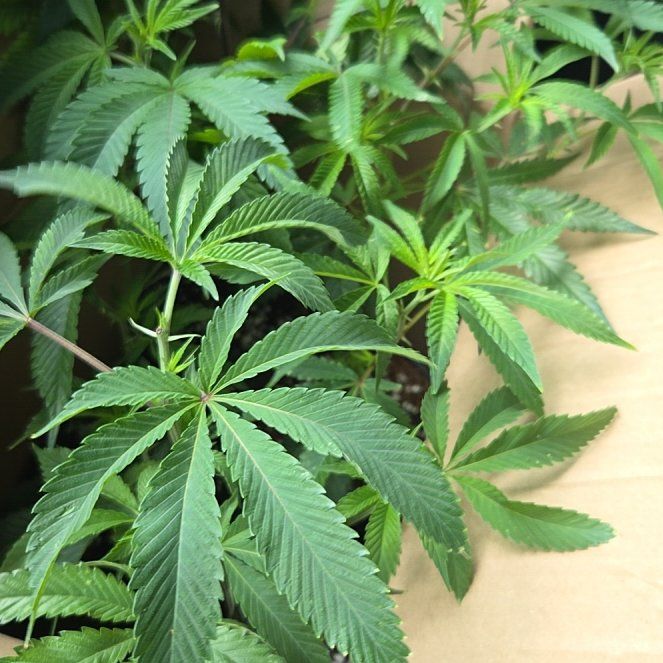
Almost invisible without a hand lens. Pale yellow to red specks running along the underside of the serrated palmately compound leaves. Cluster where leaflets meet the petiole and along the central vein. Hot dry indoor grow rooms with low humidity and constant airflow are exactly the climate they breed fastest in.
Tiny pale speckled dots across the upper leaf surface, then bronze patches that spread leaflet by leaflet. Fine webbing strung between leaflets and across bud sites in heavy infestations. Webbing on developing flowers means contaminated harvest. Populations explode in the warm dry conditions of a flowering room.
Release predator mites at first sign of tiny pale dots
Order Phytoseiulus persimilis sachets from a beneficial insect supplier ($25 to $40 per release).
Hang sachets near the canopy, one per plant or every 4 square feet, with the lights on so the predators disperse.
Repeat the release every 2 weeks until the spider mite population crashes. Safe to use right through flowering and harvest.
Leaf shower in vegetative stage only
In the vegetative stage, move plants to a shower or take them outside on a warm day. Spray cool water on the underside of every fan leaf for 30 seconds to knock mites off. Never do this once flowers form because trapped water in the buds causes bud rot. Repeat weekly through veg only.
Prune heavily infested fan leaves and bag them
Cut off any fan leaf showing heavy tiny pale dots, webbing, or bronzing. Bag the trimmings sealed and put them straight in outdoor trash. Removes a huge slice of the breeding population in one pass. Combine with predator releases for a one-two punch.
Spray neem oil right up to harvest.
Neem oil within 4 weeks of harvest leaves residues that end up in the smoked or consumed product, with a harsh taste and unknown safety profile. Stop all sprays at least 4 weeks before harvest. Use predator mites and pruning instead during flowering.


