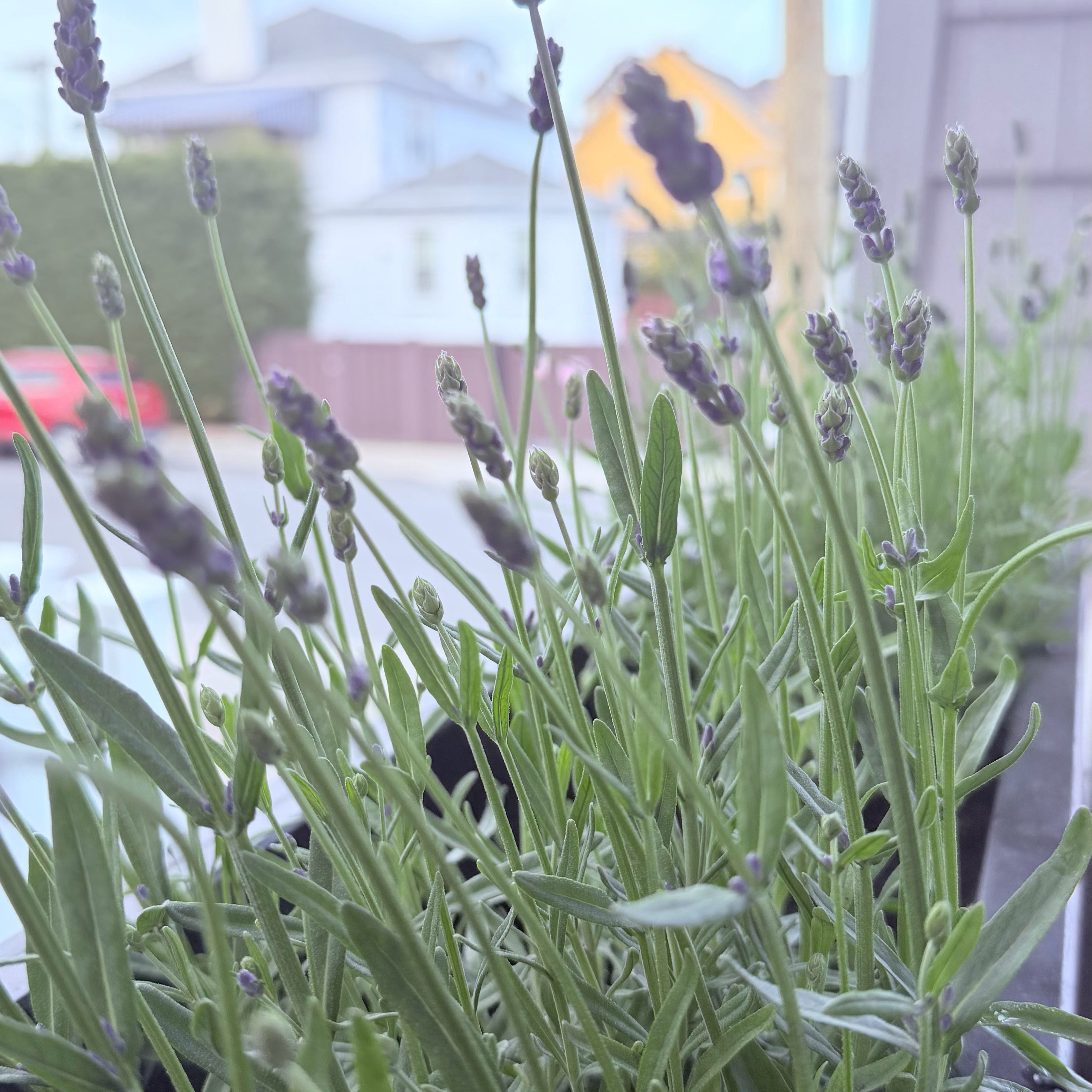
Lavender

What's Eating Your Lavender?

Lavandula spp.
Reviewed by Kiersten Rankel M.S.
Quick Answer

Lavender's strong oils repel most pests, so the list is short. The most likely culprits are spider mites on heat-stressed container plants in dry summer weather, aphid clusters on flower spikes during bloom, and spittlebugs that leave the harmless but startling foam masses on woody stems. Deer and rabbits leave lavender alone.

Stay on top of plant care
Get seasonal reminders for watering and fertilizing, personalized for your plants.
Try Greg Free

What does the damage look like?

Tap the closest match to jump straight to the fix.

Pests, ranked by impact

Spider mite infestation on a stem with fine silk webbing and pale speckled leaf damage

Spider mites

Damage
High
Removal
Moderate
What it looks like

Almost invisible without a hand lens. Pale yellow to red-orange specks on the underside of the silvery needle-like leaves. Container lavender baking in hot dry afternoon sun is the classic trigger. In-ground lavender is rarely affected.

What the damage looks like

Silver-grey foliage turns dull and dusty, then bronzes and crisps from the tips inward. Fine webbing strung between the woody stems and along leaf clusters in heavy infestations. Drought-stressed plants defoliate fastest. The plant can recover but often loses its compact shape for the season.

How to get rid of them
Option 1

Hose down the foliage every 3 days for 2 weeks

Take container lavender outside or hold a hose nozzle 12 inches from in-ground plants. Spray cool water through the foliage and along the woody stems for 30 seconds. Mites can't reattach quickly when knocked off. Lavender's oily leaves shed water well and tolerate the rinse. Repeat every 3 days for 2 weeks. Water in the morning so foliage dries fast.

Option 2

Move container lavender out of afternoon heat

Spider mites breed fastest on heat-stressed plants. Move pots into morning sun with afternoon shade for the rest of summer. Check soil moisture every 2 to 3 days because terracotta dries out fast and a wilting plant draws mites in.

Option 3

Neem oil rinse, every 5 days for 3 rounds

1

Mix 2 tablespoons cold-pressed neem oil and 1 teaspoon dish soap per gallon of water.

2

Spray the underside of the foliage and into the woody stem joints in early evening, never in full sun on lavender's oily leaves.

3

Repeat every 5 days for 3 rounds to cover the egg-to-adult cycle.

Dense colony of aphids clustered on a plant stem

Aphids

Damage
Medium
Removal
Easy
What it looks like

Tiny pear-shaped insects 1 to 3 mm long, in shades of green or pale yellow. Cluster densely on the flower spikes during bloom and on the soft new growth tips. Lavender's woody mature stems and oily leaves are mostly aphid-proof, so colonies pile onto the only soft tissue available.

What the damage looks like

Visible insects packed along flower stems and unopened buds. Flowers open distorted or fail to open at all. A sticky shiny film coats the bracts and lower foliage, and ants often appear to farm the aphids. Cut flowers from infested spikes are unusable for culinary or sachet use.

How to get rid of them
Option 1

Strong water blast every 2 to 3 days for 1 week

Hold a hose nozzle 12 inches from each affected flower spike and spray at high pressure. Most aphids dislodge and don't make it back. Repeat every 2 to 3 days for a week. Lavender's woody stems take the pressure without breaking. Fastest fix and keeps the bloom clean for harvest.

Option 2

Cut affected spikes and harvest early

If the bloom is far enough along to use, snip every infested flower spike at the woody stem just below the green growth. Bag and discard. Lavender often pushes a second flush of spikes after the cut, and the new growth comes in clean. Don't compost infested cuttings.

Option 3

Insecticidal soap on flower spikes only, in early evening

Spray ready-to-use insecticidal soap (Safer Brand, ~$10) directly on the affected flower spikes in early evening. Avoid drenching the silvery foliage in midday sun because the oily leaf coating plus soap plus heat can scorch. Skip the spray once flowers fully open if you want bees on the bloom.

White spittlebug foam mass on a plant stem

Spittlebugs

Damage
Low
Removal
Easy
What it looks like

The nymph of a small jumping insect, hidden inside the foam mass it produces. The nymph itself is a pale green soft-bodied insect 4 to 6 mm long. Lavender is one of the iconic host plants, and the foam is highly visible against silvery foliage in late spring.

What the damage looks like

Bubble-bath-like white foam masses stuck to woody stems and the base of flower spikes, usually one per stem. The foam looks alarming but the plant is fine. Nymphs feed on sap inside the foam and rarely cause visible damage. No yellowing, no distortion, no flower loss.

How to get rid of them
Option 1

Hose off the foam masses

Aim a hose at each foam mass and rinse it away. The exposed nymph drops to the ground and rarely climbs back. One pass usually clears the plant for the rest of the season because spittlebugs have one generation per year. No spray needed. Lavender's woody stems and oily leaves shrug off the rinse.

Option 2

Leave them alone if you can stand the look

Spittlebugs do not meaningfully damage established lavender. The foam dries and disappears within 2 to 3 weeks as nymphs mature into adults and disperse. Skipping treatment costs the plant nothing and the cycle ends on its own. Worth knowing because the foam is the most common pest question on lavender by far.

Stay ahead of all of them

Four habits that keep lavender's already-low pest pressure even lower.
1

Flower-spike check at first bloom

Aphids show up as flower spikes lengthen. A 30-second look down each spike when buds first show color catches colonies before they wreck the harvest. Lavender's woody stems stay clean, so any clustered insects you see will be on the spikes.

2

Plant in full sun with sharp drainage

Lavender hates wet roots. Plant in gritty soil on a slope, raised bed, or in a terracotta pot with at least half its volume in coarse sand or pumice. Dry roots and good airflow keep spider mites and root-rot fungus gnats away. This is the single biggest lever for pest-free lavender.

3

Water at the base, never overhead

Lavender's silvery oily leaves are built to repel water and reflect heat. Overhead watering soaks the foliage, encourages fungal issues on the woody stems, and signals stressed plants to spider mites. Drip irrigation or a watering can at soil level keeps the canopy dry and the plant happy.

4

Hard prune by one-third every spring

Cut the woody mound back by a third just as new growth begins. The cut keeps the plant compact, opens airflow through the canopy, and removes any overwintering aphid eggs hiding on old flower stems. Never cut into bare wood because lavender rarely regrows from old stems.

Stay on top of plant care
Get seasonal reminders for watering and fertilizing, personalized for your plants.
Try Greg Free

About This Article

Kiersten Rankel M.S.
Botanical Data Lead at Greg · Plant Scientist
About the Author
Kiersten Rankel holds an M.S. in Ecology & Evolutionary Biology from Tulane University. A certified Louisiana Master Naturalist, she has over a decade of experience in science communication, with research spanning corals, cypress trees, marsh grasses, and more. At Greg, she curates species data and verifies care recommendations against botanical research.
See Kiersten Rankel's full background on LinkedIn.
Editorial Process
Pest identification and treatment guidance verified against Lavandula spp. field reports from Greg's botanical database, cross-referenced with university extension sources and published horticultural research.