

Lantana lace bug
Tiny lace-winged true bugs about 3 to 4 mm long with clear, intricately patterned wings. Hide on the underside of lantana's rough sandpapery leaves. Leave behind dark varnish-like droppings on the leaf underside, which is the most reliable confirming clue.
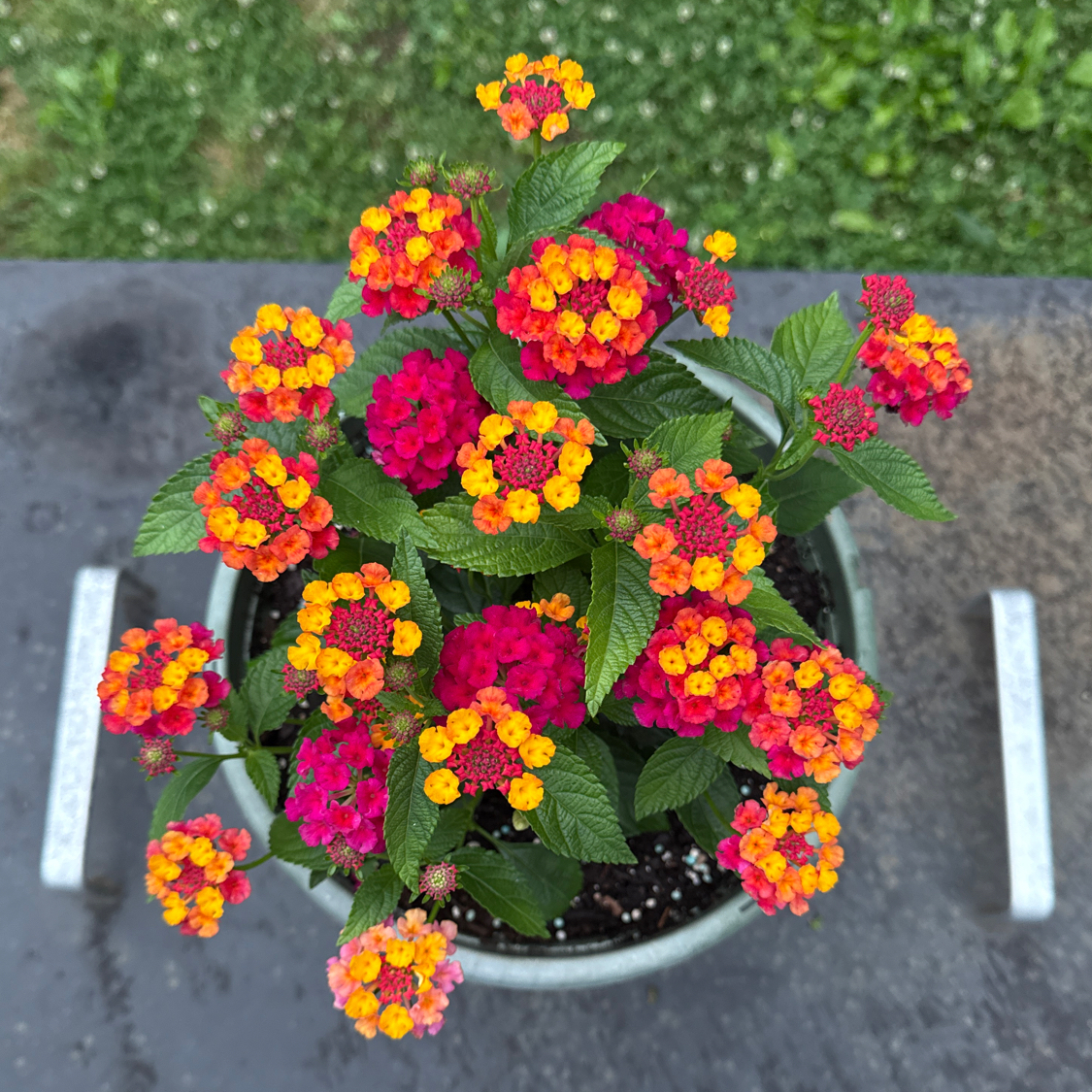
Pale yellow dots on the upper leaf surface, then a bronze cast across whole leaves. The opposite oval leaves go dull and crispy. Heavy infestations defoliate the spreading shrub mid-season and shut down the flat-topped flower clusters. Dark droppings on the underside confirm lace bugs over mites.
Hose-blast leaf undersides every 3 days for 2 weeks
Aim a strong hose stream at the underside of every leaf, paying close attention to the lower and inner foliage where lace bugs hide. The blast knocks adults and nymphs off, and most don't make it back. Repeat every 3 days for 2 weeks. Cheapest fix and safe for the butterflies the lantana attracts.
Insecticidal soap on leaf undersides, every 5 days for 3 rounds
Use ready-to-use insecticidal soap (Safer Brand, ~$10) and spray at dusk after pollinators have left.
Coat the underside of every leaf thoroughly. Soap only kills on contact, so missed spots survive.
Repeat every 5 days for 3 rounds to catch newly hatched nymphs.
Skip broad-spectrum sprays that hit butterflies
Lantana is a butterfly magnet. Pyrethroids and carbaryl wipe out the pollinators you planted lantana for and rarely outperform soap on lace bugs anyway. Stay with water blasts and soap on the leaf undersides where lace bugs actually feed.


