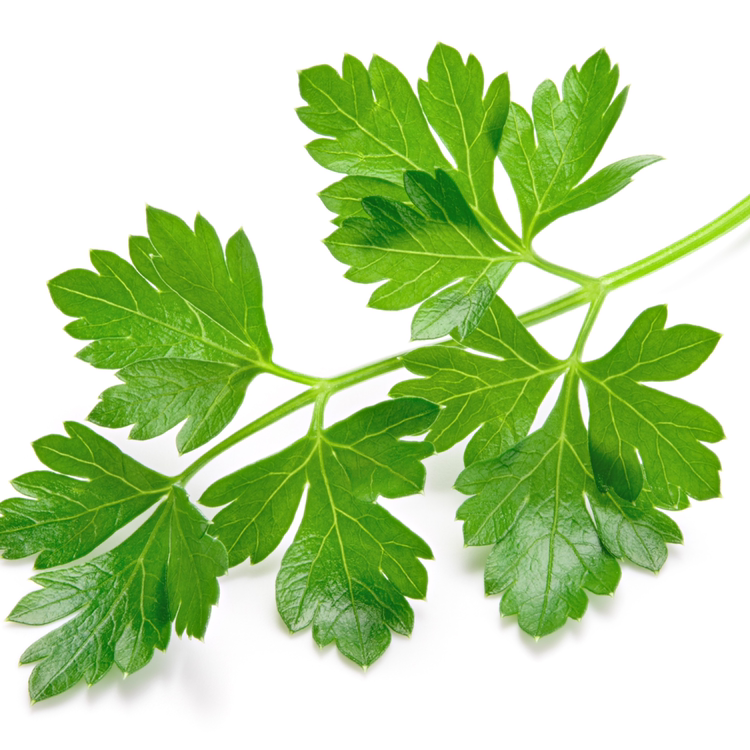
Italian Parsley

What's Eating Your Italian Parsley?

Petroselinum crispum
Reviewed by Kiersten Rankel M.S.
Quick Answer

For Italian parsley, the most likely culprits are striking green-and-black-banded swallowtail caterpillars (parsley worms) chewing flat leaves down to bare stems, and aphid clusters on tender new growth and second-year flowering umbels. Spider mites appear in hot dry summers or on stressed indoor parsley, and slugs chew lower leaves and seedlings overnight.

Stay on top of plant care
Get seasonal reminders for watering and fertilizing, personalized for your plants.
Try Greg Free

What does the damage look like?

Tap the closest match to jump straight to the fix.

Pests, ranked by impact

Macro photo of a caterpillar resting on a green leaf

Parsley worm (swallowtail caterpillar)

Damage
Medium
Removal
Easy
What it looks like

Striking 2-inch caterpillars with bright green bodies, black bands, and yellow dots running along each segment. The larva of the Eastern black swallowtail butterfly. Drawn to parsley, dill, fennel, and carrot tops because they share the same Apiaceae family oils.

What the damage looks like

Whole flat leaves and finely divided leaflets stripped down to bare stems, often working from the outside of the plant inward. One or two caterpillars can clear a small parsley clump in 2 to 3 days. No webbing, no holes in leaves, just missing foliage.

How to get rid of them
Option 1

Hand-pick and relocate to a host patch

1

Walk the parsley bed in the morning. Look on the underside of flat leaves and along stems.

2

Pick caterpillars off by hand. They don't bite or sting.

3

Move them to a dedicated host patch of extra parsley, dill, or fennel grown specifically for the butterflies. Most gardeners welcome the trade because the adults are gorgeous pollinators.

Option 2

Plant a decoy dill or fennel patch nearby

Sow a small bed of dill, fennel, or extra parsley 6 to 10 feet from your harvest plants. Adult swallowtails lay eggs on whichever Apiaceae plant they find first. The decoy patch absorbs most of the caterpillars while your eating parsley stays intact.

Option 3

Succession-plant parsley every 4 to 6 weeks

Start a fresh tray of Italian parsley every 4 to 6 weeks through the season. Pressure spreads across multiple clumps so no single plant gets stripped. You also harvest younger, more tender leaves throughout the year.

Common myth

Spray Bt or insecticide on swallowtail caterpillars to protect your parsley.

Bt (Bacillus thuringiensis) kills swallowtail caterpillars the same way it kills cabbage worms. Eastern black swallowtails are native pollinators with declining populations and the parsley worm IS the butterfly. Hand-pick to a host patch instead. The trade of a few flat leaves for breeding pollinators is worth it on a $2 packet of seed.

Dense colony of aphids clustered on a plant stem

Aphids

Damage
Medium
Removal
Easy
What it looks like

Tiny pear-shaped insects 1 to 3 mm long, in shades of green, gray, or black. Cluster on tender new growth at the center of the parsley clump and dense on the flowering umbels of second-year plants going to seed.

What the damage looks like

New flat leaves curl and yellow as aphids drain sap. A sticky shiny film coats lower leaves and the soil below. Heavy infestations weaken flavor and slow new leaf production. On bolting second-year plants, aphids swarm the umbels and reduce seed set.

How to get rid of them
Option 1

Strong water blast every 2 to 3 days for 2 weeks

Hold a hose nozzle 12 inches from the plant and spray the new growth and underside of flat leaves at high pressure. Most aphids dislodge and don't make it back. Repeat every 2 to 3 days for 2 weeks. Parsley shrugs off a hard rinse and the soaking actually freshens the foliage.

Option 2

Insecticidal soap on new growth, weekly for 3 weeks

Spray ready-to-use insecticidal soap (Safer Insect Killing Soap, ~$10) on the underside of leaves and into the center of the clump at dusk. Wait 2 days before harvesting. Repeat weekly for 3 weeks to catch new hatches. Safe on edibles when used as labeled.

Option 3

Companion plant alyssum or yarrow nearby

Plant alyssum, dill, or yarrow within 3 feet of the parsley bed. These attract ladybugs, lacewings, and parasitic wasps that feed on aphids. Established plantings keep aphid pressure low without sprays and protect the bolting umbels in year two.

Spider mite infestation on a stem with fine silk webbing and pale speckled leaf damage

Spider mites

Damage
Medium
Removal
Moderate
What it looks like

Almost invisible without a hand lens. Yellow-green to red specks on the underside of flat leaves and along the leaf-petiole junction. Hot dry summer outdoor parsley and stressed windowsill parsley in winter heat are the typical hot zones.

What the damage looks like

Tiny pale yellow speckled dots across the upper leaf surface, then bronze patches that spread and dull the bright green. Fine webbing strung between leaflets and along stems in heavy infestations. Affected leaves taste off and lose the fresh parsley flavor.

How to get rid of them
Option 1

Shower the foliage twice a week for 2 weeks

Take potted parsley to the sink or shower and spray cool water on the underside of every leaf for 30 seconds. For garden parsley, use a hose with a fine spray. Mites can't reattach quickly when knocked off and the rinse humidity slows survivors. Twice a week for 2 weeks usually clears a population.

Option 2

Neem oil at dusk, every 5 days for 3 rounds

1

Mix 2 tablespoons cold-pressed neem oil and 1 teaspoon dish soap per gallon of water.

2

Spray the underside of every flat leaf and along the leaf-petiole junction at dusk.

3

Repeat every 5 days for 3 rounds. Wait 2 days after spraying before harvesting and rinse leaves well.

Option 3

Cool the bed and raise humidity

Mulch the parsley bed 2 inches deep with straw or shredded leaves to cool the root zone in summer. For indoor parsley, move the pot away from heating vents and mist the foliage every other day. Spider mites thrive in the hot dry conditions parsley itself dislikes.

Large red-brown slug (Arion rufus) crawling on a rhubarb leaf

Slugs

Damage
Medium
Removal
Easy
What it looks like

Soft brown or gray mollusks 1 to 3 inches long. Hide under mulch, pot rims, and garden debris by day. Feed at night, especially after rain or evening watering. A serious threat to young parsley seedlings and the lower flat leaves of established plants.

What the damage looks like

Ragged irregular holes chewed in the flat leaves, working from the outer edges. Silvery dried slime trails on stems, soil, and pot rims at sunrise confirm slugs over caterpillars. Whole young seedlings can disappear overnight.

How to get rid of them
Option 1

Iron phosphate bait around the bed at dusk

Sprinkle iron phosphate slug bait (Sluggo or Monterey Sluggo, ~$15) lightly around the parsley bed at dusk after watering. Slugs eat it and stop feeding within hours. Safe around pets and edibles when used as labeled. One application usually lasts 2 weeks.

Option 2

Beer trap and morning hand-pick

1

Sink a shallow tuna can or yogurt cup level with the soil 3 feet from the parsley.

2

Fill with cheap beer at dusk. Slugs are drawn to the yeast, fall in, and drown.

3

Empty and refill every morning. Hand-pick any slugs spotted on the parsley itself by lifting leaves and checking pot rims.

Option 3

Inspect from below at sunrise

Walk the parsley bed at first light with a flashlight. Lift the lower flat leaves and check the soil line, mulch edges, and underside of pot rims. Pick any slugs you find into a jar of soapy water. Catching one breeding adult prevents dozens of seedling losses next month.

Stay ahead of all of them

Four habits that keep Italian parsley pests rare and easy to spot.
1

Succession-plant parsley every 4 to 6 weeks

Start a fresh tray every 4 to 6 weeks through the growing season. More clumps spreads pest pressure thinner and you always have tender young flat leaves to harvest. Old clumps can take a parsley worm hit without ending your supply.

2

Grow a dedicated swallowtail host patch

Sow a small bed of extra parsley, dill, or fennel 6 to 10 feet from your harvest plants. Adult swallowtails lay eggs on whichever Apiaceae plant they find first. The host patch absorbs most caterpillars and you get the butterflies without sacrificing dinner.

3

Inspect from below at sunrise on Sundays

Lift the lower flat leaves and check the soil line, pot rims, and underside of leaves. Slugs hide there overnight, aphids cluster on the youngest leaves at the center, and spider mite tiny pale dots shows on the underside first. Three pests caught in one 60-second scan.

4

Harvest outer stems regularly

Cut outer stems at the base every week, even when you don't need parsley for the kitchen. Regular harvesting keeps the clump open and airy, which discourages aphid colonies and spider mites. It also pushes new flat leaves from the center where you can watch them.

Stay on top of plant care
Get seasonal reminders for watering and fertilizing, personalized for your plants.
Try Greg Free

About This Article

Kiersten Rankel M.S.
Botanical Data Lead at Greg · Plant Scientist
About the Author
Kiersten Rankel holds an M.S. in Ecology & Evolutionary Biology from Tulane University. A certified Louisiana Master Naturalist, she has over a decade of experience in science communication, with research spanning corals, cypress trees, marsh grasses, and more. At Greg, she curates species data and verifies care recommendations against botanical research.
See Kiersten Rankel's full background on LinkedIn.
Editorial Process
Pest identification and treatment guidance verified against Petroselinum crispum field reports from Greg's botanical database, cross-referenced with university extension sources and published horticultural research.