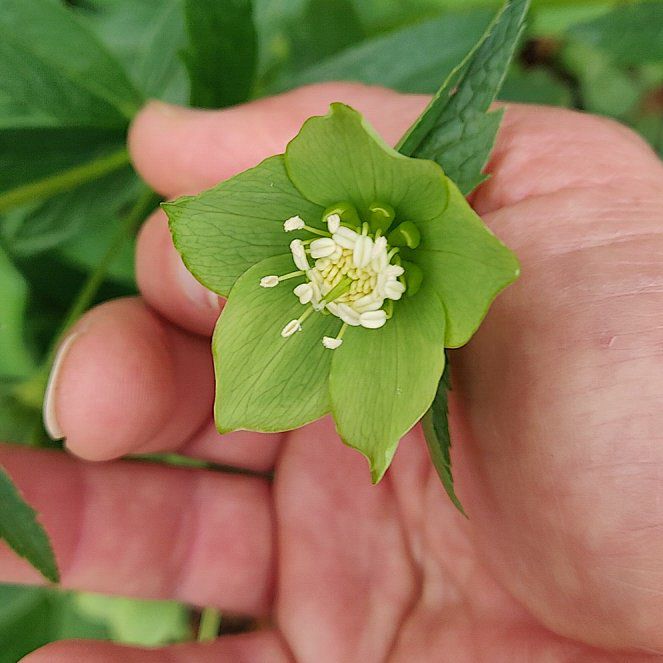
Hellebore

What's Eating Your Hellebore?

Helleborus spp.
Reviewed by Kiersten Rankel M.S.
Quick Answer

For hellebore, the most likely culprits are hellebore aphids (Macrosiphum hellebori, clustered tightly on flower stalks during late winter and early spring bloom) and slugs (chewed holes in leathery leaves during damp spring weather). Spider mites show up rarely, only on drought-stressed plants in hot dry summers. Toxic alkaloids in every part of the plant keep deer and rabbits away.

Stay on top of plant care
Get seasonal reminders for watering and fertilizing, personalized for your plants.
Try Greg Free

What does the damage look like?

Tap the closest match to jump straight to the fix.

Pests, ranked by impact

Dense colony of aphids clustered on a plant stem

Aphids

Damage
Medium
Removal
Easy
What it looks like

Hellebores host their own iconic aphid, Macrosiphum hellebori (the hellebore aphid). Pale green to yellow-green, soft-bodied, 2 to 3 mm long. Cluster densely on the upper flower stalks and on the backs of the nodding cup-shaped blooms during late winter and early spring, exactly when little else is in flower.

What the damage looks like

Tight greenish colonies coating the flower stalks and the back of the petals. Sticky shiny film on leaves and petioles below the bloom. Black sooty mold grows on the residue over a few weeks. Heavy infestations distort the flowers and shorten the bloom display, but the plant recovers fully once the colonies are cleared.

How to get rid of them
Option 1

Strong water blast every 2 to 3 days for 2 weeks

Hold a hose nozzle 12 inches from the affected flower stalks and spray at moderate pressure. Hellebore stalks are sturdy and tolerate a firm rinse without bruising the blooms. Most aphids dislodge and don't make it back. Repeat every 2 to 3 days for 2 weeks. Wear gloves while you work because every part of the plant is toxic to skin.

Option 2

Insecticidal soap on stalks and bloom backs, weekly

Spray ready-to-use insecticidal soap (Safer Brand, ~$10) directly on the colonies coating the flower stalks and the underside of the petals. Spray at dusk so the soap doesn't dry too fast in sun. Repeat weekly for 3 weeks to catch newly hatched nymphs. Avoid open flowers when pollinators are visiting.

Option 3

Wear gloves and snip the worst stalks

If a few flower stalks are completely coated, cut them off at the base and bag them. Always wear gloves when handling any part of a hellebore. The cardiotoxic alkaloids in the sap can irritate skin and are dangerous if they reach your eyes or mouth. Removing the worst stalks reduces the colony quickly without spraying near the rest of the bloom.

Large red-brown slug (Arion rufus) crawling on a rhubarb leaf

Slugs

Damage
Medium
Removal
Moderate
What it looks like

Soft-bodied gray, brown, or black mollusks, 1 to 4 inches long. Active at night and on damp overcast days. Hide under leaf litter, mulch, and stones at the base of the clump during the day. The cool damp shade where hellebores thrive is also where slugs thrive.

What the damage looks like

Ragged irregular holes chewed through the thick leathery palmate leaves, often along the leaf margins and across the middle of the blade. Silvery dried slime trails on leaves and on the soil around the clump in the morning. Damage shows up most on stressed or recently damaged foliage during damp spring weather.

How to get rid of them
Option 1

Iron phosphate bait around the clump

Scatter iron phosphate slug bait (Sluggo or Garden Safe, ~$12) in a thin ring on the soil 6 inches out from the crown. Refresh after rain. Iron phosphate is safe for pets, birds, and beneficials, which matters near a plant whose own toxicity is the only thing keeping deer and rabbits at bay. Avoid metaldehyde baits because they're dangerous to dogs.

Option 2

Hand-pick at dusk and after rain

1

Walk the bed an hour after sunset or right after a rain with a flashlight.

2

Wear gloves and pluck slugs off the leaves and from under the mulch around the crown.

3

Drop them in a jar of soapy water. Repeat 2 to 3 nights in a row to break the breeding cycle.

Option 3

Pull mulch back from the crown in spring

Hellebores like a cool root run, but a thick mulch ring pushed right against the crown gives slugs a perfect daytime hide. Pull mulch back 3 to 4 inches from the base of the clump as growth resumes in late winter. The exposed soil dries out faster between rains and slugs avoid the dry zone.

Spider mite infestation on a stem with fine silk webbing and pale speckled leaf damage

Spider mites

Damage
Low
Removal
Moderate
What it looks like

Almost invisible without a hand lens. Tiny yellow-green to red specks on the underside of the leathery palmate leaves. Rare on hellebores because the cool shaded conditions hellebores prefer aren't friendly to mites. Show up only on plants under drought stress in hot dry summers, usually on clumps in too much sun.

What the damage looks like

Tiny pale yellow dots on the upper leaf surface that spread into bronze or silvery patches. Fine webbing on the underside of leaves in heavy infestations. Damage is mostly cosmetic on the established leathery foliage and the plant recovers once water stress is fixed.

How to get rid of them
Option 1

Water deeply and shade the clump

Spider mites on hellebore are almost always a symptom of heat and drought stress, not a pest problem on their own. Soak the root zone deeply once a week through any summer dry spell. Shade-loving woodland conditions are what hellebores want anyway. Fix the underlying stress and the mites usually clear without spraying.

Option 2

Rinse leaf undersides weekly for 3 weeks

Spray cool water on the underside of every leaf with a hose nozzle for 30 seconds per clump. The thick leathery hellebore leaves tolerate a hard rinse well. Mites can't reattach quickly and the rinse humidity slows survivors. Repeat weekly for 3 weeks.

Stay ahead of all of them

Four habits that keep hellebore pests rare and easy to catch.
1

Bloom-stalk scan, weekly through late winter

Hellebore aphids appear on the flower stalks as soon as the buds rise, weeks before most gardeners are looking for pests. A 30-second weekly scan from January through March catches the colonies while they're still on one or two stalks.

2

Wear gloves any time you touch the plant

Every part of a hellebore contains cardiotoxic alkaloids that irritate skin and are dangerous if they reach the eyes or mouth. The same toxicity is what makes hellebores deer- and rabbit-resistant. Gloves protect you while you scout, deadhead, or pull weeds around the crown.

3

Pull mulch back from the crown in late winter

Slugs shelter under thick mulch right against the crown, where the new flower stalks emerge. Pulling mulch back 3 to 4 inches as growth starts dries the soil at the base and removes the prime daytime hiding spot before bloom.

4

Site in cool dappled shade

Hellebores planted in too much sun stress in summer heat and become a target for spider mites. A spot under deciduous trees gives them winter sun for bloom and summer shade for the leaves. The cool shaded conditions also keep mite pressure low all season.

Stay on top of plant care
Get seasonal reminders for watering and fertilizing, personalized for your plants.
Try Greg Free

About This Article

Kiersten Rankel M.S.
Botanical Data Lead at Greg · Plant Scientist
About the Author
Kiersten Rankel holds an M.S. in Ecology & Evolutionary Biology from Tulane University. A certified Louisiana Master Naturalist, she has over a decade of experience in science communication, with research spanning corals, cypress trees, marsh grasses, and more. At Greg, she curates species data and verifies care recommendations against botanical research.
See Kiersten Rankel's full background on LinkedIn.
Editorial Process
Pest identification and treatment guidance verified against Helleborus spp. field reports from Greg's botanical database, cross-referenced with university extension sources and published horticultural research.