
Scale insects
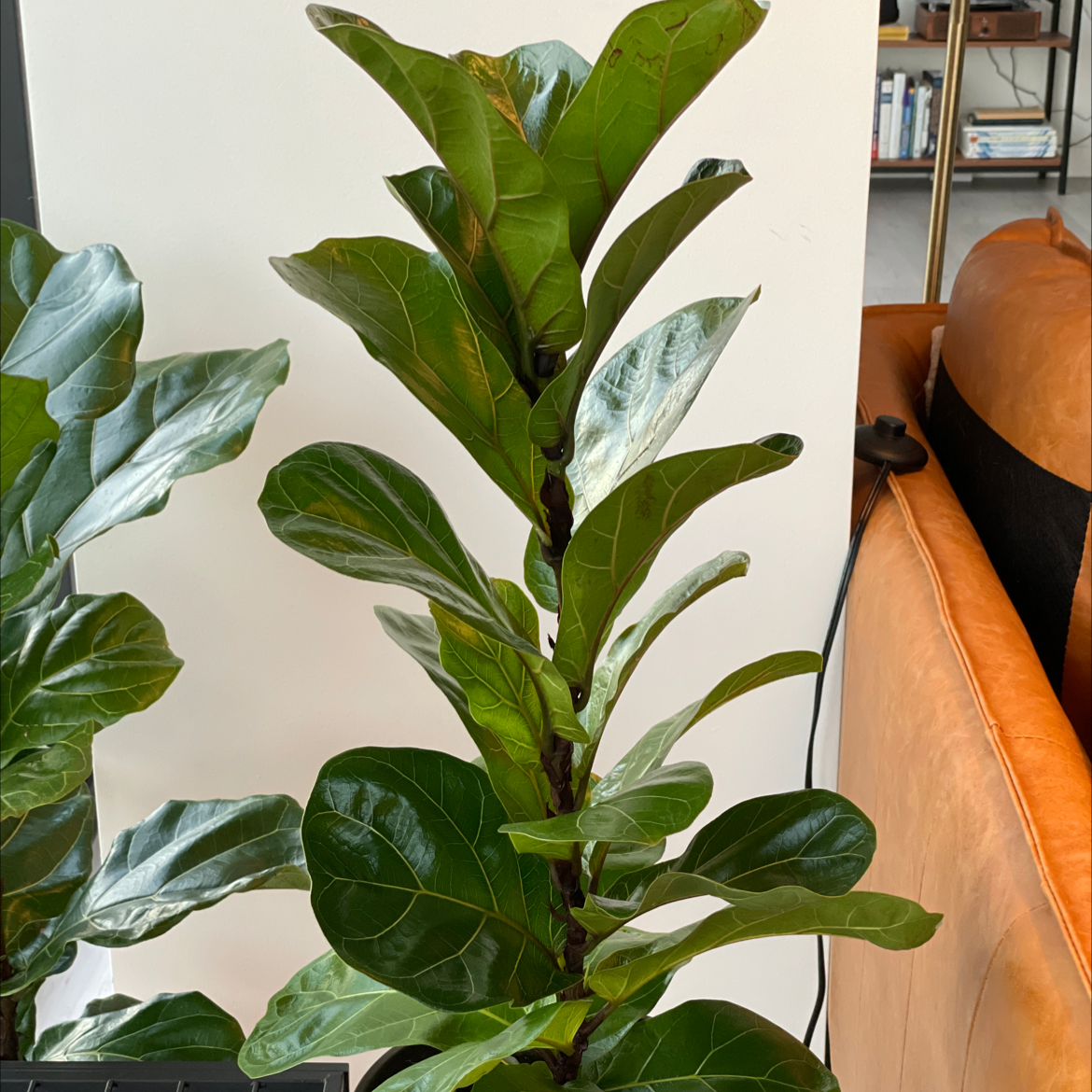
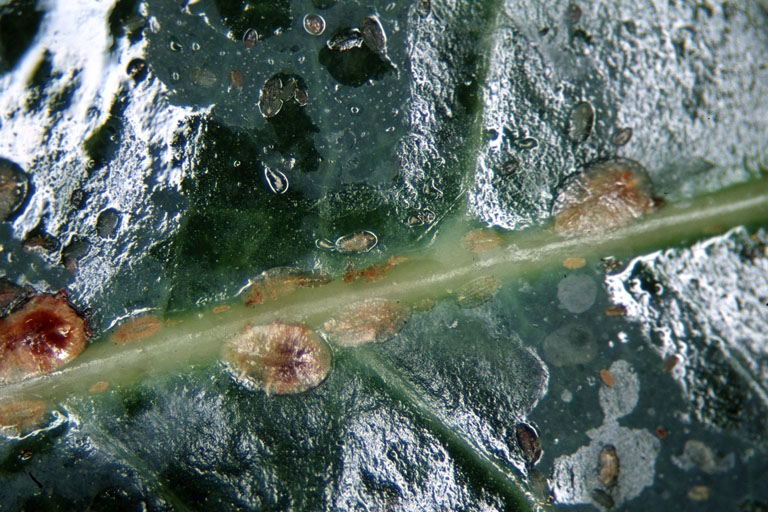
Hard or soft brown bumps stuck to the woody trunk, the leaf-petiole joint, and along the central rib on the underside of the violin-shaped leaves. 1 to 3 mm wide and look like tiny barnacles. The dense canopy and waxy leaf surface hide colonies for weeks.
A sticky shiny film on leaves and on the pot rim, often followed by sooty black mold. Yellow halos around each cluster. Each lost leaf on a fiddle leaf fig is a year of growth that does not regrow on the same node, so visible decline reads as permanent damage on a statement plant.
Scrape and dab with alcohol, weekly for 3 weeks
Put on gloves. Fiddle leaf fig leaks milky white latex sap when scraped or pruned, and the sap can irritate skin.
Scrape every visible bump off the trunk, leaf-petiole joints, and undersides with a fingernail or soft toothbrush. The thick waxy leaves take firm pressure well.
Dab any remaining bumps with a cotton swab dipped in 70% isopropyl alcohol to penetrate the waxy seal.
Repeat weekly for 3 weeks to catch newly hatched crawlers hidden in the dense canopy.
Horticultural oil spray, weekly for 3 weeks
Test on one leaf first. Fiddle leaf fig is notorious for scorching from oil applied in direct sun.
Mix horticultural oil (Bonide All Seasons, ~$15) per label and spray every leaf surface, the leaf-petiole joints, and the full trunk at lights-out.
Rinse the leaves with cool water the next morning to clear residual oil before sun hits the canopy.
Repeat every 7 days for 3 weeks. Smothers crawlers and adults the alcohol pass missed.
Isolate the plant from your collection
Move the fiddle leaf fig at least 6 feet from other houseplants. Scale crawlers walk to neighboring pots in the first week of life. Wipe the windowsill, the floor under the pot, and any tools that touched the trunk.


