

Spider mites
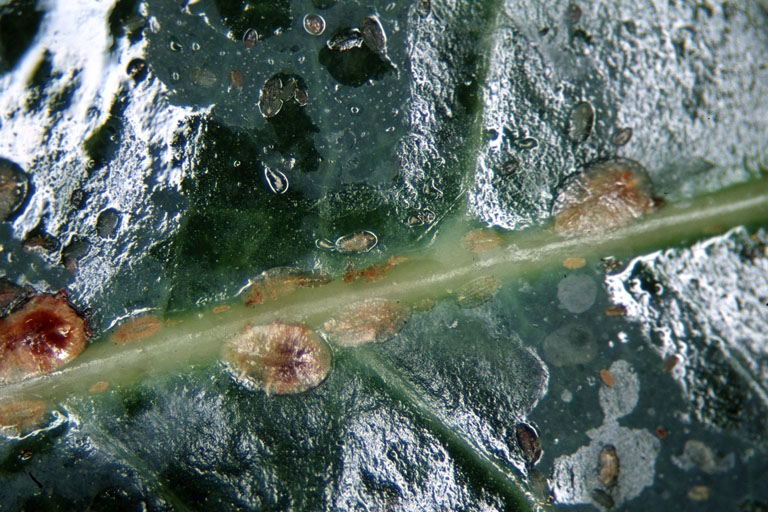
Almost invisible without a hand lens. Yellow-green to red-orange specks running along the underside of the lobed leaves. The dense canopy of an indoor English ivy is the perfect hideout, and dry winter heating triggers a population explosion within weeks.
Pale tiny pale dots along leaf veins and between the lobes, fading to a dull bronze. Fine webbing strung between leaves and along the woody stems. An indoor English ivy can defoliate in 2 to 3 weeks once a colony establishes, especially in winter dry heat.
Shower the leaves weekly for 3 weeks
Move the ivy to the shower or sink. Spray cool water on the underside of every lobed leaf and along the woody stems for at least 60 seconds. Indoor English ivy is dense, so rotate the plant and lift trailing strands to reach the inner canopy. Repeat weekly for 3 weeks.
Neem oil at lights-out, every 5 days for 3 rounds
Mix 2 tablespoons cold-pressed neem oil and 1 teaspoon dish soap per gallon of water.
Spray the top and bottom of every lobed leaf at lights-out, parting the trailing strands so the spray reaches inner foliage.
Repeat every 5 days for 3 rounds. That covers the full egg-to-adult cycle.
Raise humidity above 50%
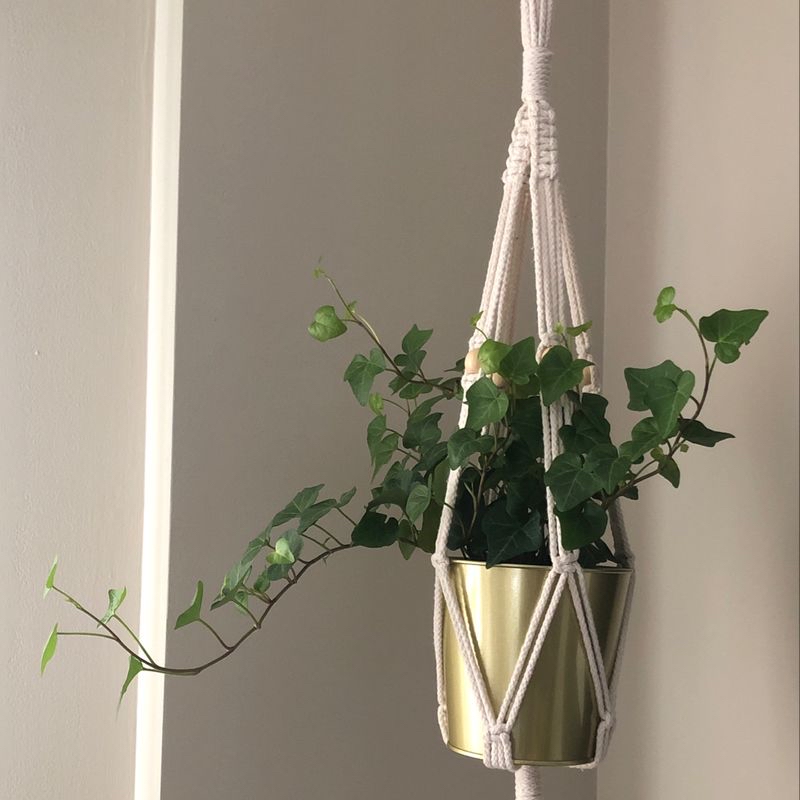
Run a humidifier near the plant for 50 to 60% relative humidity through winter. Indoor heating drops indoor air below 30%, which is the climate spider mites breed fastest in. Outdoor English ivy almost never gets a mite outbreak because outdoor humidity is naturally higher.
Pyrethrin sprays from the hardware store kill them.
Spider mites are arachnids, not insects, so most household bug sprays barely affect them. Use neem oil or a true miticide instead. English ivy's waxy leaf surface tolerates spinosad too if neem isn't enough.