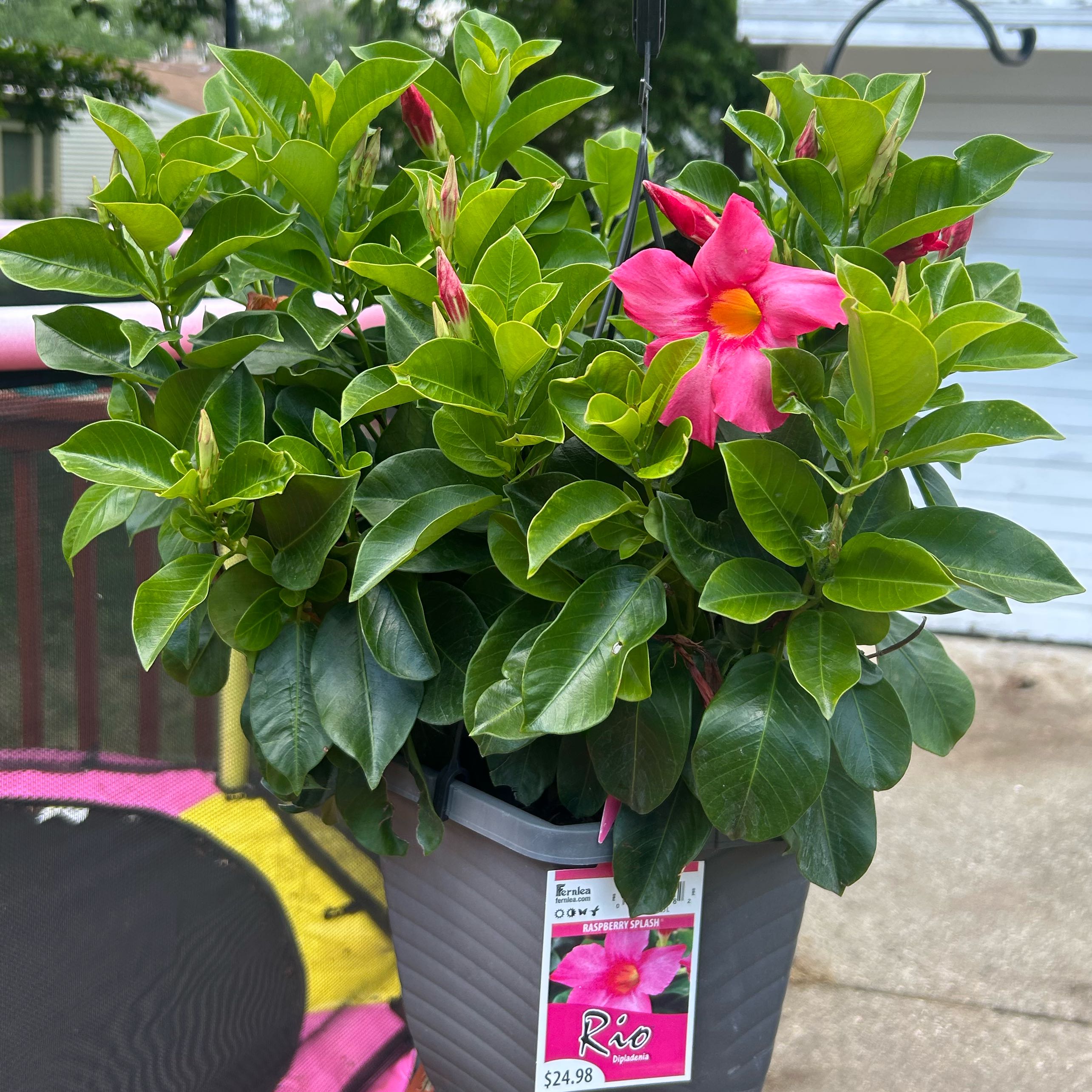
Dipladenia 'Rio'

What's Eating Your Dipladenia 'Rio'?

Mandevilla 'Rio'
Reviewed by Kiersten Rankel M.S.
Quick Answer

For Dipladenia 'Rio', the most likely culprits are spider mites (pale specks and webs in hot dry summer weather) and whiteflies (clouds of tiny white insects on leaf undersides). Bright yellow-orange oleander aphids cluster on new growth and flower stalks. Brown bumps along the woody twining stems are scale insects.

Stay on top of plant care
Get seasonal reminders for watering and fertilizing, personalized for your plants.
Try Greg Free

What does the damage look like?

Tap the closest match to jump straight to the fix.

Pests, ranked by impact

Spider mite infestation on a stem with fine silk webbing and pale speckled leaf damage

Spider mites

Damage
High
Removal
Moderate
What it looks like

Almost invisible without a hand lens. Yellow-green to red specks running along the underside of the glossy oval leaves and where leaves meet the twining stems. Hot dry summer weather on a patio or balcony triggers explosive population growth on container Dipladenia.

What the damage looks like

Pale yellow tiny pale dots on the upper leaf surface that spreads to bronze patches and full leaf yellowing. Fine webbing strung between leaves and along the stem tips in heavy infestations. Container plants can defoliate within 2 to 3 weeks once mite numbers explode in heat.

How to get rid of them
Option 1

Shower the foliage every 4 days for 2 weeks

Move the container to the shower or hose and spray cool water on the underside of every leaf for 30 seconds. Mites can't reattach quickly when knocked off, and the rinse humidity slows survivors. Dipladenia tolerates a hard rinse well. Repeat every 4 days for 2 weeks during hot weather.

Option 2

Neem oil at dusk, every 5 days for 3 rounds

1

Mix 2 tablespoons cold-pressed neem oil and 1 teaspoon dish soap per gallon of water.

2

Spray the underside of every leaf and along the twining stems at dusk to avoid leaf burn in summer sun.

3

Repeat every 5 days for 3 rounds. That covers the full egg-to-adult life cycle.

Option 3

Move out of full hot afternoon sun during peak heat

Spider mites breed fastest on heat-stressed plants in dry air. Shift the container to morning sun with afternoon shade during summer heat waves. Water deeply to keep the rootball cool. A less-stressed plant resists mite damage and recovers faster from rinses.

Cluster of silverleaf whiteflies (Bemisia tabaci) on the underside of an eggplant leaf

Whiteflies

Damage
High
Removal
Moderate
What it looks like

Tiny snow-white insects 1 to 2 mm long. Cluster densely on the underside of the glossy oval leaves and lift off in a small cloud when the plant is brushed. Adults fly. The yellow oval nymphs stay glued to the leaf undersides feeding on sap. Common on outdoor Dipladenia through summer.

What the damage looks like

Yellowing and pale mottling on leaves, often starting on the lower foliage. A sticky shiny film coats leaves below the affected branch. Black sooty mold grows on the residue. Heavy infestations spread plant viruses that distort new growth and flowers for the rest of the season.

How to get rid of them
Option 1

Yellow sticky traps plus weekly insecticidal soap

1

Hang 4 to 6 yellow sticky traps (Trappify or Stingmon, ~$10) right at canopy height around the trellis or pot.

2

Spray ready-to-use insecticidal soap (Safer Insect Killing Soap, ~$10) on the underside of every leaf at dusk.

3

Repeat the soap spray every 5 to 7 days for 3 weeks. Traps catch adults while soap kills nymphs.

Option 2

Strong water blast at lights-out, every 2 to 3 days for 2 weeks

Hold a hose nozzle 12 inches from the leaf undersides and spray at high pressure. Adults scatter and nymphs dislodge. Dipladenia tolerates the rinse well. Spray at dusk so leaves dry before morning sun. Repeat every 2 to 3 days for 2 weeks while sticky traps are working.

Option 3

Isolate from other flowering tropicals on the patio

Whiteflies move easily between hibiscus, mandevilla, lantana, and other flowering tropicals. Move the affected Dipladenia at least 6 feet from other plants while you treat. Inspect nearby pots for nymphs on leaf undersides before bringing the plant back.

Dense colony of aphids clustered on a plant stem

Aphids

Damage
Medium
Removal
Easy
What it looks like

Dipladenia gets the oleander aphid, a bright yellow-orange specialist of the Apocynaceae family (oleander, desert rose, mandevilla). Tiny pear-shaped insects 2 to 3 mm long with black legs. Cluster densely on new growth tips, flower stalks, and the soft underside of young leaves.

What the damage looks like

Distinctive bright yellow clusters on the freshest tip growth and along developing flower stalks. New leaves curl, twist, and yellow as aphids drain sap. A sticky shiny film coats leaves below the affected stem. Heavy clusters on flower stalks reduce bloom count and quality for that flush.

How to get rid of them
Option 1

Strong water blast every 2 to 3 days for 2 weeks

Hold a hose nozzle 12 inches from the affected new growth and flower stalks and spray at high pressure. Most aphids dislodge and don't make it back to the plant. Repeat every 2 to 3 days for 2 weeks. The fastest, cheapest fix and works without chemicals.

Option 2

Neem oil spray at dusk, every 5 days for 3 rounds

1

Mix 2 tablespoons cold-pressed neem oil with 1 teaspoon dish soap per gallon of water.

2

Spray the new growth tips, flower stalks, and underside of young leaves at dusk.

3

Repeat every 5 days for 3 rounds. Covers the egg-to-adult cycle.

Option 3

Leave ladybugs and lacewings alone outdoors

Oleander aphids are toxic to most generalist predators because they sequester compounds from the milky Apocynaceae sap. A few specialist parasitic wasps and lacewing larvae still hunt them. Avoid broad-spectrum sprays on the patio so the natural controls keep populations from rebuilding.

Brown soft scale (Coccus hesperidum) clustered on a plant stem

Scale insects

Damage
Medium
Removal
Hard
What it looks like

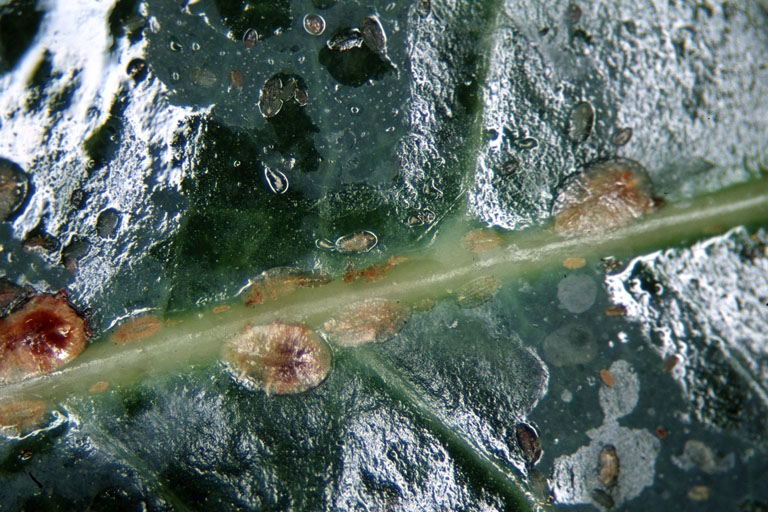
Hard or soft brown bumps stuck along the woody twining stems and at the base of leaf joints, 1 to 4 mm wide. Look like tiny barnacles. Don't move because they're glued in place. Often appear with a glossy sticky film on leaves below and on the trellis or pot rim.

What the damage looks like

A sticky shiny film on leaves and surfaces below the affected stem. Black sooty mold grows on the residue over weeks. Yellowed leaves around heavy clusters. Persistent infestations slow growth and reduce flower production over the season but rarely kill an established Dipladenia outright.

How to get rid of them
Option 1

Scrub and oil weekly for 4 weeks

1

Wet the affected woody stems with horticultural oil (Bonide All Seasons, ~$15).

2

Scrub gently with a soft toothbrush to dislodge bumps and break the waxy seal. The woody stems tolerate firm scrubbing.

3

Spray a final coat of oil and leave on. Repeat weekly for 4 weeks to catch newly hatched crawlers.

Option 2

Insecticidal soap on crawlers, every 7 days for 3 weeks

Adult scale are armored and resist sprays, but the mobile crawler stage is soft and vulnerable. Spray ready-to-use insecticidal soap (Safer Insect Killing Soap, ~$10) along the woody stems and leaf joints every 7 days for 3 weeks. Pairs well with the scrub-and-oil routine to clean up the next wave of crawlers.

Option 3

Prune heavily infested stems

Dipladenia 'Rio' takes hard pruning well and pushes new growth quickly. Cut out stems with thick scale colonies, bag, and discard. Wipe the trellis or pot rim with soapy water. The remaining plant rebounds with cleaner growth in 4 to 6 weeks during warm weather.

Stay ahead of all of them

Four habits that keep Dipladenia 'Rio' pests rare and easy to catch.
1

Tip and underleaf check, every Sunday

Oleander aphids cluster on the bright new growth and flower stalks. Whiteflies and spider mites hide on the underside of the glossy leaves. A weekly 30-second scan of the freshest growth catches colonies while they're still on a single stem.

2

Quarantine new tropicals for 2 weeks

Most pests come home from the garden center on the plant you bought. Two weeks of isolation away from your other patio tropicals catches whiteflies, scale, and mites before they spread to an established Dipladenia or its mandevilla and hibiscus neighbors.

3

Wash the trellis and pot rim every spring

Scale crawlers and aphid eggs overwinter on the trellis, pot rim, and any tied stems. A soapy wipe-down before the first warm flush removes hidden pockets that would otherwise reseed the plant once new growth pushes.

4

Water deeply, never let it bake dry in summer

Spider mites and whiteflies multiply fastest on heat-stressed plants. Dipladenia 'Rio' wants the top inch of soil to dry between waterings, then a deep soak. A consistent rhythm in hot weather keeps the plant strong enough to shrug off light pest pressure.

Stay on top of plant care
Get seasonal reminders for watering and fertilizing, personalized for your plants.
Try Greg Free

About This Article

Kiersten Rankel M.S.
Botanical Data Lead at Greg · Plant Scientist
About the Author
Kiersten Rankel holds an M.S. in Ecology & Evolutionary Biology from Tulane University. A certified Louisiana Master Naturalist, she has over a decade of experience in science communication, with research spanning corals, cypress trees, marsh grasses, and more. At Greg, she curates species data and verifies care recommendations against botanical research.
See Kiersten Rankel's full background on LinkedIn.
Editorial Process
Pest identification and treatment guidance verified against Mandevilla 'Rio' field reports from Greg's botanical database, cross-referenced with university extension sources and published horticultural research.