

Fungus gnats
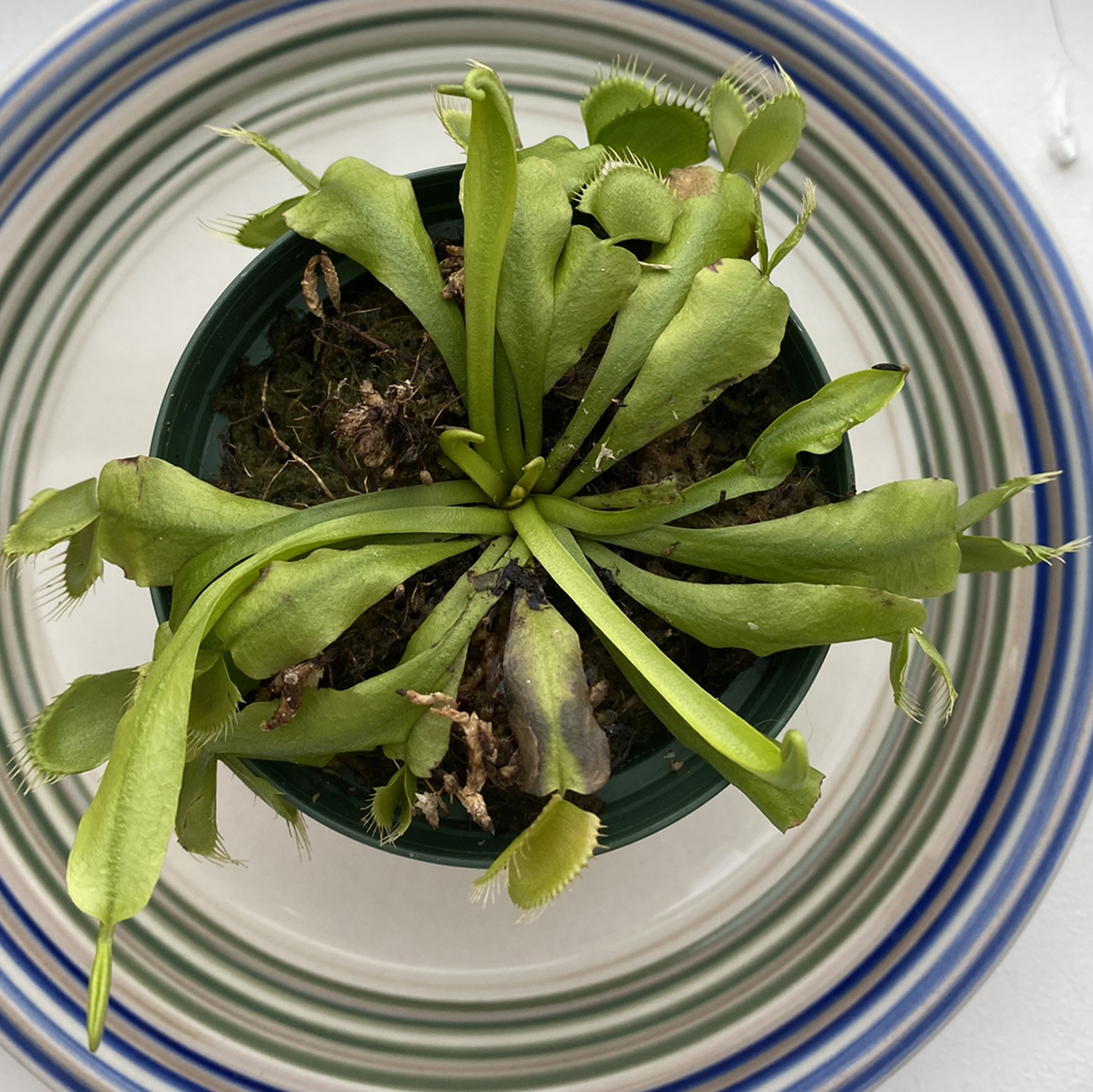
Tiny dark flies, 1 to 3 mm long, hovering above the sphagnum and lifting off when you tray-water. Larvae are barely-visible white worms wriggling in the top of the wet peat. Traps catch some adults but never enough to control a real population.
Adults are mostly a nuisance, but their numbers are a warning. Venus fly trap needs constantly damp nutrient-poor sphagnum or peat, which is also ideal gnat habitat. Heavy gnat populations mean the substrate is going anaerobic, which rots the rhizome at the soil line and kills the plant from the base up.
Refresh the sphagnum or peat substrate
Lift the plant out and rinse the rhizome gently in distilled or rainwater. Look for any soft brown rot at the base.
Repot in fresh long-fiber sphagnum or a 1:1 peat and perlite mix. Never use regular potting soil. Fertilizer kills Venus fly trap.
Resume tray-watering with rainwater or distilled water only. Tap water minerals build up in the substrate and kill the plant over months.
Yellow sticky traps just above the substrate
Stick yellow cards (Trappify, ~$10) right at the rim of the pot. Adults stick on takeoff and landing. Catches the breeding population while the substrate refresh kills the larvae. Replace every 2 weeks.
Mosquito Bits sprinkled on the substrate
Mosquito Bits (Bt-i, ~$15) is a bacteria-based larvicide that targets fungus gnat larvae specifically. Sprinkle a teaspoon on the sphagnum surface. Safe for the plant and won't add minerals or nutrients that would harm a Venus fly trap.


