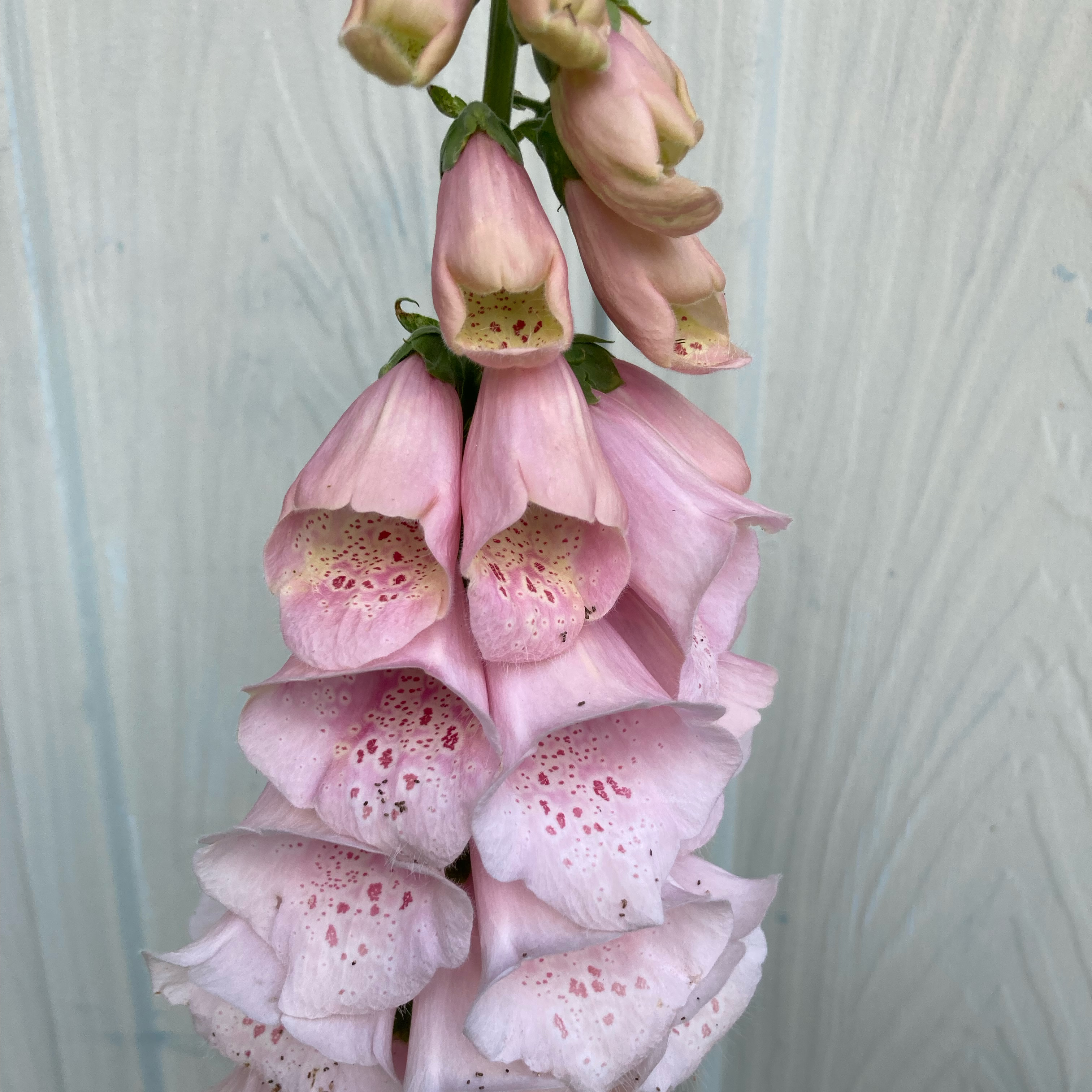


Aphids
Tiny pear-shaped insects 1 to 3 mm long, in shades of green, gray, or pink. Cluster densely on the tall flower spikes during bloom in year two, packed along the stem just below the tubular bells and on the soft underside of the upper rosette leaves.
A glossy sticky film coats the flower spike and the leaves below the cluster. Tubular bells distort or drop early when the spike is heavily infested, shortening the bloom. Black sooty mold grows on the residue over a few weeks. The toxic alkaloids in foxglove deter most chewers, so aphids are usually the only insect a grower will spot.
Strong water blast every 2 to 3 days for 2 weeks
Hold a hose nozzle 12 inches from the flower spike and spray at high pressure, top and bottom of the spike and along the upper rosette leaves. Most aphids dislodge and don't make it back to the plant. Repeat every 2 to 3 days for 2 weeks. The fastest, cheapest fix and works without chemicals near pollinators.
Insecticidal soap on the spike at dusk, weekly
Spray ready-to-use insecticidal soap (Safer Insect Killing Soap, ~$10) directly on aphid clusters at dusk when bees aren't active. Soak the underside of leaves and along the spike. Repeat weekly for 3 weeks. Works on contact only, so coverage matters more than concentration.
Plant alyssum and yarrow nearby for ladybugs
Plant sweet alyssum, dill, or yarrow within 3 feet of the foxglove patch. These attract ladybugs and lacewings, which feed on aphids. Established plantings keep aphid pressure low without sprays and last for years. Especially valuable on foxglove because broad-spectrum sprays threaten the bumblebees that pollinate the bells.


