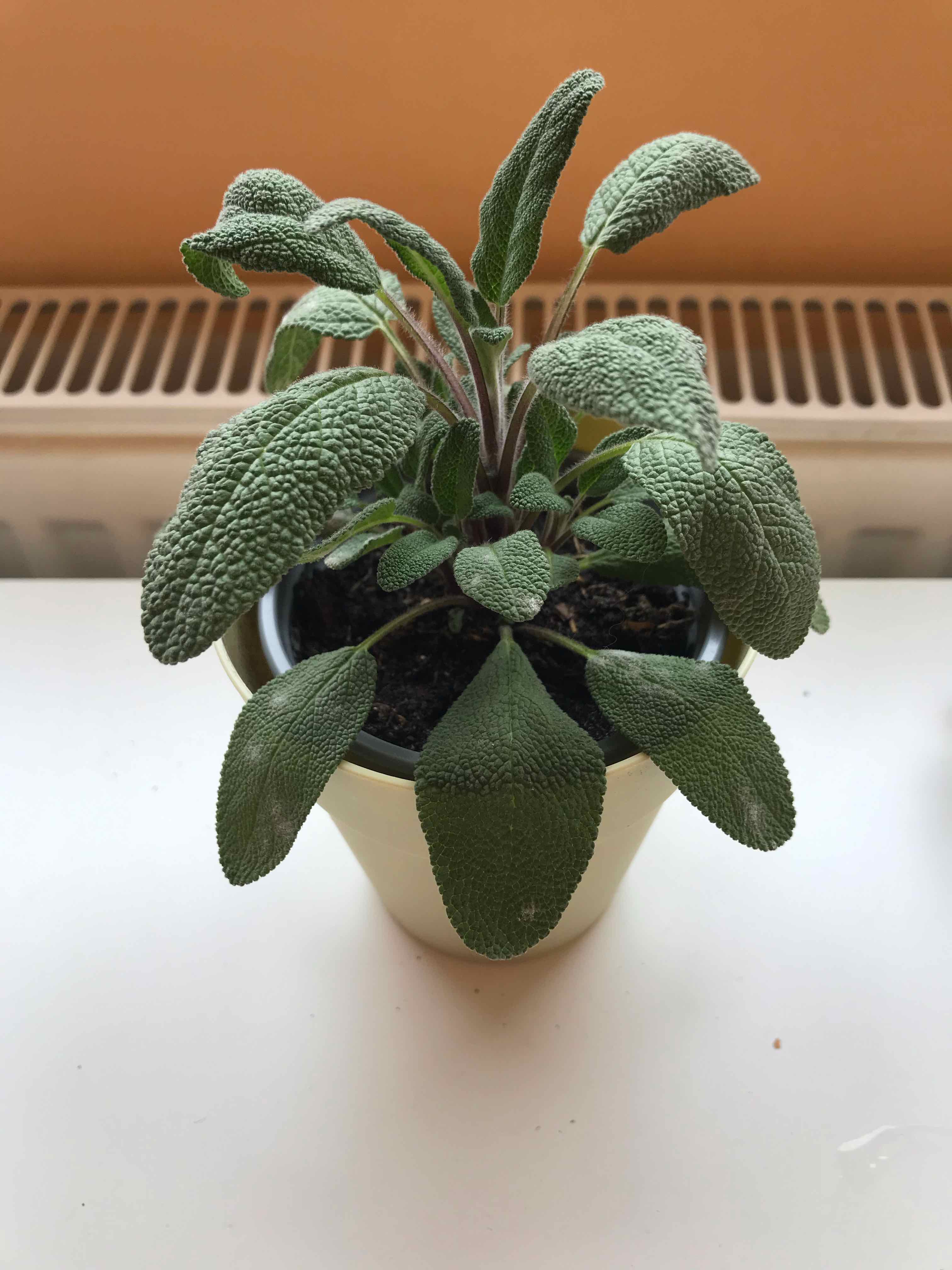


Spider mites
Almost invisible without a hand lens. Yellow-green to red-brown specks on the underside of sage's silver felted leaves. The fuzz that gives sage its color also hides early colonies. Hot dry summer air and drought stress on container sage trigger population booms.
Tiny pale dots tiny pale dots the upper leaf surface, then dull bronze patches that spread across whole leaves. Fine webbing strung between leaves and along the square stems in heavy infestations. Stressed container sage can defoliate in 2 to 3 weeks once mites take hold.
Shower the foliage weekly for 3 weeks
Take container sage to the shower or hose it down outside. Spray cool water on the underside of every leaf for 30 seconds. The felted leaf surface holds moisture briefly, which mites hate. Repeat weekly for 3 weeks. Skip this on in-ground sage in cool weather, the leaf fuzz takes a long time to dry and can hold humidity against the woody base.
Neem oil at dusk, every 5 days for 3 rounds
Mix 2 tablespoons cold-pressed neem oil and 1 teaspoon dish soap per gallon of water.
Spray the underside of every leaf at dusk. Sage's felted leaves need a full coat to reach mites hiding in the fuzz.
Repeat every 5 days for 3 rounds. That covers the full egg-to-adult life cycle. Wait 24 hours after spraying before harvesting leaves for cooking, then rinse well.
Move container sage out of reflected heat
Spider mites breed fastest on drought-stressed sage in 90F+ air. Move pots off hot patios and away from south-facing walls during heat waves. Water deeply at the base when the top inch of soil dries. Sage tolerates drought well, but baking heat plus dry roots is exactly the condition mites need to explode.


