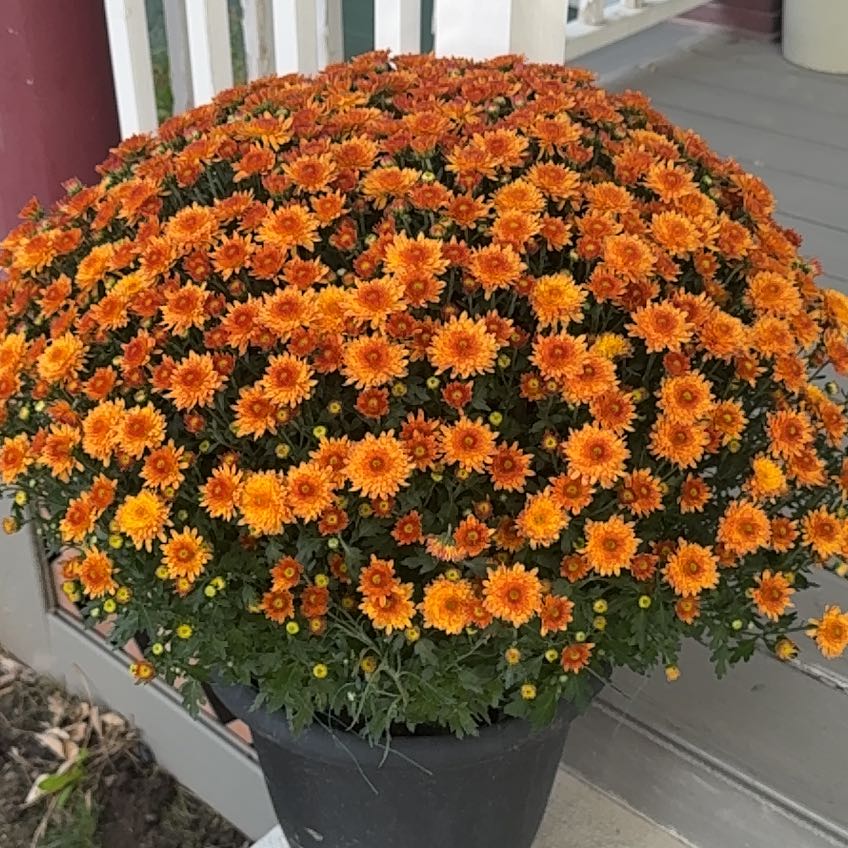
Chrysanthemum

What's Eating Your Chrysanthemum?

Chrysanthemum spp.
Reviewed by Kiersten Rankel M.S.
Quick Answer

For chrysanthemum, the most likely culprits are aphids clustering on tender new growth and developing buds, and thrips scarring petals as fall blooms open. Spider mites explode in hot dry summers and can defoliate stressed plants. Squiggly silvery trails on the leaves point to chrysanthemum leafminer, mostly cosmetic but unmistakable.

Stay on top of plant care
Get seasonal reminders for watering and fertilizing, personalized for your plants.
Try Greg Free

What does the damage look like?

Tap the closest match to jump straight to the fix.

Pests, ranked by impact

Slender adult thrips (Frankliniella sp.) on a flower petal

Thrips

Damage
High
Removal
Hard
What it looks like

Slender insects under 2 mm long, pale yellow to brown, that move with a quick darting wriggle. Hide deep inside developing flower buds and between the closely packed petals of opening cushion blooms. Hold a white sheet of paper under a bud and tap to see them drop.

What the damage looks like

Pale silvery streaks and brown scars on petals as flowers open. Distorted, lopsided blooms in vibrant fall colors that should be perfect. Tiny black dots of thrips droppings between petals confirm it. The damage is permanent on the affected flower because chrysanthemum is grown for the bloom display.

How to get rid of them
Option 1

Spinosad spray on buds and opening blooms, every 7 days

1

Spinosad (Captain Jack's Deadbug Brew or Monterey Garden Insect Spray, ~$12 to $15) reaches thrips inside the bud and is one of the few options that works on this hidden pest.

2

Spray buds and opening blooms at dusk, soaking into the petal layers from above and below.

3

Repeat every 7 days from first color through full bloom. Spinosad breaks down in sunlight, so dusk timing is essential.

Option 2

Deadhead spent and damaged blooms immediately

Cut off any flower showing streaks or scars and bag it. Thrips lay eggs inside the petals, and faded blooms are nurseries for the next generation. Removing them through the bloom season cuts pest pressure for the rest of fall and into next year's plants.

Option 3

Blue sticky cards near the buds before bloom

Set blue sticky cards (Trappify or Stingmon, ~$10 for a 20 pack) on stakes 6 inches above the canopy as soon as buds form. Thrips fly to blue more than yellow. Cards do not control a heavy infestation alone but catch the first arrivals and tell you to start spraying.

Spider mite infestation on a stem with fine silk webbing and pale speckled leaf damage

Spider mites

Damage
High
Removal
Moderate
What it looks like

Almost invisible without a hand lens. Yellow-green to red-orange specks on the underside of the pinnately divided leaves. Hot dry late-summer weather, the same conditions that stress chrysanthemum just before bud set, triggers a population boom.

What the damage looks like

Tiny pale yellow dots tiny pale dots the upper leaf surface, then bronze patches that spread across whole leaves. Fine webbing between the divided leaf segments and along stems in heavy infestations. A stressed plant can drop most of its lower leaves in two to three weeks, weakening the plant going into bloom.

How to get rid of them
Option 1

Strong water blast on leaf undersides, every 3 days for 2 weeks

Hold a hose nozzle 12 inches from the plant and spray the underside of every leaf at high pressure. Mites cannot reattach quickly when knocked off, and the rinse raises humidity around the foliage. Repeat every 3 days for 2 weeks. The cheapest and fastest first line for outdoor mums.

Option 2

Insecticidal soap or neem oil at dusk, every 5 days for 3 rounds

1

Mix 2 tablespoons cold-pressed neem oil and 1 teaspoon dish soap per gallon of water, or use ready-to-use insecticidal soap.

2

Spray the underside of every leaf at dusk because both products burn foliage in direct sun.

3

Repeat every 5 days for 3 rounds. That covers the full egg-to-adult life cycle.

Option 3

Water deeply through hot dry stretches

Drought stress is what triggers the mite explosion in the first place. Water chrysanthemum deeply at the base 2 to 3 times a week through July and August, especially containers. A well-watered plant resists mite damage and recovers fast even after light feeding.

Dense colony of aphids clustered on a plant stem

Aphids

Damage
Medium
Removal
Easy
What it looks like

Tiny pear-shaped insects 1 to 3 mm long, in shades of green, brown, or black. Cluster densely on tender new growth at the stem tips and on developing flower buds, where the plant is softest and most nutrient-rich.

What the damage looks like

New leaves and bud tips curl, twist, and yellow as aphids drain sap. A sticky shiny film coats leaves and the soil below the plant. Black sooty mold grows on the residue over a few weeks. Heavy clusters on buds cause distorted or aborted blooms.

How to get rid of them
Option 1

Strong water blast every 2 to 3 days for 2 weeks

Hold a hose nozzle 12 inches from the affected stem tips and spray at high pressure. Most aphids dislodge and don't make it back to the plant. Repeat every 2 to 3 days for 2 weeks. Aim into the bud cluster where they hide. The fastest fix and works without chemicals.

Option 2

Neem oil spray at dusk, every 5 days for 3 rounds

1

Mix 2 tablespoons cold-pressed neem oil with 1 teaspoon dish soap per gallon of water.

2

Spray the underside of every leaf and into bud clusters at dusk.

3

Repeat every 5 days for 3 rounds. Covers the egg-to-adult cycle.

Option 3

Plant alyssum or yarrow nearby for natural control

Alyssum, dill, and yarrow within 3 feet of your mums attract ladybugs and lacewings, which feed on aphids. Established plantings keep aphid pressure low without sprays and last for years. A useful companion for any fall flower bed.

Distinctive squiggly silvery serpentine mines from leafminer larvae on a leaf

Leafminers

Damage
Medium
Removal
Hard
What it looks like

The larva of a tiny fly (Liriomyza species, including the chrysanthemum leafminer). The adult flies are rarely seen. Damage comes from the larva tunneling between the upper and lower leaf surfaces of the divided chrysanthemum leaves.

What the damage looks like

Distinctive squiggly silvery or pale white trails winding through the leaf, widening as the larva grows. Often several trails on one leaf. The damage is cosmetic and rarely kills the plant, but on a chrysanthemum grown for visual impact the affected leaves look ragged and the lower foliage thins out.

How to get rid of them
Option 1

Pick off and bag affected leaves as soon as you see trails

Pinch off and bag every leaf with a trail. The larva is inside the leaf and keeps feeding until it pupates. Removing the leaf removes the larva. Bag and dispose in the trash. Do not compost. Picking off the first generation cuts pressure for the rest of the season.

Option 2

Spinosad spray on the foliage, every 7 days

1

Spinosad (Captain Jack's Deadbug Brew, ~$12 to $15) soaks into the leaf surface enough to reach miners.

2

Spray top and bottom of every leaf at dusk, focusing on the soft new growth where the flies prefer to lay.

3

Repeat every 7 days through midsummer when adult flies are active.

Option 3

Encourage parasitic wasps by avoiding broad-spectrum sprays

Tiny parasitic wasps lay eggs inside leafminer larvae and keep populations in check naturally. They are killed by malathion, pyrethroids, and other broad-spectrum garden insecticides. Stick with spinosad or hand picking and the wasps usually keep next year's pressure lower on their own.

Stay ahead of all of them

Four habits that defuse most chrysanthemum pest pressure before bloom season.
1

Pinch back through July

Pinch the growing tips every 2 to 3 weeks from spring through the Fourth of July. The pinching forces side branches for a denser cushion of fall blooms and removes the soft new growth where aphids and leafminers concentrate. Two wins from one cut.

2

Inspect the leaf undersides every Sunday through summer

Spider mites and leafminer trails both start on the lower leaves before they spread. A 30-second weekly check of the underside of leaves, especially the lower third of the plant where the canopy is densest, catches infestations the week they start.

3

Deadhead spent blooms through fall

Faded chrysanthemum flowers are thrips nurseries. Snip off blooms as the petals brown and bag them. Deadheading also pushes the plant to keep producing fresh buds and extends the display by weeks. The single most useful pest habit during peak fall color.

4

Water at the base, never overhead

Wet petals invite thrips and the divided leaves don't shed water well. Water at the soil line in the morning so any splash dries before evening. Drier foliage means fewer mite-friendly humid microclimates and cleaner blooms when the plant comes into color.

Stay on top of plant care
Get seasonal reminders for watering and fertilizing, personalized for your plants.
Try Greg Free

About This Article

Kiersten Rankel M.S.
Botanical Data Lead at Greg · Plant Scientist
About the Author
Kiersten Rankel holds an M.S. in Ecology & Evolutionary Biology from Tulane University. A certified Louisiana Master Naturalist, she has over a decade of experience in science communication, with research spanning corals, cypress trees, marsh grasses, and more. At Greg, she curates species data and verifies care recommendations against botanical research.
See Kiersten Rankel's full background on LinkedIn.
Editorial Process
Pest identification and treatment guidance verified against Chrysanthemum spp. field reports from Greg's botanical database, cross-referenced with university extension sources and published horticultural research.