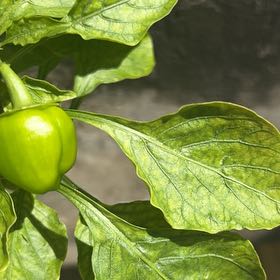


Aphids
Tiny pear-shaped insects 1 to 3 mm long, in shades of green, black, or pale yellow. Cluster densely on the soft underside of young leaves and along new growth tips at the bushy crown of the plant. Often hide where the leaf petiole meets the stem.
New leaves curl, twist, and yellow as aphids drain sap. A sticky shiny film coats leaves and the soil below. Worst of all, aphids vector cucumber mosaic virus and pepper mottle virus, which permanently stunt the plant and ruin fruit set for the season.
Strong water blast every 2 to 3 days for 2 weeks
Hold a hose nozzle 12 inches from the affected new growth and spray at high pressure. Most aphids dislodge and don't make it back to the plant. Repeat every 2 to 3 days for 2 weeks. The fastest, cheapest fix and works without chemicals on a fruiting plant.
Insecticidal soap on leaf undersides at dusk
Spray ready-to-use insecticidal soap (Safer Brand, ~$10) on the underside of every leaf and along new growth at the crown.
Pay attention to the leaf-petiole junction where aphids cluster. Coat thoroughly.
Repeat every 5 days for 3 rounds. Spray at dusk so the soap doesn't burn leaves in afternoon sun.
Plant alyssum or yarrow within 3 feet of the bed
Alyssum, dill, and yarrow attract ladybugs and lacewings, which feed on aphids. One small clump within 3 feet of the pepper bed seeds the area with beneficials. Established plantings keep aphid pressure low for years and protect against virus spread better than any spray.


