

Thrips
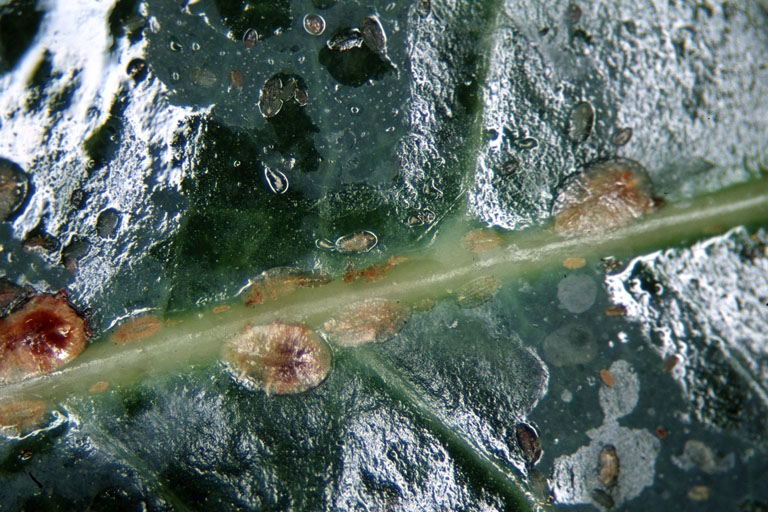
Tiny pale yellow insects under 1 mm long, almost invisible without a hand lens. Feed on young fruit and the tender new leaves before they harden. Worst from spring bloom through early summer when fruit is the size of a marble to a walnut.
Silvery-brown leathery scars and corky patches on the fruit skin once it sizes up. Damage shows months after feeding because thrips fed on the fruit when it was tiny. Scarred fruit is still safe to eat but loses market value and looks rough on the tree.
Spinosad spray during fruit-set, every 7 to 10 days
Mix spinosad (Captain Jack's Deadbug Brew or Monterey Garden Insect Spray, ~$15) per the label rate.
Spray young fruit and tender new growth at dusk so the spray dries before pollinators return. Spinosad is bee-safe once dry.
Repeat every 7 to 10 days from petal fall through pea-size fruit. Pre-harvest interval is 1 day on most labels.
Mulch heavily under the canopy
Spread 4 to 6 inches of coarse wood-chip mulch out to the drip line. Avocado thrips pupate in leaf litter on the soil. A thick mulch layer disrupts the cycle and harbors predatory mites and ground beetles that feed on pupae. Avocado roots love the moisture and cool soil anyway.
Skip broad-spectrum sprays during bloom
Avocado relies on bees for fruit set. Pyrethroids and other broad-spectrum insecticides applied during bloom kill the pollinators and the predatory mites that keep thrips populations down. The next thrips wave comes back worse without those natural controls.