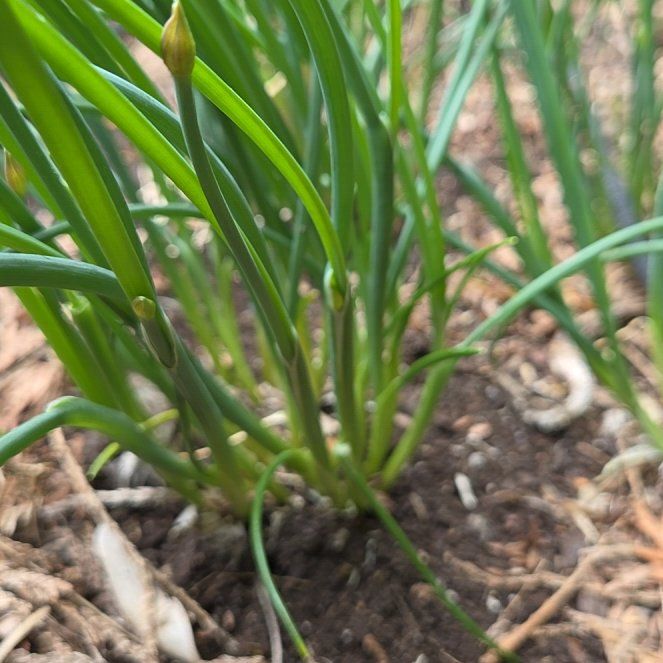
Wild Chives

What's Eating Your Wild Chives?

Allium schoenoprasum
Reviewed by Kiersten Rankel M.S.
Quick Answer

For wild chives, the most likely culprits are onion thrips that leave silvery streaks running along the hollow tubular leaves in hot dry weather. Aphids show up rarely, mostly clustered on the purple pompom flower stalks during late spring bloom. Spider mites only appear on container chives left to dry out. The clump's sulfur-rich leaves repel almost everything else, which is why chives are commonly tucked next to roses, carrots, and brassicas as a companion deterrent.

Stay on top of plant care
Get seasonal reminders for watering and fertilizing, personalized for your plants.
Try Greg Free

What does the damage look like?

Tap the closest match to jump straight to the fix.

Pests, ranked by impact

Slender adult thrips (Frankliniella sp.) on a flower petal

Thrips

Damage
Medium
Removal
Moderate
What it looks like

Tiny pale yellow to brown insects, 1 to 2 mm long, that crawl down inside the open tip of the hollow tubular leaf or hide where the leaf bases bundle together at the soil line. Hard to see without slitting a leaf open. Populations build fastest in hot dry weather from late May through July.

What the damage looks like

Silver or whitish streaks running the length of the hollow leaves, sometimes with tiny black dots of frass tucked inside the streak. Heavy feeding turns whole leaves bronze and limp. Damage is cosmetic on a culinary clump because chives regrow from the underground rhizome after a hard cut, but the current flush of leaves is unsightly until the next regrowth.

How to get rid of them
Option 1

Cut the clump back to 2 inches and let it regrow

Chives respond beautifully to a hard chop. Cut the entire clump down to 2 inches with kitchen shears and bag the cuttings (do not compost). New clean leaves push up from the rhizome within 7 to 10 days. The cut-and-come-again pattern is faster and more reliable than spraying. Use the trimmings in the kitchen if they're mostly clean.

Option 2

Strong water blast every 3 days for 2 weeks

Hold a hose nozzle 12 inches from the clump and spray hard from above and at the base of the leaves. The hollow leaves bend and spring back without damage. Repeat every 3 days for 2 weeks. Best for early infestations where you don't want to lose the standing flush of leaves yet.

Option 3

Spinosad spray at dusk, every 7 days for 3 rounds

1

Mix spinosad (Monterey Garden Insect Spray or Captain Jack's Deadbug Brew, ~$15) per label rate.

2

Spray at dusk, soaking the bundled leaf bases at the soil line and letting some run down inside the hollow leaf tubes.

3

Repeat every 7 days for 3 rounds. Spinosad is approved for organic edibles and breaks down within 1 to 2 days, so chives are safe to harvest after the listed pre-harvest interval on the label.

Dense colony of aphids clustered on a plant stem

Aphids

Damage
Low
Removal
Easy
What it looks like

Tiny pear-shaped insects, 1 to 3 mm long, in shades of green, gray, or black. Rare on chives because the sulfur compounds in the leaves repel them. When they appear, they cluster almost exclusively on the flowering stalks during the late spring purple pompom bloom rather than on the hollow leaves themselves.

What the damage looks like

A dense cluster of small soft-bodied insects gathered just below the purple pompom flowerhead. The hollow leaves stay clean. Damage is purely cosmetic on the bloom and does not affect the clump or its culinary leaves. Many growers cut the flower stalks anyway to push energy back into leaf production.

How to get rid of them
Option 1

Cut the flower stalk and bag it

Cut every infested flower stalk at the base of the clump and put it in the trash. Removing the stalk removes the entire aphid colony in one clean cut. The purple flowers are edible and pretty in salads or vinegar if they're clean enough. Otherwise discard. Cutting the stalks also redirects energy into more leaf growth.

Option 2

Strong water blast if the leaves are affected

If aphids spread off the flower stalks onto the hollow leaves, hold a hose nozzle 12 inches away and spray hard. Chives' tubular leaves shed water and spring back upright within minutes. One or two blasts a few days apart usually clears the infestation completely.

Spider mite infestation on a stem with fine silk webbing and pale speckled leaf damage

Spider mites

Damage
Low
Removal
Easy
What it looks like

Almost invisible without a hand lens. Yellow-green to red-orange specks on the outer surface of the hollow leaves. Only show up on container-grown chives left to dry out for too long, especially clumps overwintered indoors on a sunny windowsill where the air stays hot and dry. In-ground chives almost never get them.

What the damage looks like

Tiny pale yellow dots running along the outside of the hollow leaves, then bronze patches that spread across the upper portion of the clump. Fine webbing strung between adjacent leaves in heavy infestations. Affected leaves stay attached but go papery. The clump bounces back fast once watering and humidity return to normal.

How to get rid of them
Option 1

Soak the pot and rinse the leaves

1

Take the container to a sink or shower and water the soil thoroughly until it drains from the bottom. Drought stress is the root cause.

2

Rinse every hollow leaf with a steady stream of cool water for 30 seconds, top and bottom of the clump.

3

Repeat the rinse every 5 days for 2 weeks. Mites can't reattach quickly when knocked off and the rinse humidity slows survivors. Most container chive infestations clear up after this alone.

Option 2

Cut the clump back and let it regrow

If webbing is heavy, cut the whole clump down to 2 inches with shears and bag the cuttings. The rhizome pushes clean new leaves within a week or two. Combine with consistent watering going forward and the mites rarely return. This is faster than spraying and avoids residue on the culinary leaves.

Stay ahead of all of them

Four habits that keep wild chives clean, productive, and useful as a companion deterrent for the rest of the bed.
1

Cut the clump hard 2 or 3 times each season

Chives thrive on cut-and-come-again harvest. Shear the whole clump down to 2 inches whenever leaves get tatty, thrips arrive, or the flush gets old. New clean leaves push from the rhizome within a week. The hard chop resets pest pressure and keeps the kitchen supply tender.

2

Plant chives next to roses, carrots, and brassicas

The sulfur compounds in chive leaves repel aphids, carrot fly, and several caterpillars. Tuck a clump at the base of every rose bush and at the head of carrot and brassica rows. The chives protect the neighbors all season and use almost no space.

3

Snip flower stalks early if you see clustered insects

The purple pompom blooms are the only part of the clump that aphids find interesting. If insects start clustering on a stalk, snip it at the base immediately. The hollow leaves stay clean and the clump pushes more leaf growth instead of seed.

4

Water container chives consistently through summer

Spider mites only show up on chives that dry out repeatedly, almost always container-grown clumps on hot porches or sunny windowsills. Keep the soil evenly moist (not soggy) through summer and the mite issue never starts. In-ground clumps with deep root runs rarely need this attention.

Stay on top of plant care
Get seasonal reminders for watering and fertilizing, personalized for your plants.
Try Greg Free

About This Article

Kiersten Rankel M.S.
Botanical Data Lead at Greg · Plant Scientist
About the Author
Kiersten Rankel holds an M.S. in Ecology & Evolutionary Biology from Tulane University. A certified Louisiana Master Naturalist, she has over a decade of experience in science communication, with research spanning corals, cypress trees, marsh grasses, and more. At Greg, she curates species data and verifies care recommendations against botanical research.
See Kiersten Rankel's full background on LinkedIn.
Editorial Process
Pest identification and treatment guidance verified against Allium schoenoprasum field reports from Greg's botanical database, cross-referenced with university extension sources and published horticultural research.