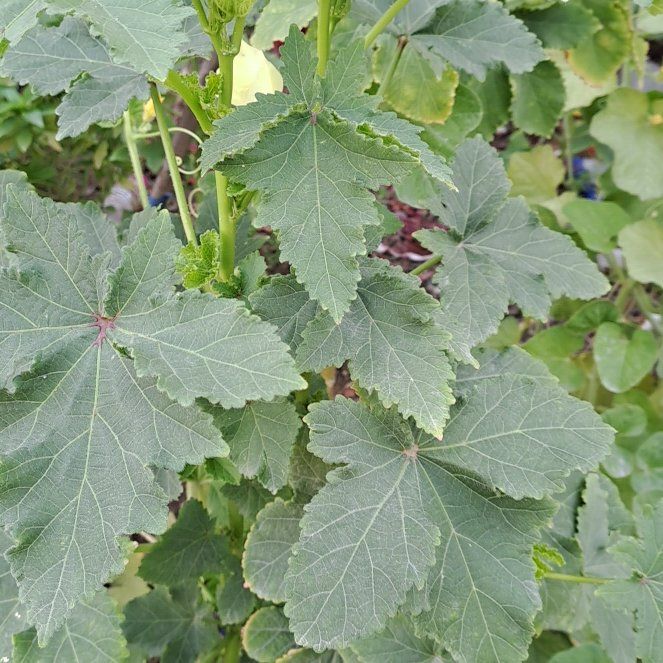
Okra

What's Eating Your Okra?

Abelmoschus esculentus
Reviewed by Kiersten Rankel M.S.
Quick Answer

For okra, the most likely culprits are stink bugs (piercing developing pods and leaving distorted, lumpy fruit that ruins the harvest) and spider mites (the iconic Southern okra pest in hot dry summers). Aphids cluster on new growth and flower buds before they open. Japanese beetles skeletonize the large lobed leaves, and flea beetles pinhole young seedlings.

Stay on top of plant care
Get seasonal reminders for watering and fertilizing, personalized for your plants.
Try Greg Free

What does the damage look like?

Tap the closest match to jump straight to the fix.

Pests, ranked by impact

Shield-shaped stink bug (Halyomorpha sp., Pentatomidae) on a plant

Stink bugs

Damage
High
Removal
Moderate
What it looks like

Shield-shaped insects 12 to 17 mm long. Brown marmorated stink bug is mottled brown with banded antennae. Native green stink bug is bright green. Cluster on developing okra pods and along the upper third of the tall stem. Drop and hide on the soil when disturbed.

What the damage looks like

Pods turn lumpy, twisted, or curled with sunken brown spots where each bug fed. Some pods develop hard corky patches and become inedible. Heavy feeding stops new pod set on a flowering plant and ruins the harvest for weeks.

How to get rid of them
Option 1

Hand-pick into soapy water at dawn, daily for 2 weeks

1

Walk the okra row at dawn while the bugs are sluggish and slow to fly.

2

Hold a wide jar of soapy water under each pod cluster and tap the stem so bugs drop into the water.

3

Repeat every morning for 2 weeks during peak pod set, which is typically July through August.

Option 2

Pyrethrin spray on the upper stem at dusk, every 5 days

Spray pyrethrin (PyGanic, ~$25) on the upper third of the stem and on developing pods at dusk. The spray breaks down quickly so it spares pollinators that visit okra flowers in the morning. Repeat every 5 days through pod set, which lasts 8 to 12 weeks in Southern gardens.

Option 3

Trap crop sunflowers or sorghum 6 to 10 feet from the okra

Stink bugs prefer sunflowers and sorghum to okra. Plant a single row 6 to 10 feet from the okra patch and check the trap crop every morning. Hand-pick or vacuum bugs off the trap before they move to the okra. The trap crop also keeps the bugs out of nearby tomatoes and beans.

Spider mite infestation on a stem with fine silk webbing and pale speckled leaf damage

Spider mites

Damage
High
Removal
Moderate
What it looks like

Almost invisible without a hand lens. Yellow-green to red-orange specks on the underside of okra's large palmately lobed leaves, especially along the central vein. Hot dry Southern summers and drought-stressed plants are exactly the conditions that trigger a population explosion.

What the damage looks like

Tiny pale dots stipple the upper leaf surface, then bronze patches spread across the lobes. Fine webbing strung between the leaf and the tall stem in heavy infestations. Affected leaves drop, and a defoliated okra plant stops flowering and pod set within a week.

How to get rid of them
Option 1

Hose-blast the leaf undersides every 3 days for 2 weeks

Hold a hose nozzle 12 inches from the underside of every lobed leaf and spray at high pressure. Mites can't reattach quickly when knocked off, and the rinse humidity slows the survivors. Repeat every 3 days for 2 weeks. Best done at dawn so the leaves dry before the afternoon heat.

Option 2

Insecticidal soap spray, every 5 days for 3 rounds

1

Spray ready-to-use insecticidal soap (Safer Insect Killing Soap, ~$10) on the underside of every leaf at dusk.

2

Cover the central vein and the leaf-petiole joints where mites cluster.

3

Repeat every 5 days for 3 rounds. That covers the full egg-to-adult cycle in summer heat.

Option 3

Deep-water once a week to break the drought-stress trigger

Soak the okra row to a depth of 6 inches once a week instead of shallow daily watering. Okra has deep taproots and pulls moisture from below, and a well-watered plant resists mite buildup far better than a drought-stressed one. Mulch 2 inches deep with straw to hold the soil moisture through hot afternoons.

Dense colony of aphids clustered on a plant stem

Aphids

Damage
Medium
Removal
Easy
What it looks like

Tiny pear-shaped insects 1 to 3 mm long, in shades of green, yellow, or black. Cluster densely on the soft new growth at the top of the stem and around hibiscus-style flower buds before they open. Cotton aphid is the species that hits okra hardest in Southern gardens.

What the damage looks like

New leaves curl and twist as aphids drain sap. Flower buds yellow and drop before opening, costing pods that would have set from those flowers. A sticky shiny film coats the leaves below, and black sooty mold grows on the residue within a week.

How to get rid of them
Option 1

Strong water blast every 2 to 3 days for 2 weeks

Hold a hose nozzle 12 inches from each colony and spray at high pressure. Most aphids dislodge and don't make it back to the plant. Aim under the curled new leaves and around the flower buds where they hide. Repeat every 2 to 3 days for 2 weeks. The fastest, cheapest fix.

Option 2

Neem oil spray at dusk, every 5 days for 3 rounds

1

Mix 2 tablespoons cold-pressed neem oil with 1 teaspoon dish soap per gallon of water.

2

Spray the underside of every leaf and into the cluster of new growth at dusk so the spray dries before pollinators arrive in the morning.

3

Repeat every 5 days for 3 rounds. Covers the egg-to-adult cycle.

Option 3

Plant alyssum or dill within 3 feet of the okra row

Sweet alyssum and dill flower for months and attract ladybugs and lacewings, which eat aphids. Plant a 3-foot strip along the okra row at transplant time. Established beneficials keep aphid pressure low for the rest of the season without spraying.

Metallic green and copper Japanese beetle (Popillia japonica) on a lantana flower

Japanese beetles

Damage
Medium
Removal
Easy
What it looks like

Metallic copper-and-green beetles about 1 cm long with white tufts along the sides. Feed in clusters on the upper canopy of the okra plant, where the largest lobed leaves catch the most sun. Most active 9 a.m. to 3 p.m. on warm days from late June through August.

What the damage looks like

Leaves chewed down to a lacy skeleton with only the veins remaining. Damage starts on the top of the plant and works down. A heavy infestation can strip the upper canopy in 3 to 4 days, slowing pod production until new leaves emerge.

How to get rid of them
Option 1

Hand-pick into soapy water in the morning, daily for 2 weeks

1

Walk the okra row in the morning while the beetles are sluggish from cool temperatures.

2

Hold a jar of soapy water under each cluster and knock the beetles off the leaves into the jar.

3

Repeat daily for 2 weeks. Beetles release a pheromone when crushed that draws more, so drop them in soap rather than squishing on the plant.

Option 2

Neem oil spray at dusk, weekly through July and August

Mix 2 tablespoons cold-pressed neem oil with 1 teaspoon dish soap per gallon and spray the upper canopy at dusk. Neem doesn't kill beetles on contact but makes the leaves less appetizing within a few days, and feeding pressure drops sharply. Repeat weekly through peak beetle season.

Option 3

Skip pheromone bag traps near the okra

Pheromone traps (the yellow-and-green hanging bags) draw far more beetles than they catch and concentrate them on whatever plant is nearby. If a neighbor sets one out, ask them to hang it at least 50 feet from your okra row.

Tiny shiny black flea beetle (Altica sp.) on a green leaf

Flea beetles

Damage
Medium
Removal
Moderate
What it looks like

Tiny shiny black beetles 2 to 3 mm long. Jump like fleas when disturbed, which is the giveaway. Hit okra hardest at the seedling and young transplant stage in late spring. Established plants over 18 inches tall mostly shrug off the damage.

What the damage looks like

Hundreds of tiny round pinholes scattered across young leaves, like a shotgun blast. Seedlings can be killed outright if the holes overwhelm the small leaf area. Damage on a tall established okra plant looks alarming but rarely reduces pod yield.

How to get rid of them
Option 1

Floating row cover from transplant until plants reach 18 inches

Drape lightweight floating row cover (Agribon AG-19, ~$20 for a 10x25 ft roll) over the okra row at transplant. Pin the edges with soil or landscape staples. Remove once the plants reach 18 inches and are tall enough to outgrow flea beetle damage. The cover is the single most effective fix because okra is wind-pollinated and doesn't need bee access until flowering.

Option 2

Spinosad spray at dusk, every 7 days for 3 weeks

1

Mix spinosad (Captain Jack's Deadbug Brew, ~$12) per the label rate.

2

Spray the top and bottom of every young leaf at dusk to spare pollinators.

3

Repeat every 7 days for 3 weeks or until the plants outgrow the seedling stage.

Option 3

Mulch with straw 2 inches deep around seedlings

Flea beetles overwinter in soil debris and emerge from the ground around your seedlings. A 2-inch straw mulch breaks up the bare-soil surface they need and slows their reach to the young leaves. Mulch also helps okra hold soil moisture through hot Southern summers.

Stay ahead of all of them

Four habits that keep okra pests rare and the harvest steady through summer.
1

Harvest pods every 2 to 3 days

Pick okra pods at 3 to 4 inches long. Oversized pods turn tough, AND they signal the plant to stop flowering, which ends the harvest early. Frequent picking also gives a quick chance to spot stink bugs, aphids, and pod damage while the colony is still small.

2

Succession-plant a second row 4 weeks after the first

A second okra planting 4 weeks behind the first keeps the harvest going if the first row gets hit by spider mites or stink bugs in late summer. Two staggered rows also dilute pest pressure across more plants and buy time to fix problems.

3

Deep-water once a week, mulch 2 inches deep

Okra has deep taproots and prefers infrequent soaking over daily shallow watering. Drought-stressed plants are exactly what spider mites need to explode. A weekly soak plus straw mulch keeps the plant vigorous and mite pressure low through Southern heat.

4

Companion plant basil and marigolds within 3 feet

Sweet basil and French marigold near the okra row mask the plant's scent from aphids and flea beetles, and the marigold flowers feed ladybugs and lacewings. Plant at transplant time after last frost. The companions look good and last all season.

Stay on top of plant care
Get seasonal reminders for watering and fertilizing, personalized for your plants.
Try Greg Free

About This Article

Kiersten Rankel M.S.
Botanical Data Lead at Greg · Plant Scientist
About the Author
Kiersten Rankel holds an M.S. in Ecology & Evolutionary Biology from Tulane University. A certified Louisiana Master Naturalist, she has over a decade of experience in science communication, with research spanning corals, cypress trees, marsh grasses, and more. At Greg, she curates species data and verifies care recommendations against botanical research.
See Kiersten Rankel's full background on LinkedIn.
Editorial Process
Pest identification and treatment guidance verified against Abelmoschus esculentus field reports from Greg's botanical database, cross-referenced with university extension sources and published horticultural research.