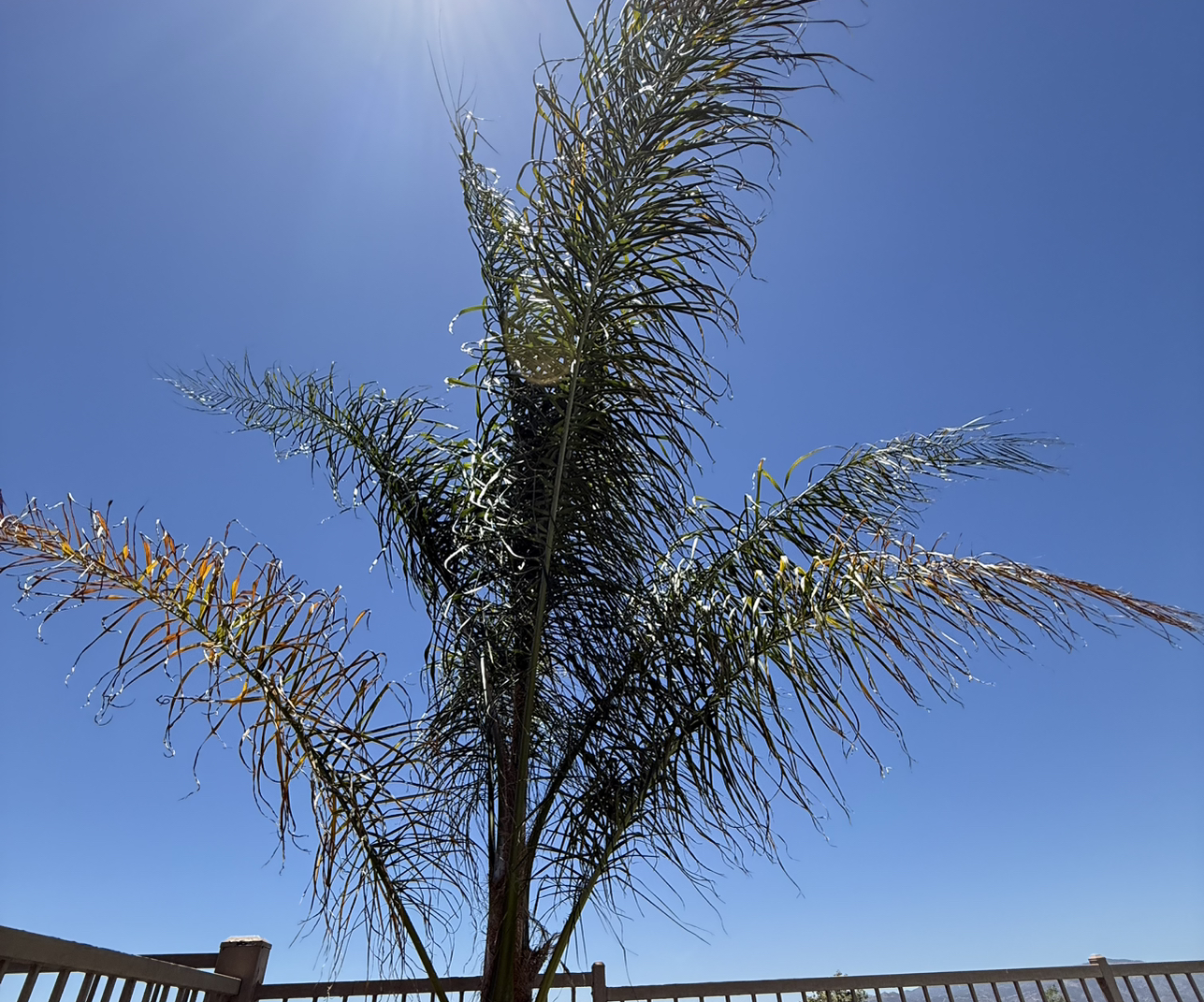
How to Water Queen Palm
Syagrus romanzoffiana
Reviewed by Kiersten Rankel M.S.
Quick Answer
Water your Queen Palm deeply every 5–7 days during the first two seasons, when the top 2 inches of soil are dry. Established trees in zones 9 to 11 only need water during long dry stretches.
Queen Palm has fibrous roots that fan out wide and shallow. Long slow soaks at the drip line build deeper drought tolerance.

Stay on top of plant care
Get seasonal reminders for watering and fertilizing — personalized for your plants.
How Often and How Much to Water
Adjust the sliders below for your pot size, light, and setting. The numbers assume a well-draining mix with organic matter and a pot or site with drainage.
Setting
Every
9days
Use
1cup
Your Watering Rhythm Across the Year
Soil dries faster in the growing season, which varies by region. Slow down watering in the off-season to avoid overwatering.
Pacific
Mountain
Midwest
Northeast
Southeast
JFMAMJJASOND
Growing season
Growing season
9days
Resting season
3–4weeks
How to Water Your Queen Palm
Water in the morning at the drip line, not at the trunk. Queen Palm absorbs water through fibrous roots that fan out under the canopy edge.
1
Water in the morning so the soil surface and any wet fronds dry before evening. This reduces leaf-spot fungal issues.
2
Apply water around the drip line, the area under the outer edge of the fronds. Most feeder roots live there, not at the trunk.
3
Soak slowly until water reaches 10 to 12 inches deep. Run a drip hose at low flow for 30 to 60 minutes.
4
Mulch 2 to 3 inches deep with bark or wood chips out to the drip line, kept a hand-width back from the trunk to avoid trunk rot.
Should You Water Your Queen Palm Today?
Queen Palm shows drought stress in the oldest fronds first while younger fronds in the canopy stay green. Check soil 4 to 6 inches down before deciding the tree is fine.
Hold off
Fronds arching gracefully and bright green
Newest unfurling spear firm and upright
Soil 4 inches down still cool and moist
Mulch underneath still damp
Recent rain in the last few days
Ready for water
Older fronds yellowing from the tips inward
Newest spear slow to unfurl
Soil 4 inches down dry and crumbly
Mulch dry through to the soil
Whole canopy looking dull or limp in heat
If Something Looks Off
Queen Palm responds to drought and to root rot with similar yellowing fronds. The soil moisture below the surface and the order of decline tell the two apart.
Underwatered
Soil
Dry and crumbly several inches down with mulch loose and powdery
Fronds
Oldest lowest fronds yellowing and crisping at the tips
Pace
Steady decline over a week or two that stabilizes within a few days of a deep soak
Next steps
Set a slow drip hose at the drip line and run for 60 minutes so water reaches 10 inches deep
Repeat the deep soak every 4 days for the next two weeks while the tree recovers
Refresh mulch out to the drip line if it has thinned in summer heat
Existing yellow fronds won't green back up. Let them drop on their own. New spears emerging from the crown are the sign the tree has bounced back
Overwatered
Soil
Stays soggy or shows standing water days after rain
Trunk
Bark at the soil line dark or with fungal growth
Fronds
Newest spear soft or pulling out easily, a sign of bud rot
Pace
Rapid collapse over days that worsens even in dry weather
Next steps
Stop supplemental watering and pull mulch back from the trunk to let the soil surface dry
Check that the planting site drains within 24 hours after rain. Queen Palm cannot tolerate sustained wet feet
If the central spear has gone soft, the bud may be rotting. This is often fatal but you can try a copper fungicide drench in the crown
For container palms, slip out of the pot, trim any black mushy roots back to firm white tissue, and repot in fresh well-draining mix
Wait at least 2 weeks before watering again, and let the top 3 inches of soil dry between waterings going forward
Got More Questions?
Why are my Queen Palm fronds yellowing?
Most often a manganese or potassium deficiency, common in Queen Palms grown outside their native range. Older fronds yellow from the tips and drop early.
A palm-specific fertilizer with manganese and potassium fixes the underlying issue. Check that watering is consistent first, since drought stress shows similar signs.
How long does my Queen Palm need supplemental water before it's established?
Plan on 2 full growing seasons. After that the root system is wide and deep enough to handle most weather without help.
An established Queen Palm holds bright green fronds through summer heat without help and pushes a strong new spear in spring.
Can I grow a Queen Palm in a container long-term?
Short term yes, long term no. Queen Palm wants to send roots wide and deep, and a container limits both.
A young palm can live in a 15 to 25 gallon pot for 3 to 5 years. After that growth slows noticeably and the palm is happier in the ground in zones 9 to 11.
Why is the central spear of my Queen Palm soft?
Bud rot from over-watering or rain saturation, the most serious problem a palm can have. The newest spear pulls out easily and the rot moves down into the crown.
Act fast. Stop watering, drench the crown with a copper-based fungicide, and improve drainage. Once the bud is gone the palm cannot recover. Some palms recover from early-stage bud rot if treated within days.
How long can my Queen Palm go without water?
An established mature palm in zones 9 to 11 tolerates 3 to 4 weeks of dry weather. Young palms in their first 2 years need water every 5 to 7 days during summer.
Deep-water before any extended dry stretch, and watch for older fronds yellowing as the first warning sign.
Can I water my Queen Palm at the trunk with a basin?
Avoid it. Trunk-zone watering encourages roots to stay close to the surface and increases risk of trunk rot.
Use a soaker hose or drip line at the drip line, the area under the outer edge of the fronds. That's where the feeder roots are.
Stay on top of plant care
Get seasonal reminders for watering and fertilizing — personalized for your plants.
About This Article

Kiersten Rankel M.S.
Botanical Data Lead at Greg · Plant Scientist
Editorial Process
Watering guidance verified against Syagrus romanzoffiana growth data from Greg's botanical database, cross-referenced with USDA hardiness zone data and published horticultural research.
290+ Greg users growing this plant
USDA hardiness zones 9b–11b
Citations:
Royal Horticultural Society
Royal Horticultural Society