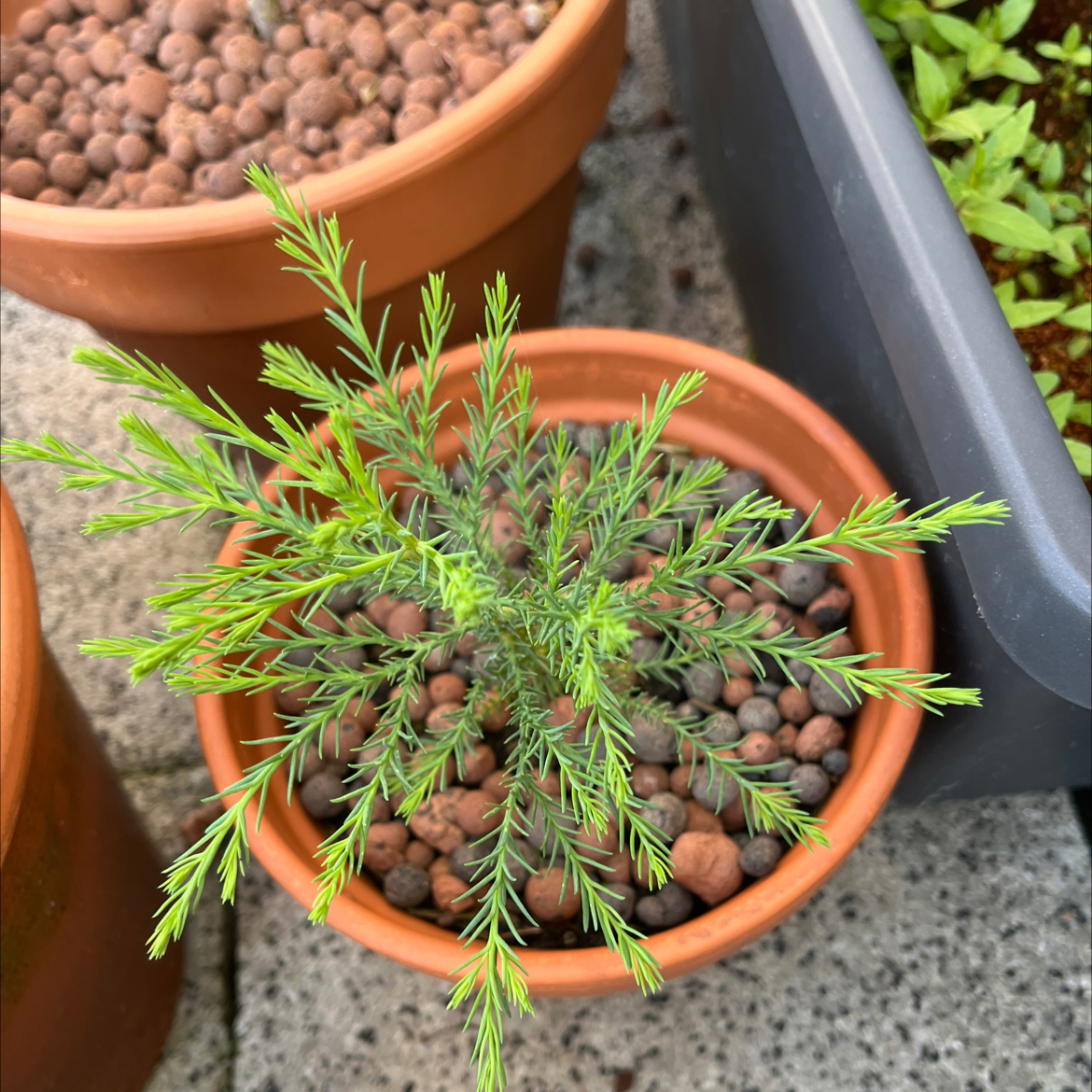
How to Water Giant Sequoia
Sequoiadendron giganteum
Reviewed by Kiersten Rankel M.S.
Quick Answer
Water your Giant Sequoia deeply every 5–7 days through the first two summers, then every 10–14 days once established. Mature in-ground trees in zones 6 to 8 only need water during drought.
Sequoias evolved on misty mountain slopes. Young trees fail from drought far more often than from rot.

Stay on top of plant care
Get seasonal reminders for watering and fertilizing — personalized for your plants.
How Often and How Much to Water
Adjust the sliders below for your pot size, light, and setting. The numbers assume a well-draining mix with organic matter and a pot or site with drainage.
Setting
Every
9days
Use
1cup
Your Watering Rhythm Across the Year
Soil dries faster in the growing season, which varies by region. Slow down watering in the off-season to avoid overwatering.
Pacific
Mountain
Midwest
Northeast
Southeast
JFMAMJJASOND
Growing season
Growing season
9days
Resting season
3–4weeks
How to Water Your Giant Sequoia
Soak deeply, drain fully. Sequoia roots run wide and shallow, so a long slow soak around the drip line beats a quick splash at the trunk.
1
Water in the morning so foliage and surface soil dry before evening, reducing fungal needle problems.
2
Apply water around the drip line, the area under the outer edge of the branches, not at the trunk. Most feeder roots live there.
3
Soak slowly until water penetrates 8 to 12 inches deep. A long drip from a hose at low flow for 30 to 60 minutes is more effective than a quick spray.
4
Mulch 3 inches deep with bark or wood chips out to the drip line, kept a hand-width back from the trunk. This holds moisture and moderates soil temperature.
Should You Water Your Giant Sequoia Today?
Young sequoias drop needles fast in drought and the damage doesn't reverse on the same branch. Check soil moisture 6 inches down before deciding to skip a watering.
Hold off
Needles look soft blue-green and uniform
New growth at branch tips firm and upright
Soil 6 inches down still cool and moist
Mulch underneath the surface still damp
Recent deep rain in the last few days
Ready for water
Needles look dull or slightly grayish
Lower interior needles browning and dropping
Soil 6 inches down dry and crumbly
Mulch dry through to the soil
Top growth wilting in afternoon sun
If Something Looks Off
Sequoias rarely show visible stress until the problem is advanced. Brown interior needles and tip dieback both happen with drought and with root rot, so the soil and the timeline tell you which.
Underwatered
Soil
Dry and dusty 6 inches down with mulch crumbling
Needles
Browning and dropping from the inner branches first then progressing outward
Pace
Steady decline over weeks that stabilizes within a day of a deep soak
Next steps
Set a slow drip hose at the drip line and run for 60 to 90 minutes so water reaches a foot deep
Repeat the deep soak every 3 days for the next two weeks while the tree recovers
Refresh mulch out to the drip line if it has thinned
Existing brown needles will drop. Wait for spring flush before judging the tree's full recovery
Overwatered
Soil
Stays soggy or pooling at the surface days after rain
Stem
Bark at the base looks dark or has fungal growth
Needles
Yellowing across whole branches with no clear pattern
Pace
Sudden branch dieback that worsens even in dry weather
Next steps
Stop supplemental watering and pull mulch back from the trunk to let the surface dry
Check that the planting site drains. If water pools after rain, the tree may be in the wrong spot
For container trees, slip it out of the pot, trim any black mushy roots back to firm pale tissue, and repot in fresh well-draining mix
Wait at least 2 weeks before watering again, and let the top 4 inches of soil dry between waterings going forward
Got More Questions?
Can I grow a Giant Sequoia in a container long-term?
Short term yes, long term no. Containers limit the deep root system sequoias rely on for stability and water access.
A young sapling can live in a 10 to 20 gallon pot for 3 to 5 years. After that the tree wants to be in the ground, ideally in zones 6 to 8 where summers are not too hot.
How long can my Giant Sequoia go without water?
An established mature tree in its native zone tolerates 4 to 6 weeks without rain. Young trees and container trees go 5 to 10 days at most before stress.
Deep-water before any extended dry stretch, and watch for needles dulling as your first warning sign.
Why are interior needles turning brown?
Some interior browning is natural fall needle drop, especially in autumn. Mature sequoias shed older interior needles every year.
If the browning spreads outward to new growth or affects whole branches, that signals drought stress or root rot, not normal turnover.
Does my Giant Sequoia need more water in hot weather?
Yes. Heat above 90F nearly doubles the tree's water demand, especially for trees in container or in their first 3 years in the ground.
During heat waves shift to deep soaks every 3 to 4 days, and consider afternoon shade for young trees if you live outside the species's natural cool-summer range.
Can I plant a Giant Sequoia in clay soil?
Only if you amend it heavily. Sequoias need deep moisture but cannot sit in waterlogged soil.
Mix in coarse compost, pine bark, and pumice to a depth of 18 inches before planting, and choose a site that drains within 24 hours after heavy rain.
Why are the lower branches dying back?
Most often light, not water. Lower branches shaded out by upper canopy branches die naturally as the tree matures.
If the dieback is happening on a young tree under 15 feet, check soil moisture and look for borer holes or fungal cankers at the base of the dead branches.
Stay on top of plant care
Get seasonal reminders for watering and fertilizing — personalized for your plants.
About This Article

Kiersten Rankel M.S.
Botanical Data Lead at Greg · Plant Scientist
Editorial Process
Watering guidance verified against Sequoiadendron giganteum growth data from Greg's botanical database, cross-referenced with USDA hardiness zone data and published horticultural research.
239+ Greg users growing this plant
USDA hardiness zones 6a–8b