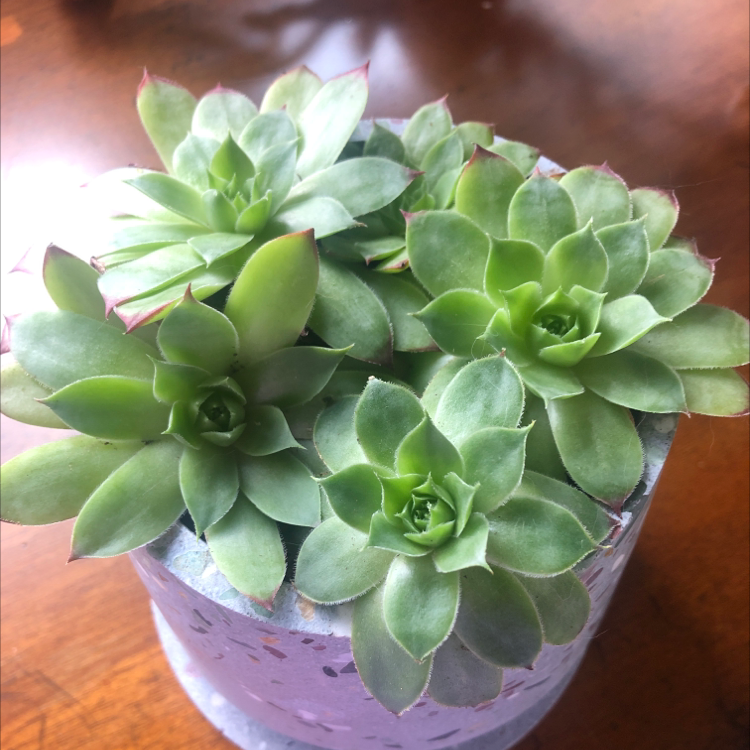
How to Water Hens and Chicks
Sempervivum spp.
Reviewed by Kiersten Rankel M.S.
Quick Answer
Water your Hens and Chicks every 14–21 days in spring and summer, only when the soil is bone-dry through the pot. Stretch to once a month or longer in winter.
These alpine succulents store water in tight rosettes and tolerate freezing temperatures and weeks of drought. The biggest mistake is watering on a schedule.

Stay on top of plant care
Get seasonal reminders for watering and fertilizing — personalized for your plants.
How Often and How Much to Water
Adjust the sliders below for your pot size, light, and setting. The numbers assume a free-draining cactus or succulent mix and a pot with drainage.
Setting
Every
9days
Use
1cup
Your Watering Rhythm Across the Year
Soil dries faster in the growing season, which varies by region. Slow down watering in the off-season to avoid overwatering.
Pacific
Mountain
Midwest
Northeast
Southeast
JFMAMJJASOND
Growing season
Growing season
9days
Resting season
3–4weeks
How to Water Your Assorted Hens and Chicks
Soak the soil, never the rosette. Water trapped between the tightly packed leaves is the fastest path to rot at the center.
1
Pour at the soil line, off to the side of the rosette. Water pooling in the center of the plant invites crown rot.
2
Soak slowly until water runs out the drainage holes. That confirms the rootball is fully wet.
3
Empty the saucer after 10 minutes so the base of the rosette isn't sitting in water.
4
Water in the morning so any drops on the leaves dry by night, especially if the plant is outdoors.
Should You Water Your Assorted Hens and Chicks Today?
Always check before you pour. These plants die from too much water far more often than too little, and the soggy-soil mistakes are usually fatal.
Hold off
Leaves feel firm and look plump
Rosette spread wide and outward
Soil sits tight against the pot wall
Soil dry on top but damp an inch down
Pot feels heavy when lifted
Ready for water
Outer leaves feel soft or look wrinkled
Rosette closing up tight
Visible gap between soil and pot wall
Soil bone-dry through the drainage hole
Pot feels almost empty
If Something Looks Off
Underwater and overwater can look similar at the rosette. Both cause leaves to soften, but the soil and the timeline tell you which one you have.
Underwatered
Soil
Bone-dry and pulled away from the pot wall
Leaves
Outer leaves wrinkled and soft, inner ones still firm
Pace
Slow shrinking over weeks that bounces back within hours of soaking
Next steps
Set the pot in a basin of room-temperature water for 15 to 20 minutes
Drain fully and return to its usual bright spot
Expect outer leaves to plump back up within a day
Existing wrinkled leaves won't fully recover. New rosette growth comes from the center
Overwatered
Soil
Stays dark and damp for over a week
Leaves
Inner leaves soft and translucent, base of rosette mushy
Pace
Sudden collapse where leaves pull off in your fingers
Next steps
Stop watering immediately and move to a bright airy spot
Pop the rosette out of the soil. Trim any black mushy roots back to firm white tissue and remove rotting outer leaves
Let the rosette air-dry on a paper towel for 1 to 2 days, then replant in fresh dry cactus mix
Wait at least 1 week before the first watering
Watch for fungus gnats around the soil. They thrive in damp pots and confirm the mix is staying wet too long
Got More Questions?
How long should I wait to water after repotting?
Wait 5 to 7 days. The roots are more sensitive to soggy soil right after a transplant, and a brief dry stretch lets any nicked tissue seal over.
When you do water, soak fully, drain the saucer, and resume the normal rhythm.
Can Hens and Chicks survive winter outside?
Yes, in most cold climates. They are hardy down to USDA zone 3 and tolerate freezing temperatures fine as long as the soil isn't waterlogged.
The killer is wet feet in winter, not cold. Plant in gritty fast-draining soil and skip watering through the cold months. Snow cover is fine.
Why is the mother rosette dying after flowering?
That is normal and expected. Sempervivum is monocarpic, meaning each rosette flowers once and then dies. The chicks growing around it carry on.
Let the spent flower stalk dry, then cut it off. The babies fill in the space within one to two seasons.
Can I use tap water?
Yes. Hens and Chicks tolerate ordinary tap water without issue. Chlorine and fluoride at typical municipal levels are not a problem for this species.
If you have very hard water and notice white mineral crust building up, switch to rainwater or distilled occasionally.
How long can I leave it alone for vacation?
Six weeks or more without trouble. Mature rosettes are walking water reservoirs and routinely go that long in their alpine habitat.
For outdoor plants, normal rainfall is enough. For indoor pots, soak deeply before you leave and don't worry about it.
Are self-watering pots OK for these?
No. Hens and Chicks rot fast in continuously moist soil. Their entire growth strategy is based on long dry stretches between rainfalls.
Use a regular pot with drainage holes and let the soil go fully dry between waterings. Self-watering systems will kill them within a season.
Stay on top of plant care
Get seasonal reminders for watering and fertilizing — personalized for your plants.
About This Article

Kiersten Rankel M.S.
Botanical Data Lead at Greg · Plant Scientist
Editorial Process
Watering guidance verified against Sempervivum spp. growth data from Greg's botanical database, cross-referenced with USDA hardiness zone data and published horticultural research.
43+ Greg users growing this plant
USDA hardiness zones 4a–11b