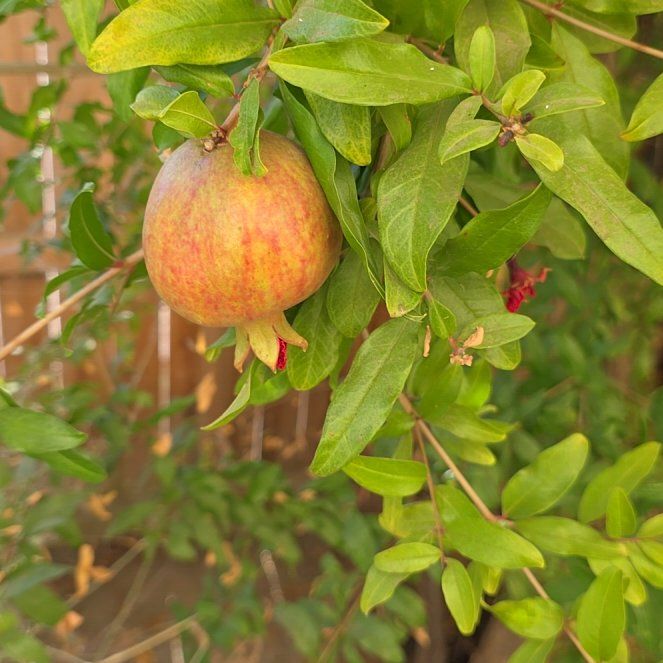
How to Water Pomegranate
Punica granatum
Reviewed by Kiersten Rankel M.S.
Quick Answer
Water your Pomegranate every 7 to 10 days from May through August when the top 2 inches of soil are dry. Stretch to every 2 to 3 weeks in fall and almost stop in winter.
Soak deeply, drain fully, and water in the morning if it lives outdoors so the leaves dry before night.

Stay on top of plant care
Get seasonal reminders for watering and fertilizing — personalized for your plants.
How Often and How Much to Water
Adjust the sliders below for your pot size, light, and setting. The numbers assume a gritty fast-draining mix and a pot or site with drainage.
Setting
Every
9days
Use
1cup
Your Watering Rhythm Across the Year
Soil dries faster in the growing season, which varies by region. Slow down watering in the off-season to avoid overwatering.
Pacific
Mountain
Midwest
Northeast
Southeast
JFMAMJJASOND
Growing season
Growing season
9days
Resting season
3–4weeks
How to Water Your Pomegranate
Soak deeply, then let the soil dry out before watering again. Pomegranates are Mediterranean plants that resent constant moisture and fruit best when the soil swings between wet and dry.
1
Water at the soil line in the morning, especially for outdoor plants. Wet leaves overnight invite fungal problems.
2
Pour slowly until water streams out the drainage holes or pools and soaks in for in-ground plants.
3
Empty saucers after 10 minutes for potted plants. Standing water rots the trunk base.
4
If the soil has gone hydrophobic and water just runs off, set the pot in a basin for 20 minutes to rehydrate the rootball.
Should You Water Your Pomegranate Today?
Always check the soil before you water. Pomegranates hate soggy roots far more than a dry stretch and they will drop fruit if the soil swings unevenly during fruiting.
Hold off
Leaves feel firm and look glossy
Branches springy with no drooping tips
Top 2 inches of soil still feel damp
Soil sits tight against the pot wall
Pot feels heavy when lifted
Ready for water
Leaves looking dull and limp
Tips of branches drooping
Top 2 inches of soil dry to the touch
Visible gap between soil and pot wall
Pot feels light when lifted
If Something Looks Off
Underwater and overwater both show as wilting leaves and dropped fruit. The soil dryness and the speed of decline tell you which is happening.
Underwatered
Soil
Dry through the pot or several inches into the ground
Leaves
Dull and limp, then yellowing inward from the edges
Pace
Slow decline that bounces back within a day of a deep soak
Next steps
Soak deeply, letting water reach the bottom roots
For potted plants set in a basin for 20 minutes if the soil has dried hard
Move out of the hottest afternoon sun for a couple of days while it recovers
Expect leaves to firm up within 24 to 48 hours. Wait for new growth before fertilizing
Overwatered
Soil
Stays dark and soggy for over a week with fungus gnats hopping off the soil
Stem
Soft or darkened at the trunk base
Leaves
Yellowing and dropping all over the plant at once
Pace
Sudden collapse that worsens even after you stop watering
Next steps
Stop watering and move potted plants to a sunnier spot with airflow
For potted plants slide out and trim dark mushy roots back to firm white tissue
Repot in fresh gritty fast-draining mix in a clean pot
Wait until the top 3 inches are fully dry before watering again
Remove leaves that have already yellowed and dropped
Got More Questions?
Why is my Pomegranate dropping its leaves?
Pomegranates are deciduous and drop their leaves every fall. New leaves return in spring once temperatures climb, so a bare plant in winter is normal.
If the leaves yellow and drop in the middle of summer, that points to overwatering, root rot, or a sudden cold snap. Check the soil and the trunk base before you assume the worst.
Should I water differently when my Pomegranate is fruiting?
Yes. During fruit development from late spring through summer, keep the soil consistently moist but never soggy. Big swings between dry and wet split the fruit.
Once fruit nears ripeness, ease back on watering. A slightly drier final stretch concentrates flavor and lowers the chance of cracking.
Can I grow my Pomegranate indoors?
Dwarf varieties like Punica granatum 'Nana' do fine in a sunny window for a few years, but full-size pomegranates struggle without a long warm season and direct sun.
Indoor specimens water on the same schedule as outdoor potted ones in summer but slow way down in winter, especially if leaves drop. Without strong light they sulk.
How do I water a Pomegranate planted in the ground?
Deep watering once a week through the heat of summer is plenty in most climates. A long slow soak at the dripline beats short shallow waterings since deep roots are what keep the plant drought tolerant later.
Mature in-ground plants barely need supplemental water in zones 8 to 10 once established, except during a real dry stretch.
How long can a potted Pomegranate go without water?
Around 2 to 3 weeks in summer for an established plant in a 12 to 14 inch pot. Smaller pots dry out faster and might only stretch to 7 to 10 days.
In winter, a deciduous plant that has dropped its leaves can go 4 to 6 weeks easily. Just make sure the pot does not stay frozen solid.
Why are my Pomegranate fruits cracking open?
Splitting fruit almost always means an uneven watering pattern, often a deep watering after a dry stretch. The skin cannot stretch fast enough to keep up with the swelling inside.
Keep watering even and steady through fruit development, mulch around the base to buffer the soil, and harvest as soon as fruit hits color so it does not split on the branch.
Stay on top of plant care
Get seasonal reminders for watering and fertilizing — personalized for your plants.
About This Article

Kiersten Rankel M.S.
Botanical Data Lead at Greg · Plant Scientist
Editorial Process
Watering guidance verified against Punica granatum growth data from Greg's botanical database, cross-referenced with USDA hardiness zone data and published horticultural research.
1,599+ Greg users growing this plant
USDA hardiness zones 7a–11b