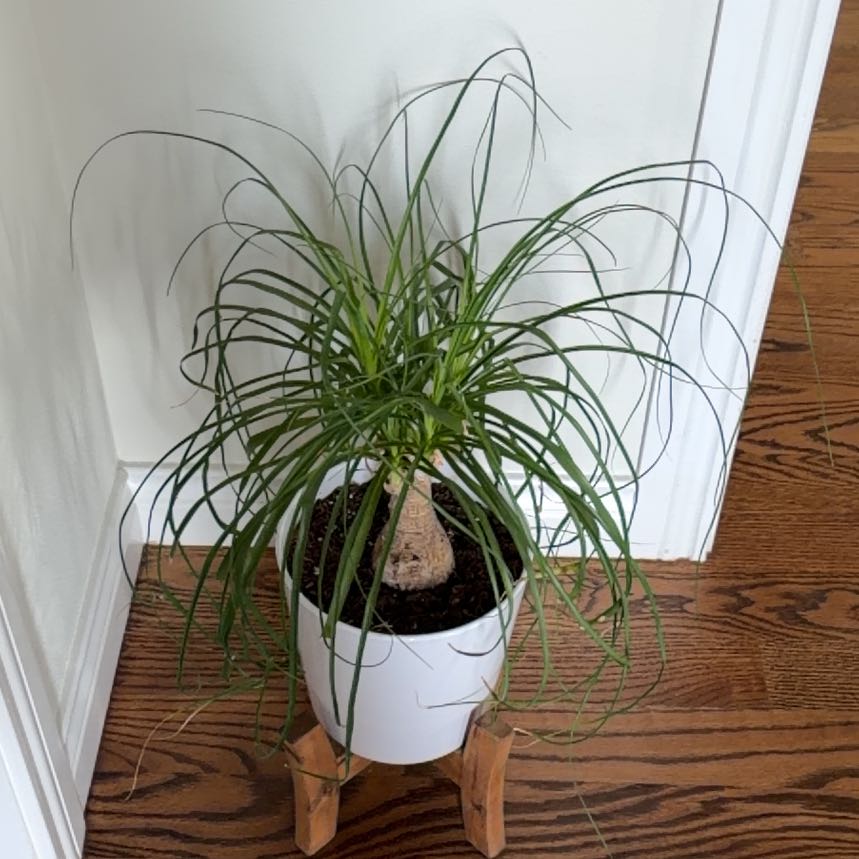
How to Water Ponytail Palm
Beaucarnea recurvata
Reviewed by Kiersten Rankel M.S.
Quick Answer
Water your Ponytail Palm every 14–21 days in spring and summer, only when the soil is bone-dry through the pot. Stretch to once a month or longer in winter.
The swollen base stores water like a built-in reservoir. The biggest mistake is watering on a schedule instead of checking the soil first.

Stay on top of plant care
Get seasonal reminders for watering and fertilizing — personalized for your plants.
How Often and How Much to Water
Adjust the sliders below for your pot size, light, and setting. The numbers assume a free-draining cactus or succulent mix and a pot with drainage.
Setting
Every
9days
Use
1cup
Your Watering Rhythm Across the Year
Soil dries faster in the growing season, which varies by region. Slow down watering in the off-season to avoid overwatering.
Pacific
Mountain
Midwest
Northeast
Southeast
JFMAMJJASOND
Growing season
Growing season
9days
Resting season
3–4weeks
How to Water Your Ponytail Palm
Soak deeply, then let it dry out completely. Ponytail Palms rot fast if the caudex stays wet, so the long dry stretch between waterings is more important than the soak itself.
1
Pour at the soil line, not over the swollen base. Water pooling against the caudex is the fastest path to rot.
2
Soak slowly until water runs out the drainage holes. That confirms the rootball is fully wet, not just the top.
3
Empty the saucer after 10 minutes so the base of the trunk is never sitting in water.
4
Wait until the soil is bone-dry through the pot before the next watering. Test by sliding a finger 2 inches in or lifting the pot.
Should You Water Your Ponytail Palm Today?
Always check before you pour. Ponytail Palms die from too much water far more often than too little, so when in doubt, wait another week.
Hold off
Caudex feels firm and full
Leaves arch out smooth and glossy
Soil sits tight against the pot wall
Finger 2 inches into the soil feels any moisture
Pot feels heavy when lifted
Ready for water
Caudex feels slightly soft or shrunken
Leaves look dull or tips brown and crisp
Visible gap between soil and pot wall
Soil bone-dry through the drainage hole
Pot feels almost empty
If Something Looks Off
Underwater and overwater can look similar at first glance. Both stop water from moving up to the leaves so the foliage browns either way, but the timeline and the caudex tell you which one you have.
Underwatered
Soil
Bone-dry and pulled away from the pot wall
Caudex
Feels slightly soft or wrinkled at the surface
Leaves
Brown crispy tips on the longest leaves first
Pace
Slow decline over weeks that bounces back within a day of soaking
Next steps
Set the pot in a basin of room-temperature water for 20 to 30 minutes
Drain fully and return to its usual spot
Expect the caudex to plump up within a few days
Existing brown tips won't reverse but the leaves still photosynthesize from the green parts. Wait for new growth before fertilizing
Overwatered
Soil
Stays dark and damp for over a week
Caudex
Spongy or browning at the soil line with a sour smell
Leaves
Yellow from the base upward and pull free easily
Pace
Sudden collapse that worsens even after you stop watering
Next steps
Stop watering immediately and move to a bright airy spot
Pop out of the pot and trim any dark mushy roots back to firm white tissue. Inspect the caudex and cut away any soft spots
Repot in fresh dry cactus or succulent mix in a clean pot with drainage. Often a smaller pot helps the soil dry faster
Wait at least 2 weeks before the first watering to let cut tissue seal over
Watch for fungus gnats around the soil. They thrive in damp pots and confirm the soil is staying wet too long
Got More Questions?
How long should I wait to water after repotting?
Wait 7 to 10 days. Repotting always damages a few fine roots and Ponytail Palms are slow to seal those wounds. A long dry stretch lets the cuts callous over before you reintroduce moisture.
When you do water, soak fully, drain the saucer, and resume the normal rhythm.
Why is the swollen base getting soft?
A soft or squishy caudex is almost always rot from too much water. The base stores water and stays firm when healthy. If yours has gone soft, stop watering and check for darkening or a sour smell at the soil line.
If the soft area is small, scrape it back to firm tissue, dust with cinnamon, and let the plant dry out for several weeks before watering again.
Can I use tap water?
Yes. Ponytail Palms tolerate ordinary tap water without issue. Chlorine and fluoride at typical municipal levels are not a problem for this species.
If you have very hard water and notice white crust on the soil surface, flush with rainwater or distilled water once or twice a year to clear mineral buildup.
How long can I leave it alone for vacation?
Four to six weeks is fine for a mature plant in a typical pot. The caudex carries weeks of stored water, so a soak before you leave covers most trips.
For longer stretches, move it out of direct sun while you're away. Less light means less water demand.
Should I water it less in winter?
Yes, significantly. Growth slows from late November through February and the plant uses much less water. Stretch waterings to once a month or longer and let the soil go fully bone-dry between soakings.
The biggest winter mistake is watering on the same summer schedule. Cool roots in damp soil rot fast.
Why are the leaf tips turning brown?
Brown crispy tips usually mean either underwatering or mineral buildup from very hard water. Check the caudex first. If it feels firm and full, the soil is probably the issue, so flush with distilled water.
If the caudex feels soft, the plant is genuinely thirsty. Soak deeply and the new growth coming in should arrive clean.
Stay on top of plant care
Get seasonal reminders for watering and fertilizing — personalized for your plants.
About This Article

Kiersten Rankel M.S.
Botanical Data Lead at Greg · Plant Scientist
Editorial Process
Watering guidance verified against Beaucarnea recurvata growth data from Greg's botanical database, cross-referenced with USDA hardiness zone data and published horticultural research.
20,734+ Greg users growing this plant
USDA hardiness zones 9a–11b