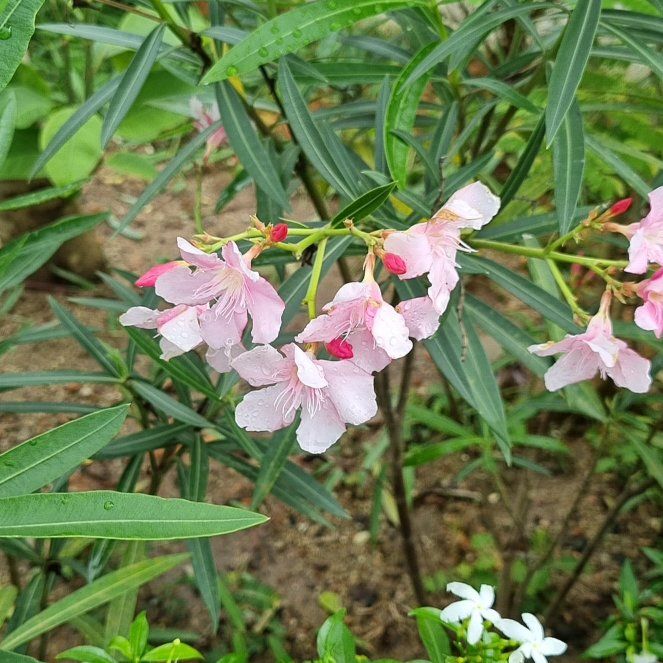
How to Water Oleander
Nerium oleander
Reviewed by Kiersten Rankel M.S.
Quick Answer
Water a newly planted oleander deeply once a week through the first growing season. Established plants only need water during long dry spells, every 2 to 4 weeks in summer.
This Mediterranean shrub tolerates drought far better than soggy soil. Wear gloves. Every part of the plant is toxic.

Stay on top of plant care
Get seasonal reminders for watering and fertilizing — personalized for your plants.
How Often and How Much to Water
Adjust the sliders below for your pot size, light, and setting. The numbers assume a gritty fast-draining mix and a pot or site with drainage.
Setting
Every
9days
Use
1cup
Your Watering Rhythm Across the Year
Soil dries faster in the growing season, which varies by region. Slow down watering in the off-season to avoid overwatering.
Pacific
Mountain
Midwest
Northeast
Southeast
JFMAMJJASOND
Growing season
Growing season
9days
Resting season
3–4weeks
How to Water Your Oleander
Soak the root zone deeply, then let it dry. Oleander is built for hot dry summers and a habit of frequent shallow watering does more harm than a long drought.
1
Water in the morning so any wet foliage dries through the day. Oleander tolerates wet leaves but morning watering still saves more water from evaporation.
2
Pour at the base of the plant, not on the leaves. A slow trickle from a hose for several minutes lets water reach the deep roots.
3
Soak deeply enough that water reaches 12 inches down for an established shrub. That is 5 to 15 gallons depending on size.
4
Wear gloves and avoid pruning sap or sawdust around food, kids, or pets. Every part of oleander is highly toxic if ingested or if sap gets in eyes.
Should You Water Your Oleander Today?
Oleander handles long dry spells far better than wet feet. When in doubt, wait another week and check the soil deeper down.
Hold off
Leaves look firm and dark green
New growth holding its shape
Soil 4 inches down feels cool and slightly damp
Recent rain in the past week or two
Mulch underneath still moist
Ready for water
Leaves dull or curling along the midrib
Tips of new shoots wilting in afternoon sun
Soil 4 inches down dry and crumbly
Cracks opening in the soil near the base
Hot dry spell with no rain for over 3 weeks
If Something Looks Off
Oleander shows almost the same symptoms in both extremes, with yellowing leaves and dieback. The soil and timeline tell the difference.
Underwatered
Soil
Dry several inches down with cracking near the base
Leaves
Older leaves yellow and drop while new growth wilts in heat
Pace
Gradual decline over weeks that recovers slowly after a deep soak
Next steps
Run a slow soak from a hose at the base for 30 to 60 minutes so water reaches the deep roots
Apply a few inches of mulch around the root zone but keep it off the trunk
Check again in a few days. Recovery from real drought stress takes a week or more
Existing damage will not reverse but the green leaves still photosynthesize. Wait for new growth before fertilizing
Overwatered
Soil
Stays soggy days after watering with a sour smell
Stem
Bark at the base soft or weeping sap
Leaves
Mass yellowing with brown leaf spots and twig dieback from the tips
Pace
Sudden decline that worsens after rain or watering
Next steps
Stop supplemental watering and let the soil dry fully
Pull mulch back from the trunk so the base of the plant can breathe
If the plant is in a container, check for blocked drainage and tip out any standing water
Wait at least 3 to 4 weeks before watering again so soggy soil can fully drain
Prune any dead twigs back to firm green wood and discard the trimmings safely. Wear gloves throughout
Got More Questions?
Is oleander as toxic as people say?
Yes. Every part of oleander is highly toxic to people, pets, and livestock. The sap can irritate skin and eyes. Smoke from burning trimmings is also toxic.
Wear gloves when pruning, dispose of trimmings in the trash rather than burning or composting, and keep the plant away from grazing animals and children who might mouth a leaf or twig.
How long until my newly planted oleander can survive on rainfall alone?
One full growing season in mild Mediterranean climates, two seasons in hotter or drier zones. Through the first summer water deeply once a week.
From the second year on, an established oleander only needs water during true droughts, usually 3 weeks or more without rain.
Should I water oleander in winter?
Only during truly dry winters. Oleander is evergreen but goes mostly dormant in cool weather and needs almost no water below 50F.
If you live where winter rain is reliable, skip watering entirely. In a dry winter desert climate, give a deep soak every 4 to 6 weeks on a day above freezing.
Why are leaves yellowing across the whole shrub?
Mass yellowing usually means soggy roots, not drought. Oleander hates wet feet and will yellow and drop leaves in heavy clay soil that holds water.
Check drainage. Pull mulch off the trunk. Skip a few weeks of watering. A drought-stressed oleander tends to drop older leaves while new growth wilts in heat, which looks different.
Can I run a drip line on my oleanders?
Yes, but set it for occasional deep watering, not daily drips. A drip line that runs daily keeps the root zone constantly damp and oleander will rot.
A better setup is a soaker hose run for an hour every 2 to 3 weeks during dry spells, or emitters set to deliver several gallons in a single long session.
How long should I wait to water after planting?
Water immediately after planting to settle the soil. Then water deeply twice a week for the first 2 weeks while the plant settles in.
After that, drop to once a week for the rest of the first growing season. From the second year drop further to deep watering only during dry spells.
Stay on top of plant care
Get seasonal reminders for watering and fertilizing — personalized for your plants.
About This Article

Kiersten Rankel M.S.
Botanical Data Lead at Greg · Plant Scientist
Editorial Process
Watering guidance verified against Nerium oleander growth data from Greg's botanical database, cross-referenced with USDA hardiness zone data and published horticultural research.
1,891+ Greg users growing this plant
USDA hardiness zones 8a–10b