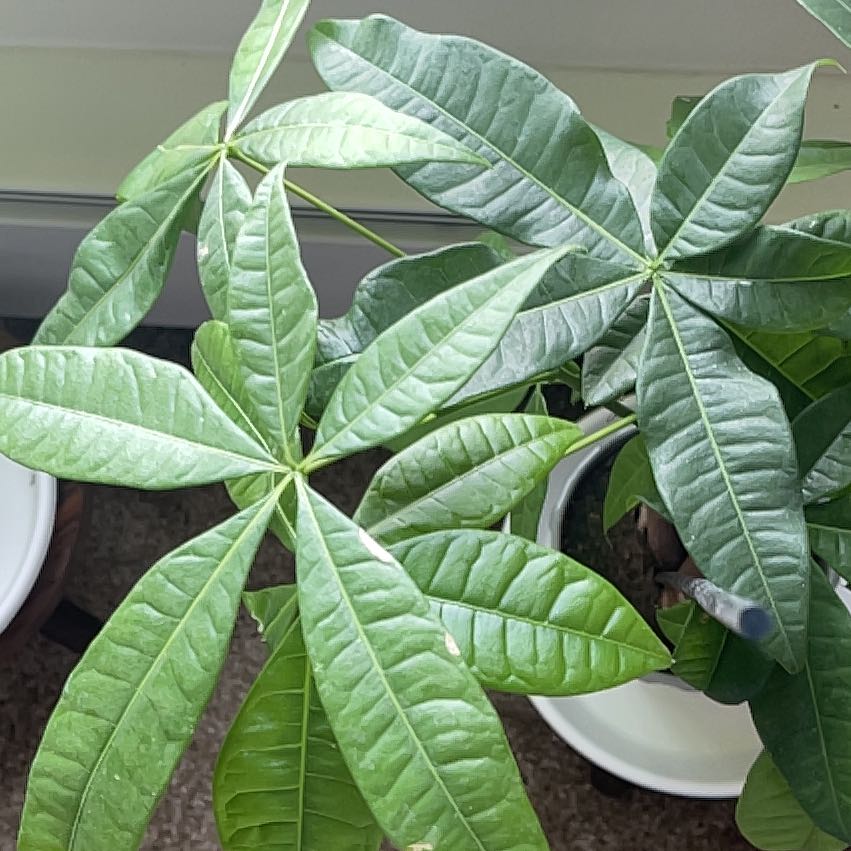
How to Water Money Tree
Pachira aquatica
Reviewed by Kiersten Rankel M.S.
Quick Answer
Water your Money Tree every 7–10 days in spring and summer when the top inch of soil is dry. Stretch to every 14–18 days in winter.
Despite the swamp-tree origin, container-grown Money Trees rot fast in soggy soil. Soak deeply, drain fully, and use room-temperature water.

Stay on top of plant care
Get seasonal reminders for watering and fertilizing — personalized for your plants.
How Often and How Much to Water
Adjust the sliders below for your pot size, light, and setting. The numbers assume a chunky well-draining mix with perlite or pumice and a pot with drainage.
Setting
Every
9days
Use
1cup
Your Watering Rhythm Across the Year
Soil dries faster in the growing season, which varies by region. Slow down watering in the off-season to avoid overwatering.
Pacific
Mountain
Midwest
Northeast
Southeast
JFMAMJJASOND
Growing season
Growing season
9days
Resting season
3–4weeks
How to Water Your Money Tree
Soak deeply, drain fully. The braided trunk hides moisture problems until the leaves drop, so the technique below keeps the rootball hydrated without leaving the trunk in standing water.
1
Use room-temperature water at the soil line, not directly on the trunk. Cold winter tap water can slow recovery for tropicals.
2
Pour slowly until water runs out the drainage holes. That tells you the rootball is fully soaked, not just the top inch.
3
Empty the saucer after 10 minutes so the base of the trunk isn't sitting in water.
4
Lift the pot before the next watering. A heavy pot still holds water inside the rootball even if the surface looks dry.
Should You Water Your Money Tree Today?
Always check before you pour. Money Trees handle a missed watering far better than a soggy week, so when in doubt, wait another day.
Hold off
Leaves feel firm and look glossy
Leaflets held up and outward on their stalks
Trunk firm at the soil line
Soil dry on top but damp an inch down
Pot feels heavy when lifted
Ready for water
Lower leaves drooping or curling slightly
Top leaflets look dull and limp
Top inch of soil dry to the touch
Visible gap between soil and pot wall
Pot feels light when lifted
If Something Looks Off
Underwater and overwater both end in dropping leaves. The difference is how fast it happens and what the trunk feels like at the soil line.
Underwatered
Soil
Bone-dry and pulled away from the pot wall
Trunk
Stays firm at the soil line
Leaves
Crisp brown edges starting on the older leaflets
Pace
Slow decline that bounces back within a day of soaking
Next steps
Set the pot in a basin of room-temperature water for 20 to 30 minutes
Drain fully and return to its usual spot out of harsh afternoon sun
Expect drooping leaflets to lift back up within 24 hours
Existing brown edges won't reverse but the leaves still photosynthesize from the green parts. Wait for new growth before fertilizing
Overwatered
Soil
Stays dark and damp for over a week with a sour smell
Trunk
Soft or browning at the soil line
Leaves
Yellow leaflets dropping from the inside out
Pace
Sudden mass leaf drop that worsens even after you stop watering
Next steps
Stop watering immediately and move to a bright airy spot
Pop out of the pot and trim any dark mushy roots back to firm white tissue. Check the bottom of the trunk for soft spots and cut them away
Repot in fresh chunky well-draining mix in a clean pot with drainage holes
Wait until the top 2 inches of soil are dry before the first watering
Watch for fungus gnats around the soil. They thrive in damp pots and confirm the mix is staying wet too long
Got More Questions?
How long should I wait to water after repotting?
Wait 5 to 7 days. Repotting always damages a few fine roots and a brief dry stretch lets them seal over before you flood the pot.
When you do water, soak fully, drain the saucer, and resume the normal rhythm.
Why are leaves yellowing and falling off?
Yellow leaves dropping from the inside out almost always mean too much water. The roots can't take up oxygen and the plant sheds older leaves to compensate. Check if the soil has been damp for more than a week.
If the soil is soggy, stop watering, move to a brighter spot, and consider repotting into a smaller pot with fresh dry mix.
Can I use tap water?
Yes. Money Trees tolerate ordinary tap water without issue. Chlorine and fluoride at typical municipal levels are not a problem for this species.
If you notice white crust on the soil surface from very hard water, flush with rainwater or distilled water once or twice a year.
How long can I leave it alone for vacation?
About 2 weeks for a mature plant in a typical pot. Soak deeply before you leave and move it slightly back from the brightest window so it uses less water while you're away.
For longer trips, ask someone to do a finger-check at the 2-week mark and water only if the top 2 inches are dry.
Should I water the braided trunk?
No. Water at the soil line only. Pouring water onto the braided trunk can cause rot at the joins where the strands cross.
The trunk doesn't absorb water like roots do. Soaking it just keeps moisture trapped against the bark.
Why is one of the trunks dying?
Braided Money Trees are several young saplings woven together, so one strand can fail without the others. Usually it's because that strand had weaker roots or the braid trapped moisture against it.
If one trunk has gone soft or hollow, cut it away cleanly at the soil line. The remaining trunks will fill in over time.
Stay on top of plant care
Get seasonal reminders for watering and fertilizing — personalized for your plants.
About This Article

Kiersten Rankel M.S.
Botanical Data Lead at Greg · Plant Scientist
Editorial Process
Watering guidance verified against Pachira aquatica growth data from Greg's botanical database, cross-referenced with USDA hardiness zone data and published horticultural research.
57,234+ Greg users growing this plant
USDA hardiness zones 10a–12b