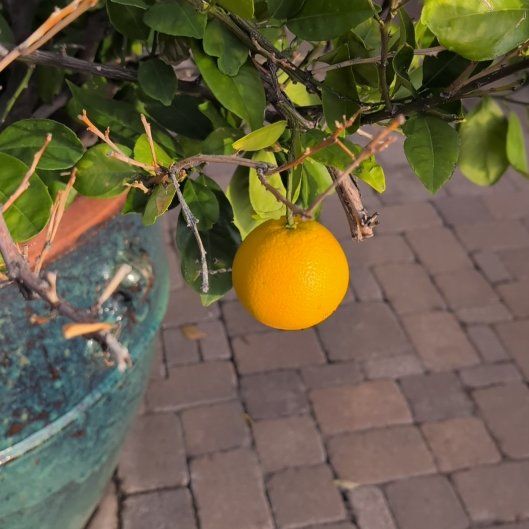
How to Water Meyer Lemon Tree
Citrus x limon 'Meyer'
Reviewed by Kiersten Rankel M.S.
Quick Answer
Water your Meyer lemon every 7–10 days from spring through early fall, when the top 2 inches of soil feel dry. Stretch to 14–21 days in winter.
Soak deeply until water runs out the drainage holes, then empty the saucer. Citrus drop leaves and buds fast if roots stay soggy.

Stay on top of plant care
Get seasonal reminders for watering and fertilizing — personalized for your plants.
How Often and How Much to Water
Adjust the sliders below for your pot size, light, and setting. The numbers assume a chunky well-draining mix with perlite or pumice and a pot with drainage.
Setting
Every
9days
Use
1cup
Your Watering Rhythm Across the Year
Soil dries faster in the growing season, which varies by region. Slow down watering in the off-season to avoid overwatering.
Pacific
Mountain
Midwest
Northeast
Southeast
JFMAMJJASOND
Growing season
Growing season
9days
Resting season
3–4weeks
How to Water Your Meyer Lemon Tree
Soak the rootball thoroughly, then let it drain. Citrus grow best on a deep-and-dry rhythm, never on a steady-moist one.
1
Pour room-temperature water at the soil line and circle the trunk evenly. Cold water from the winter tap can stall the roots and trigger leaf drop.
2
Keep pouring slowly until water flows freely from the drainage holes. That tells you the rootball is fully soaked, not just the top.
3
Empty the saucer or cache pot after 15 minutes so the roots aren’t sitting in water. Soggy feet are the fastest way to lose a Meyer.
4
If your tree lives outside, water in the morning so any splashed leaves dry before night and the roots get a full day to absorb.
Should You Water Your Meyer Lemon Tree Today?
Always check before you pour. Citrus drop flowers and fruit at the first hint of root stress, and root rot moves faster than dry soil ever will.
Hold off
Leaves feel firm and look glossy
New growth tips standing upright
Top inch of soil dry but damp 2 inches down
Soil sits tight against the pot wall
Pot feels heavy when lifted
Ready for water
Top 2 inches of soil dry and crumbly
Leaves curling upward at the edges
Newest leaves looking dull or drooped
Visible gap between soil and pot wall
Pot feels noticeably light
If Something Looks Off
Underwater and overwater both look like leaf drop on a Meyer lemon. The trick is reading the soil and the speed of the decline alongside the leaves.
Underwatered
Soil
Bone-dry through the pot and pulled away from the wall
Leaves
Older leaves curl up and drop a few at a time
Pace
Slow decline that perks up within a day of a deep soak
Next steps
Set the pot in a basin of room-temperature water for 30 minutes so the rootball can rehydrate from below
Drain fully and return the tree to its usual bright spot
Expect new leaves to lift within 24 hours and any unopened flower buds to hold
Wait until you see fresh growth before fertilizing again
Overwatered
Soil
Stays dark and damp for a week with a sour smell
Stem
Bark soft or peeling near the soil line
Leaves
Yellow leaves drop in waves with healthy-looking green ones still attached
Pace
Sudden collapse that worsens even after you stop watering
Next steps
Stop watering and move the tree to a bright spot with good airflow
If you see fungus gnats hovering around the soil, the mix has stayed too wet
Slide the rootball out of the pot and trim any dark mushy roots back to firm white tissue
Repot in fresh chunky citrus mix in a clean pot with drainage holes
Wait 7 to 10 days before the first watering and let the top 2 inches dry first
Got More Questions?
Why is my Meyer lemon dropping leaves and flower buds?
Citrus drop leaves and buds when something at the root level changed. The two usual suspects are a recent move (different light or temperature) and inconsistent watering, especially letting it go bone-dry then soaking it.
Fix the cadence first. Check soil moisture every 3 to 4 days during flowering and water on a deep-and-dry rhythm rather than little sips.
Can I use tap water on a Meyer lemon?
Yes. Citrus aren’t fussy about chlorine or fluoride the way calatheas are. If your water is very hard, leaf tips can crisp over time, and a watering with rainwater or filtered water now and then helps flush mineral buildup.
Never water with softened water from a whole-house softener. The added sodium will damage citrus roots.
Should I water more when the tree is flowering or fruiting?
Yes, modestly. A flowering Meyer uses water faster than a resting one, so you may shift from every 10 days to every 7. The key is keeping moisture even, since dry-then-soaked swings are what cause flower drop.
Check the soil every few days during heavy bloom and never let the top 2 inches go bone-dry while fruit is sizing up.
How long can I leave a Meyer lemon while I’m on vacation?
About 10 to 14 days for a tree in a normal-sized pot, longer in winter and shorter when it’s flowering or fruiting in summer.
Deep-water the day you leave, move the tree out of direct afternoon sun to slow evaporation, and ask a neighbor to check it after 10 days if you’re gone longer.
Are self-watering pots a good idea for Meyer lemons?
Not really. Citrus prefer a clear wet-then-dry cycle, and a constant reservoir tends to keep the lower roots too damp.
If you only have a self-watering pot, run it dry for a week between fills and use a chunky, fast-draining mix to compensate.
Why are my new leaves smaller and lighter green than the old ones?
That’s usually low light or low feeding, not water. Meyer lemons make full-sized dark-green leaves only when they’re getting at least 6 hours of direct sun a day.
Move the tree to your sunniest window or run it under a grow light, and resume citrus fertilizer once the soil moisture is back on a normal cadence.
Stay on top of plant care
Get seasonal reminders for watering and fertilizing — personalized for your plants.
About This Article

Kiersten Rankel M.S.
Botanical Data Lead at Greg · Plant Scientist
Editorial Process
Watering guidance verified against Citrus x limon 'Meyer' growth data from Greg's botanical database, cross-referenced with USDA hardiness zone data and published horticultural research.
5,421+ Greg users growing this plant
USDA hardiness zones 9a–11b