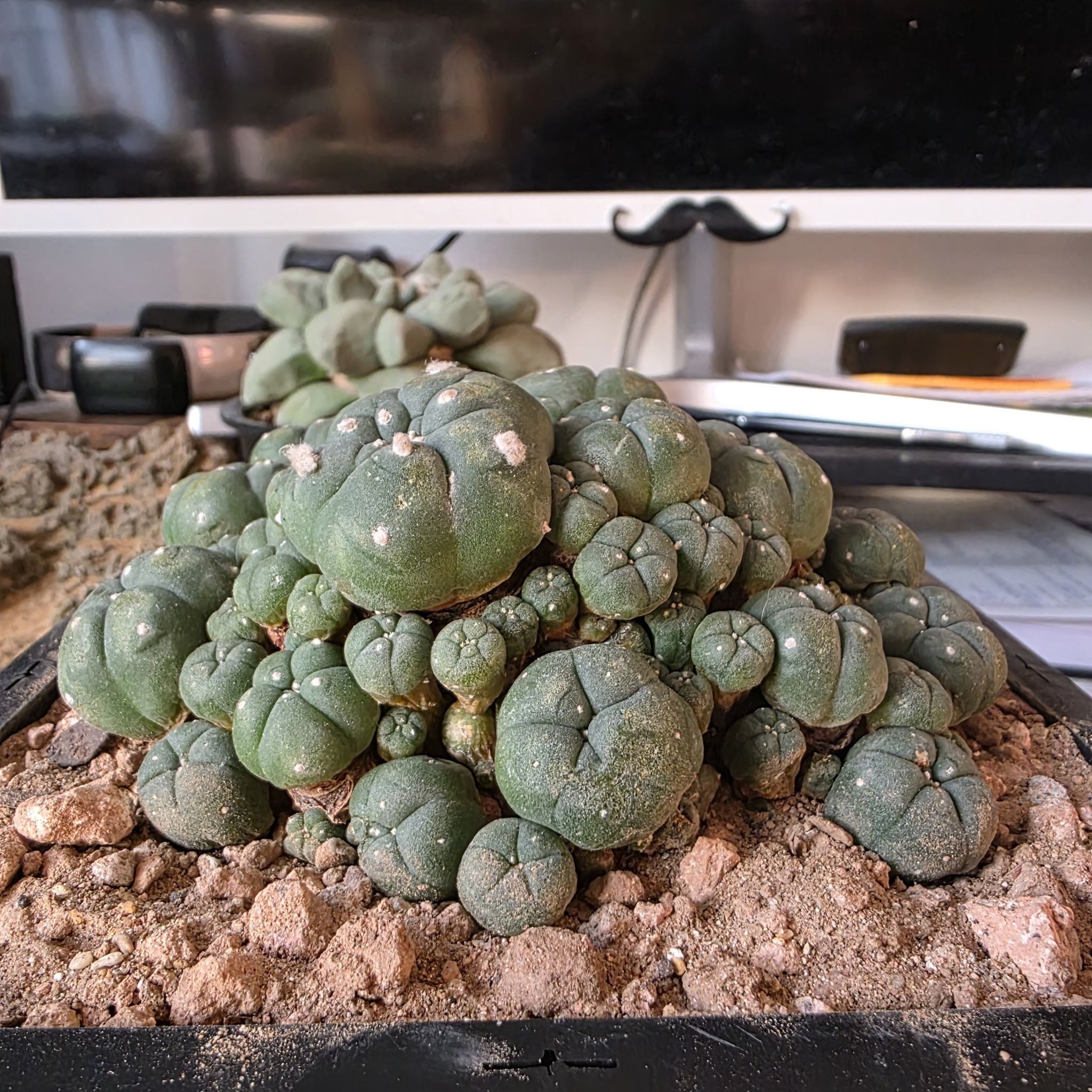
How to Water Peyote
Lophophora williamsii
Reviewed by Kiersten Rankel M.S.
Quick Answer
Water Peyote when the soil is bone-dry through the pot, roughly every 21–28 days from May through September. Stop watering from late October through February while the plant rests.
Peyote stores water in a thick taproot and shrinks between waterings. A wrinkled button is normal and not a sign to water.

Stay on top of plant care
Get seasonal reminders for watering and fertilizing — personalized for your plants.
How Often and How Much to Water
Adjust the sliders below for your pot size, light, and setting. The numbers assume a gritty cactus mix with at least 50% mineral content and a pot with drainage.
Setting
Every
9days
Use
1cup
Your Watering Rhythm Across the Year
Soil dries faster in the growing season, which varies by region. Slow down watering in the off-season to avoid overwatering.
Pacific
Mountain
Midwest
Northeast
Southeast
JFMAMJJASOND
Growing season
Growing season
9days
Resting season
3–4weeks
How to Water Your Peyote
Soak deeply, then leave it alone for weeks. Peyote is one of the most rot-prone cacti in cultivation. Water frequency, not technique, is what kills most plants.
1
Water in the morning so the surface dries before night. Cool damp nights are when crown rot takes hold.
2
Pour at the soil line, never on the button. Water sitting on the crown for hours is the most common path to rot.
3
Soak until water runs out the drainage holes. The taproot needs to be fully wetted to refill, not a surface splash.
4
Empty the saucer immediately. Don't let the pot sit in any standing water.
Should You Water Your Peyote Today?
Peyote rots far more easily than it dries out. A wrinkled or slightly shrunken button is fine. Soft mushy tissue at the base or any dark spot means stop watering immediately.
Hold off
Button feels firm even if slightly wrinkled
Top growth tight with no soft spots
Soil still slightly cool to the touch deep in the pot
Less than 3 weeks since the last watering
Pot weight noticeable when lifted
Ready for water
Button visibly shrunken and pulled inward
Soil bone-dry through the drainage hole
More than 3 weeks since the last watering in growing season
Pot feels almost empty
Button still firm with no soft spots anywhere
If Something Looks Off
Peyote shows rot and drought differently than a leafy plant. The body shrinks gradually when thirsty and turns soft or dark when over-watered. The texture of the body tells you which.
Underwatered
Soil
Bone-dry through the drainage hole and powder dry on top
Body
Visibly shrunken with deep wrinkles around the ribs
Pace
Slow steady shrinkage that plumps back within a week of a deep soak
Next steps
Soak the pot thoroughly in the morning until water runs out the drainage holes
Set the plant in bright light and let the soil go bone-dry again before the next watering
Expect the body to plump back over 1 to 2 weeks. Don't water again until the soil is fully dry
Overwatered
Soil
Stays damp for more than a week after watering with a sour smell
Body
Soft mushy tissue at the base or dark sunken spots on the crown
Pace
Sudden collapse that worsens even after you stop watering
Next steps
Stop watering immediately and move to a bright airy spot. Watch for fungus gnats hovering above the soil, a sign the mix has stayed too wet too long
Pop the plant out of the pot and inspect the taproot. Trim any black mushy tissue back to firm white root with a sterile blade
Let the cut surface dry and callus over for 1 to 2 weeks before repotting
Repot in fresh dry gritty cactus mix in a clean unglazed pot. Wait at least 3 weeks before the first watering
If the rot has reached the crown, the plant likely cannot be saved. Cleanly cut healthy tissue above the rot and treat as a propagation cutting
Got More Questions?
How long can my Peyote go without water?
Easily 6 to 8 weeks during the growing season, and the entire winter dormancy with no water at all.
During vacations or extended trips, simply skip the watering. Peyote is far more often killed by frequent watering than by any drought stretch you would set up at home.
Why is my Peyote shrinking and wrinkling?
Most often this is normal between waterings. The body shrinks as the taproot uses stored water and plumps back after the next deep soak.
Deep wrinkles that don't recover after watering can mean root damage or compacted soil. Check the roots and consider repotting in fresh gritty mix.
Can I use tap water on my Peyote?
Yes. Peyote is not sensitive to chlorine or fluoride at typical tap water levels.
If your tap water has very high mineral content you may see white crust on the soil over time. Flush with distilled water once a year or repot in fresh mix every 3 to 4 years to prevent salt buildup.
Should I water differently in winter?
Stop watering entirely from late October through February. Peyote enters dormancy and any water during this period rots the plant.
If the plant looks very shrunken in late winter you can give a single light watering on a warm sunny day in February. Otherwise wait until you see new growth on top in early spring.
Can I grow Peyote in a self-watering pot?
Absolutely not. Self-watering pots keep the soil consistently moist, and Peyote rots within weeks in those conditions.
Use an unglazed terracotta pot with multiple drainage holes. Terracotta wicks moisture out of the soil and gives the rootball the dry-down it needs.
Why isn't my Peyote growing?
Peyote is one of the slowest-growing cacti in cultivation. A healthy plant adds about 1 cm of diameter per year, sometimes less.
If the plant is firm and not shrinking, slow growth is normal. Increase light and consider a half-strength cactus fertilizer once or twice in summer if growth has stalled completely for over a year.
Stay on top of plant care
Get seasonal reminders for watering and fertilizing — personalized for your plants.
About This Article

Kiersten Rankel M.S.
Botanical Data Lead at Greg · Plant Scientist
Editorial Process
Watering guidance verified against Lophophora williamsii growth data from Greg's botanical database, cross-referenced with USDA hardiness zone data and published horticultural research.
960+ Greg users growing this plant
USDA hardiness zones 9a–11b