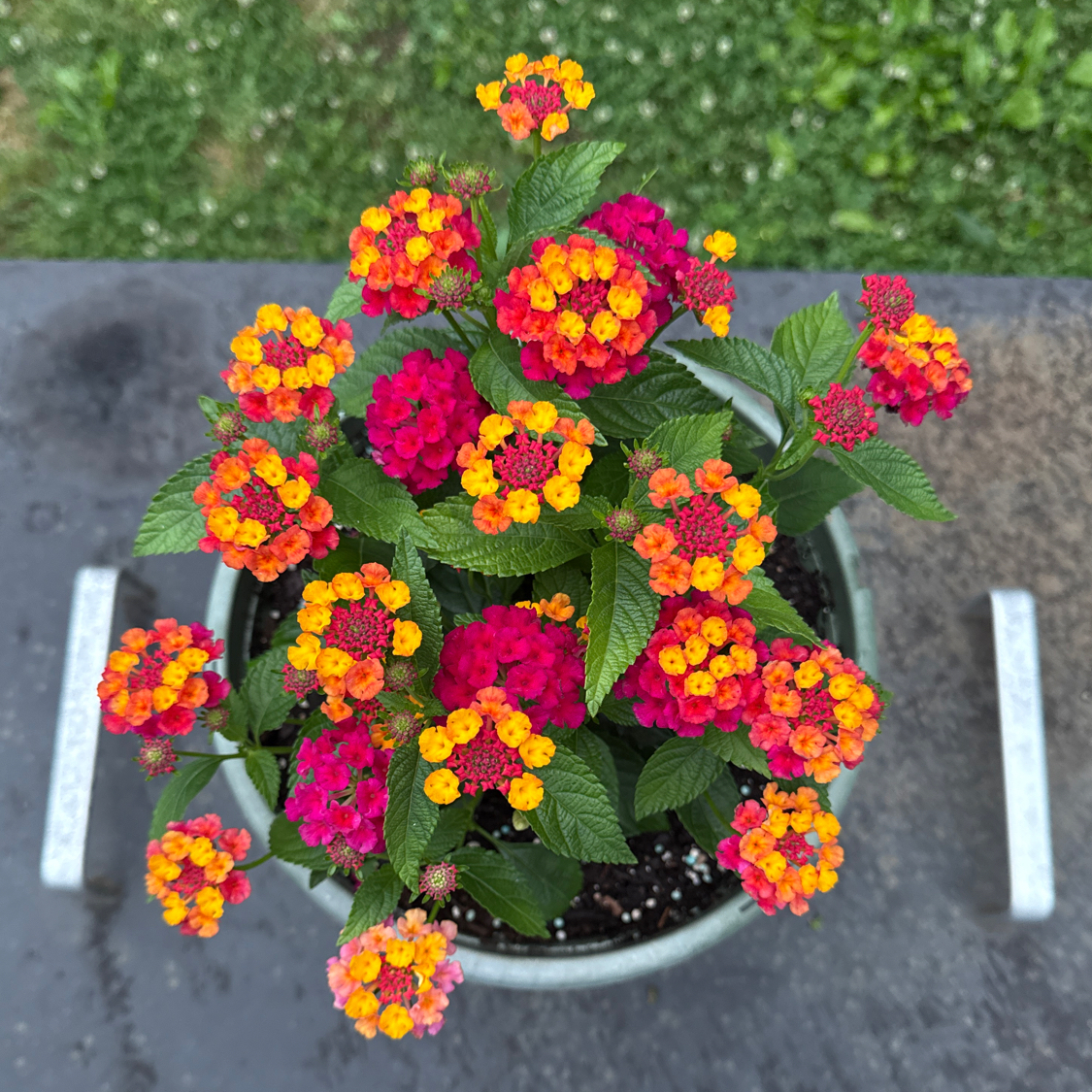
How to Water Lantana
Lantana spp.
Reviewed by Kiersten Rankel M.S.
Quick Answer
Water your Lantana every 7–14 days during the active growing season, when the top 2 inches of soil are dry. Established plants stretch to every 2–3 weeks once the heat eases.
Soak deeply, then let it dry hard. Lantana is far more likely to die from soggy roots than from a missed watering.

Stay on top of plant care
Get seasonal reminders for watering and fertilizing — personalized for your plants.
How Often and How Much to Water
Adjust the sliders below for your pot size, light, and setting. The numbers assume a well-draining mix with perlite and a pot or site with drainage.
Setting
Every
9days
Use
1cup
Your Watering Rhythm Across the Year
Soil dries faster in the growing season, which varies by region. Slow down watering in the off-season to avoid overwatering.
Pacific
Mountain
Midwest
Northeast
Southeast
JFMAMJJASOND
Growing season
Growing season
9days
Resting season
3–4weeks
How to Water Your Lantana
Soak deeply, then let it dry hard. Lantana is built for hot, dry, sunny conditions and rewards a deep soak and a long dry stretch over light frequent watering.
1
Pour at the soil line around the base of the plant. Keep water off the flowers when you can.
2
Soak slowly until water runs out the bottom of the pot or pools briefly on the soil. That tells you the rootball is fully wet.
3
Water in the morning so the foliage dries by midday. Damp leaves overnight invite leaf-spot fungus.
4
Empty the saucer after 10 minutes. Lantana rots fast in standing water.
Should You Water Your Lantana Today?
Always check before you pour. Lantana shrugs off a dry week, but a few extra waterings on already-damp soil is what kills it.
Hold off
Soil 2 inches down still feels damp
Leaves look firm and slightly rough
Stems hold themselves up easily
Flowers looking fresh
Pot feels heavy when you lift it
Ready for water
Top 2 inches of soil are bone-dry
Leaves looking dull and droopy
Whole plant flopping during midday sun
Visible gap between soil and pot wall
Pot feels almost empty
If Something Looks Off
Underwater and overwater both make Lantana sulk. The soil moisture and the recovery speed sort them out.
Underwatered
Soil
Bone-dry through the pot and pulled away from the sides
Leaves
Whole plant droops during the day and edges feel papery
Pace
Quick decline that bounces back within hours of a deep soak
Next steps
Soak slowly from the top until water runs out the bottom
If the soil has gone hydrophobic, set the pot in a basin of water for 15 minutes
Expect leaves to lift and stems to firm within a few hours
Existing scorched leaves won't reverse but new growth comes in fast once the rootball rehydrates
Overwatered
Soil
Stays dark and damp for over a week with a sour smell
Stem
Browning and softening at the soil line
Leaves
Lower leaves yellow all over and drop while still firm
Pace
Sudden collapse that worsens even after you stop watering
Next steps
Stop watering immediately and move to the brightest airiest spot you have
If in a container pop out and trim any dark mushy roots back to firm white tissue
Repot in fresh well-draining mix with extra perlite
Wait until the top 2 inches of soil are dry before the first watering
Remove any stems that have collapsed at the base
Got More Questions?
Why is my Lantana not blooming?
Most often it is too much water or too little sun. Lantana wants 6 plus hours of direct sun and dry-leaning soil to bloom heavily.
Cut watering back so the top 2 inches dry between sessions, give it the sunniest spot you have, and avoid high-nitrogen fertilizer that pushes leaf growth at the expense of flowers. Bloom usually returns within 3 to 4 weeks of a course correction.
Is tap water OK for Lantana?
Yes. Lantana is not sensitive to tap water at typical municipal levels. Cold water is fine for outdoor plants in summer.
How long can my Lantana go without water if I'm on vacation?
An established in-ground Lantana handles 3 weeks easily once it is rooted in. Container plants in full sun manage 7 to 10 days if you deep-soak them and move pots to dappled afternoon shade before you leave.
For longer container vacations, group pots together and ask a neighbor to check at the 1 week mark.
Are the berries on my Lantana a watering problem?
No, the small green or black berries are normal seed pods after the flowers fade. They are mildly toxic if eaten so keep them away from kids and pets. Snipping the spent flower clusters before they form berries actually pushes more bloom.
Why are the leaves on my Lantana sticky and turning yellow?
That sticky residue is honeydew from whiteflies, which love stressed Lantana. They are not a watering issue but they are often paired with one.
First correct the watering, holding off until the top 2 inches are dry. Then knock the whiteflies off with a strong morning hose blast every few days for 2 weeks. The plants recover quickly once both stresses are off.
Should I water more during peak summer heat?
Established Lantana usually doesn't need it. The plant is built for heat and a 95F day with dry soil is closer to its native conditions than a 70F day with damp soil.
Keep checking the top 2 inches of soil. If they are bone-dry and the plant is wilting at midday, deep-soak it. If only the leaves are tired but the soil is still damp, the heat is the issue and water won't fix it.
Stay on top of plant care
Get seasonal reminders for watering and fertilizing — personalized for your plants.
About This Article

Kiersten Rankel M.S.
Botanical Data Lead at Greg · Plant Scientist
Editorial Process
Watering guidance verified against Lantana spp. growth data from Greg's botanical database, cross-referenced with USDA hardiness zone data and published horticultural research.
1+ Greg users growing this plant
USDA hardiness zones 8a–12b