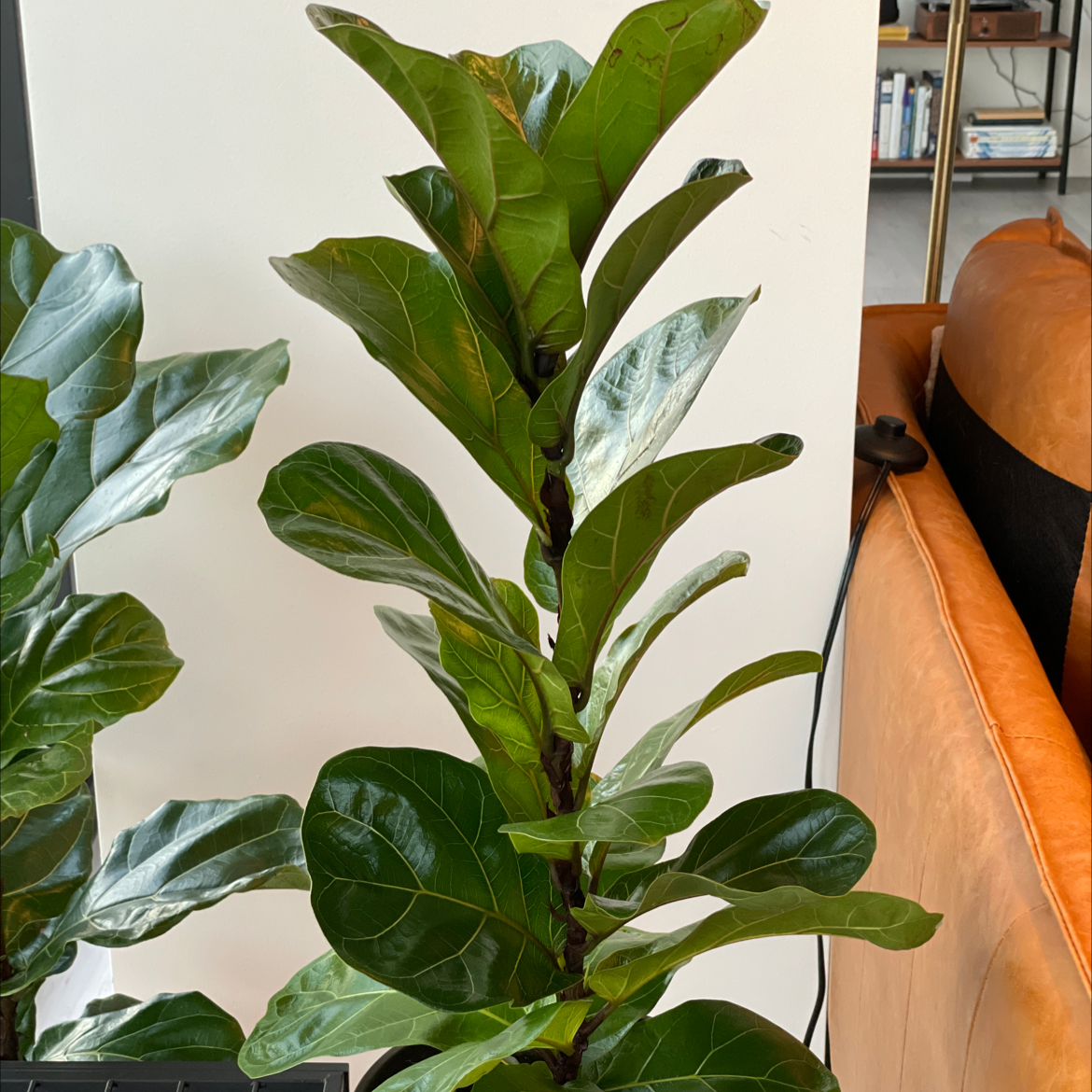
How to Water Fiddle Leaf Fig
Ficus lyrata
Reviewed by Kiersten Rankel M.S.
Quick Answer
Water fiddle leaf fig every 7 to 10 days in spring and summer, when the top 2 inches of soil are dry. Stretch to 12 to 18 days in late fall and winter.
Soak until water runs out the drainage holes. Use room-temperature water. Cold tap and inconsistent watering cause the brown spots fiddles are famous for.

Stay on top of plant care
Get seasonal reminders for watering and fertilizing — personalized for your plants.
How Often and How Much to Water
Adjust the sliders below for your pot size, light, and setting. The numbers assume a chunky well-draining mix with perlite or pumice and a pot with drainage.
Setting
Every
9days
Use
1cup
Your Watering Rhythm Across the Year
Soil dries faster in the growing season, which varies by region. Slow down watering in the off-season to avoid overwatering.
Pacific
Mountain
Midwest
Northeast
Southeast
JFMAMJJASOND
Growing season
Growing season
9days
Resting season
3–4weeks
How to Water Your Fiddle Leaf Fig
Soak deeply, drain fully. Fiddle leaf figs hate inconsistency more than they hate being slightly off, so the rhythm matters as much as the volume.
1
Pour room-temperature water at the soil line. Cold tap straight from the faucet is one of the leading causes of brown spots and sudden leaf drop on a fiddle. Let the can sit out 10 minutes if your water runs cold.
2
Pour slowly and evenly around the pot. The roots fill the whole container at maturity, and a single pour spot leaves dry pockets while one side gets soaked.
3
Keep pouring until water runs out the drainage holes. Empty the saucer after 10 minutes so the roots are not sitting in standing water.
4
Wipe dust off the leaves every few weeks with a damp cloth. Clean leaves photosynthesize better, but skip leaf shine sprays. Plain water is enough.
Should You Water Your Fiddle Leaf Fig Today?
Always check the soil before you pour. Fiddle leaf figs respond to overwater with brown spots that spread across the leaf and to underwater with crispy edges. Both are easier to prevent than to undo.
Hold off
Leaves feel firm and look glossy
Leaves held high on their stems
Top 2 inches of soil still feels damp
Soil sits tight against the pot wall
Pot feels heavy when lifted
Ready for water
Lower leaves drooping at the stem joints
Top leaves dull and slightly limp
Top 2 inches of soil dry and crumbly
Visible gap between soil and pot wall
Pot feels almost empty
If Something Looks Off
Underwater and overwater both produce brown spots and leaf drop on a fiddle, which is why the plant has its difficult reputation. The location of the spots and the timeline tell which problem you have.
Underwatered
Soil
Bone-dry through the pot and pulled back from the walls
Stem
Stems still firm but the whole tree leans slightly
Leaves
Crispy brown edges that spread inward, oldest leaves first
Pace
Slow decline over a couple of weeks that bounces back within a day of a deep soak
Next steps
Set the pot in a basin of room-temperature water for 30 minutes so the dry rootball can rehydrate from the bottom. Tipping a small fiddle to do this is fine. For larger trees, soak in place over a tray
Drain fully and put back in its usual bright spot
Expect leaves to firm up within 12 to 24 hours
Existing damage will not reverse but the green parts of the leaves still photosynthesize. Wait for new growth before fertilizing
Overwatered
Soil
Stays dark and damp for days with a sour smell
Stem
Stem soft or browning at the soil line
Leaves
Brown spots in the middle of leaves that spread outward, often with a darker ring around them
Pace
Sudden collapse and leaf drop that worsens even after you stop watering
Next steps
Stop watering and check for fungus gnats around the soil. Tiny black flies hovering at the surface are a near-certain sign the soil has stayed wet too long
Slide the plant out of the pot and trim any dark mushy roots back to firm white tissue
Repot in fresh chunky well-draining mix in a clean pot with drainage holes
Wait until the top 2 inches of soil are dry before the first watering, usually 7 to 10 days
Remove leaves that yellowed completely or have spots covering more than half the leaf
Got More Questions?
Why is my fiddle dropping leaves?
Fiddle leaf figs drop leaves whenever conditions change, including a move across the room, cold tap water, dry winter air, or a draft from a vent.
If the soil is appropriately damp and the stem is firm, the plant is fine and new leaves will push within a few weeks once it settles in. Avoid moving it again during recovery and check the watering temperature.
What are the brown spots on my leaves?
Brown spots in the middle of leaves with a darker ring usually mean overwater. Crispy brown edges that spread inward usually mean underwater or low humidity.
Check the soil moisture and the pot drainage first. Water on a steady rhythm rather than letting the soil swing dry to soaked. Both kinds of damage stay on the leaf permanently, but new growth comes in clean once you fix the cause.
Can I use tap water?
Yes if it is room temperature and reasonably soft. The biggest tap water issue with a fiddle is temperature, not chemistry. Cold water from the faucet shocks the roots and triggers leaf drop.
Let the watering can sit out 10 to 15 minutes before pouring. If your water is very hard, you may see white crust on the soil surface over time. Pour a few extra cups of water through the pot occasionally to wash it through.
Why are new leaves smaller than old ones?
Almost always light, sometimes water and fertilizer. Fiddle leaf figs need bright direct or near-direct sun to produce full-sized leaves. In a dim corner the new leaves come in proportionally smaller.
Move it closer to a south or east-facing window. Check that the soil is staying evenly moist and feed lightly through the growing season. New leaves should size up by the next round.
How long can I leave it before a vacation?
Up to 2 weeks safely. Water deeply the morning you leave so the rootball is fully soaked.
For longer trips, move it slightly away from the brightest window so soil dries more slowly. Avoid asking a friend to water on a schedule. A neighbor over-watering once during a 3-week trip is far more dangerous than a missed soak.
How long should I wait to water after repotting?
Wait 5 to 7 days. Repotting tears small roots and watering immediately into damaged tissue is one of the fastest ways to start root rot on a fiddle.
When you do water, soak deeply once and let the top 2 inches dry before watering again. Some leaf drop after repotting is normal and not a sign to water more.
Stay on top of plant care
Get seasonal reminders for watering and fertilizing — personalized for your plants.
About This Article

Kiersten Rankel M.S.
Botanical Data Lead at Greg · Plant Scientist
Editorial Process
Watering guidance verified against Ficus lyrata growth data from Greg's botanical database, cross-referenced with USDA hardiness zone data and published horticultural research.
43,728+ Greg users growing this plant
USDA hardiness zones 10a–12b