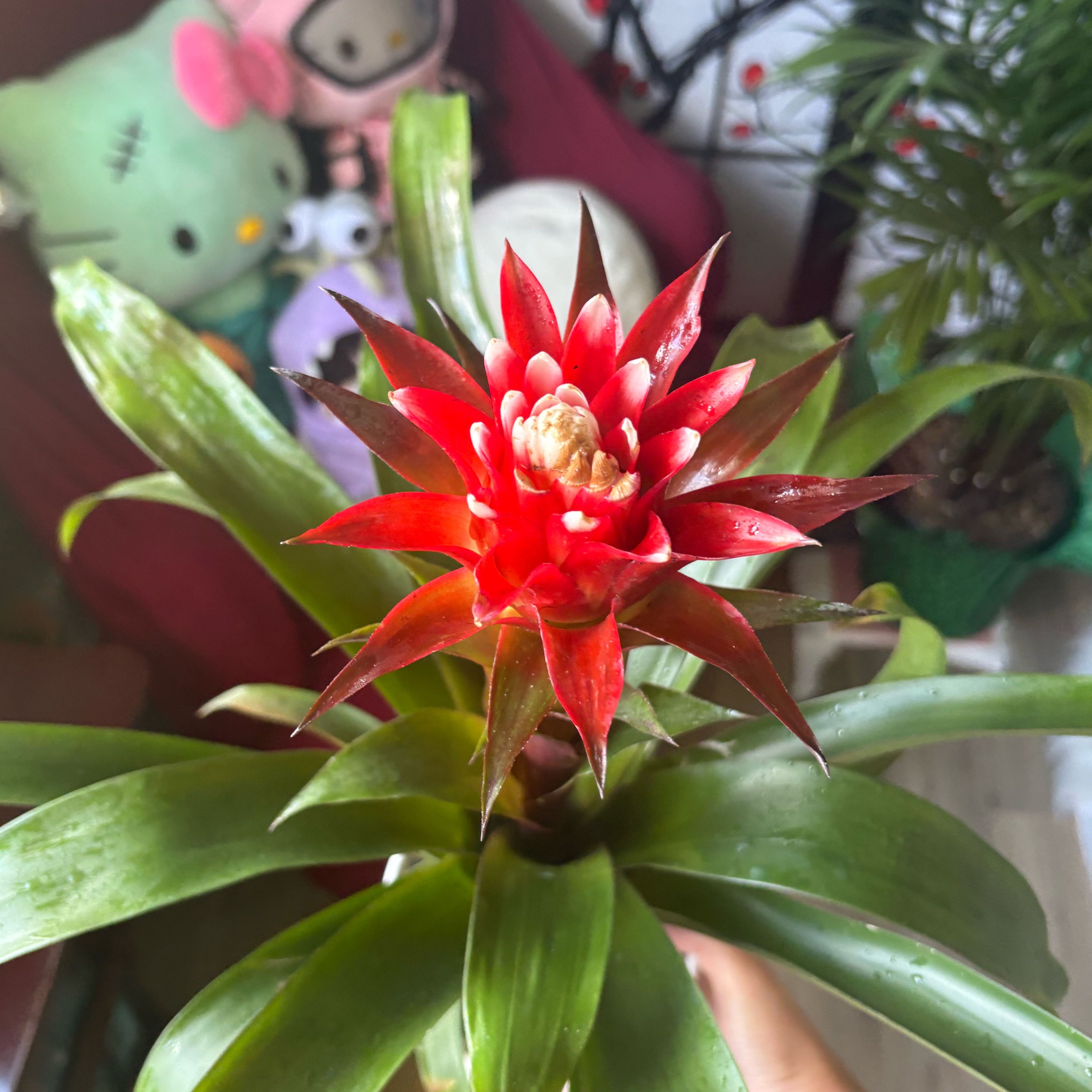
How to Water Guzmania
Guzmania lingulata
Reviewed by Kiersten Rankel M.S.
Quick Answer
Water Guzmania by filling the central cup with fresh water once a week. Empty and refill the cup every 2 to 3 weeks. Lightly water the soil every 2 to 3 weeks.
Guzmania takes most of its water through the leafy central cup, not the roots. Overwatering the soil is the most common way to lose this plant.

Stay on top of plant care
Get seasonal reminders for watering and fertilizing — personalized for your plants.
How Often and How Much to Water
Adjust the sliders below for your pot size, light, and setting. The numbers assume a peat-free moisture-retaining mix and a pot with drainage.
Setting
Every
9days
Use
1cup
Your Watering Rhythm Across the Year
Soil dries faster in the growing season, which varies by region. Slow down watering in the off-season to avoid overwatering.
Pacific
Mountain
Midwest
Northeast
Southeast
JFMAMJJASOND
Growing season
Growing season
9days
Resting season
3–4weeks
How to Water Your Droophead Tufted Airplant
Most of the watering happens in the central cup, not the soil. Guzmania evolved to catch rain in its leafy rosette, and that is still where to put most of the water you give it.
1
Pour room-temperature filtered or rainwater into the central cup until it fills. Tap water can leave mineral spots on the leaves, especially if your water is hard.
2
Empty and refill the cup every 2 to 3 weeks. Stagnant water in the cup grows bacteria and can rot the crown.
3
Water the soil only lightly, every 2 to 3 weeks, when the top inch feels dry. Pour at the soil line away from the rosette so the central cup does not overflow.
4
Run a humidifier nearby if your air is very dry. Misting and pebble trays do not raise ambient humidity meaningfully. A humidifier is the only reliable approach.
Should You Water Your Droophead Tufted Airplant Today?
Guzmania is unusual because the cup matters more than the soil. Check the cup first, then the soil. A wet pot rots the roots while the cup waters the leaves directly.
Hold off
Leaves firm and held outward
Cup still has water in it
Leaf color bright with no curling
Top of soil still feels any moisture
Pot feels heavy when lifted
Ready for water
Cup fully empty or dry
Leaves curling inward at the edges
Outer leaves browning at the tips
Top of soil dry and crumbly
Pot feels noticeably lighter than usual
If Something Looks Off
Both extremes show up as crispy outer leaves. The cup, the soil, and the pace tell which problem you have.
Underwatered
Soil
Cup dry and soil bone-dry through the pot
Leaves
Outer leaves curled inward and tips browning
Pace
Slow decline that recovers within days of refilling the cup
Next steps
Fill the central cup with room-temperature filtered or rainwater
Lightly water the soil at the same time so the roots get a small drink
Check the cup daily for the next week and keep it filled
Existing damage will not reverse but the green parts still photosynthesize. Wait for new growth or pups before fertilizing
Overwatered
Soil
Stays soggy for days with a sour smell
Stem
Base of the rosette soft or browning at the soil line
Leaves
Outer leaves yellowing across the plant with grey fuzzy patches
Pace
Sudden collapse that worsens even after you stop watering
Next steps
Stop watering the soil and empty the central cup. Check for fungus gnats around the soil. Tiny black flies hovering at the surface are a near-certain sign the soil has stayed wet too long
Slide the plant out of the pot and trim any dark mushy roots back to firm white tissue
Repot in fresh peat-free moisture-retaining mix in a clean pot with drainage holes
Wait until the top inch of soil is fully dry before the first soil watering, usually 7 to 10 days. Refill the cup with fresh water in the meantime
Remove leaves that yellowed completely or rotted at the base
Got More Questions?
Why is the central cup smelly?
Stagnant water in the cup grows bacteria. The smell is the warning sign before the cup actually rots the crown.
Empty and refill the cup every 2 to 3 weeks with fresh water. If it has gone smelly, dump the contents, rinse the rosette gently with clean water, and refill.
My Guzmania flowered. Now what?
Bromeliads flower once and then slowly die off, usually over 6 to 18 months. That is normal. The plant will produce small offsets called pups around the base before it goes.
Keep watering the cup and soil normally while pups develop. When a pup is about a third the size of the mother plant, you can separate it and pot it on its own.
Can I use tap water in the cup?
Mostly no. Tap water leaves mineral spots on the rosette and the cup itself, especially if your water is hard.
Use filtered, distilled, or rainwater for the cup. Tap water at the soil line is usually fine in moderate hardness areas, but rainwater is best across the board.
Should I water if the cup is full?
Skip the cup top-up but check the soil. The cup is the main water source but the roots also need an occasional small drink.
If the top inch of soil is dry, give a light watering at the soil line. If the soil is still damp, do nothing and check again in a few days.
How long can I leave it before a vacation?
About 2 weeks. Fill the cup the morning you leave and lightly water the soil if the top inch is dry.
For longer trips, the cup will dry out and the soil will need a light drink. A friend filling the cup with bottled water every 10 to 14 days is the easiest setup.
How long should I wait to water after repotting?
Water the cup the same day to keep the leaves hydrated. Wait 5 to 7 days before watering the soil so the roots can settle without rotting.
Guzmania has small root systems and recovers from repotting better than most houseplants if the cup stays filled while the roots reestablish.
Stay on top of plant care
Get seasonal reminders for watering and fertilizing — personalized for your plants.
About This Article

Kiersten Rankel M.S.
Botanical Data Lead at Greg · Plant Scientist
Editorial Process
Watering guidance verified against Guzmania lingulata growth data from Greg's botanical database, cross-referenced with USDA hardiness zone data and published horticultural research.
14,219+ Greg users growing this plant
USDA hardiness zones 10a–12b