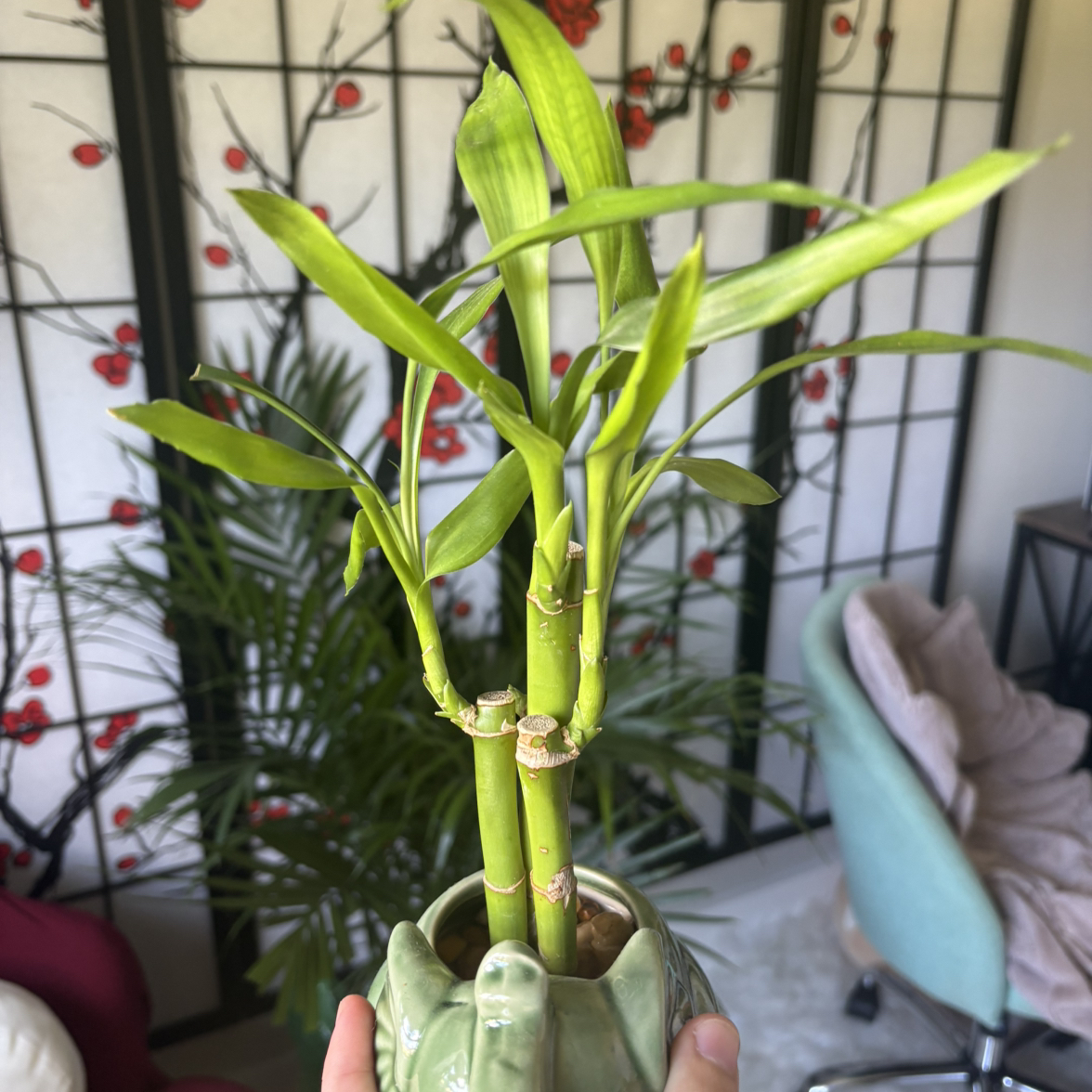
How to Water Lucky Bamboo
Dracaena sanderiana
Reviewed by Kiersten Rankel M.S.
Quick Answer
If your Lucky Bamboo grows in water, change the water every 1 to 2 weeks. If it grows in soil, water every 7 to 10 days when the top inch is dry, stretching to every 2 weeks in winter.
Use filtered, distilled, or rainwater. Lucky Bamboo browns at the tips with chlorine and fluoride.

Stay on top of plant care
Get seasonal reminders for watering and fertilizing — personalized for your plants.
How Often and How Much to Water
Adjust the sliders below for your pot size, light, and setting. The numbers assume a peat-free moisture-retaining mix and a pot with drainage. For water-grown stalks, see the FAQ for jar-care tips.
Setting
Every
9days
Use
1cup
Your Watering Rhythm Across the Year
Soil dries faster in the growing season, which varies by region. Slow down watering in the off-season to avoid overwatering.
Pacific
Mountain
Midwest
Northeast
Southeast
JFMAMJJASOND
Growing season
Growing season
9days
Resting season
3–4weeks
How to Water Your Lucky Bamboo
Lucky Bamboo grows in two ways and the routine is different for each. In water, swap the jar regularly so the stalks do not sit in stagnant chemical-laden water. In soil, water deeply and let the top inch dry between rounds.
1
For soil-grown plants, pour filtered or distilled water at the soil line until it streams out the drainage holes.
2
For water-grown stalks, pour out the old water and rinse the jar and pebbles every 1 to 2 weeks. Refill with fresh filtered water at room temperature.
3
Empty saucers after 10 minutes for soil-grown plants. Standing water rots the lower stalks.
4
Skip tap water if your home has chlorine, chloramine, or fluoride. The leaves brown and yellow within weeks even on a perfect cadence.
Should You Water Your Lucky Bamboo Today?
Always check before you water a soil-grown plant. Lucky Bamboo rots at the stalk base when soil stays soggy and yellows from the bottom up when the soil swings dry too long.
Hold off
Leaves feel firm and look uniformly green
Stalks firm with no soft yellow patches
Top inch of soil still feels damp
Soil sits tight against the pot wall
Pot feels heavy when lifted
Ready for water
Leaves feel limp and drooping
Lower leaves yellowing from the tips
Top inch of soil dry to the touch
Visible gap between soil and pot wall
Pot feels light when lifted
If Something Looks Off
Underwater and overwater both end in yellowing leaves and limp stalks. The stalk firmness and the speed of decline are how you tell them apart.
Underwatered
Soil
Dry deep into the pot and pulled away from the wall
Leaves
Yellowing from the leaf tips inward on lower leaves first
Pace
Slow decline over weeks that bounces back after a deep soak
Next steps
Set the pot in a basin of room-temperature filtered water for 30 minutes
Drain fully and move out of direct sun for a couple of days
Expect leaves to firm up within 24 to 48 hours
Existing yellow leaves will fall off naturally. Wait for new top growth before fertilizing
Overwatered
Soil
Stays dark and damp for over a week with fungus gnats hopping at the surface
Stem
Yellow soft patches on the stalk near the soil line
Leaves
Whole plant yellowing all at once with stunted new growth
Pace
Sudden collapse that worsens even after you stop watering
Next steps
Stop watering and move to a bright airy spot
Slide the plant out and trim mushy roots back to firm white tissue. Cut yellow soft sections out of the stalk down to firm green tissue
Repot in fresh peat-free moisture-retaining mix in a clean pot
Wait until the top 2 inches are dry before the first watering
Once a stalk turns yellow it does not turn back green. Healthy green stalks left in the pot will keep growing
Got More Questions?
Can I use tap water on my Lucky Bamboo?
No, not in most homes. Lucky Bamboo is one of the most chlorine and fluoride sensitive plants you can grow and tap water yellows the leaves and tips within weeks.
Use filtered, distilled, or rainwater. Letting tap water sit overnight helps with chlorine but does nothing for fluoride, which is the bigger problem for this plant.
How often should I change the water for my water-grown Lucky Bamboo?
Every 1 to 2 weeks. Swap the water completely, rinse the pebbles, and refill with fresh filtered or distilled water at room temperature.
If the water turns cloudy or smells off before two weeks, change it immediately and rinse the roots. Stagnant water grows bacteria that rot the lower stalks.
Why are the leaves on my Lucky Bamboo turning yellow?
The most common cause is tap water with chlorine or fluoride. Other causes include too much direct sun, root rot from overwatering, or low light over many months.
Switch to filtered or distilled water first. If the yellowing keeps spreading, check the lower stalks for soft patches, which point to rot rather than water quality.
Can I move my Lucky Bamboo from water to soil?
Yes. Move it in spring when the plant is actively growing. Plant the stalks in a peat-free moisture-retaining mix and water lightly for the first few weeks while it grows soil roots.
Keep it out of direct sun during the transition and expect a small yellow leaf or two as the plant adjusts. New growth signals the move took.
How long can my Lucky Bamboo go without water?
Soil-grown plants tolerate about 2 weeks before stress shows. Water-grown stalks need a refresh at least every 2 to 3 weeks or the water turns rancid and the roots rot.
For a long trip, fully refill the jar or deep-water a soil plant before you leave and pull the plant back from any bright window.
Why are the tips of my leaves brown?
Brown tips on Lucky Bamboo almost always mean tap water chemicals or low humidity. The plant cannot dump excess fluoride and salt from softened water and it shows up at the tips first.
Swap to filtered or distilled water and run a humidifier if your home is below 40% humidity. The brown tips will not heal but new leaves come in clean.
Stay on top of plant care
Get seasonal reminders for watering and fertilizing — personalized for your plants.
About This Article

Kiersten Rankel M.S.
Botanical Data Lead at Greg · Plant Scientist
Editorial Process
Watering guidance verified against Dracaena sanderiana growth data from Greg's botanical database, cross-referenced with USDA hardiness zone data and published horticultural research.
30,285+ Greg users growing this plant
USDA hardiness zones 10a–12b