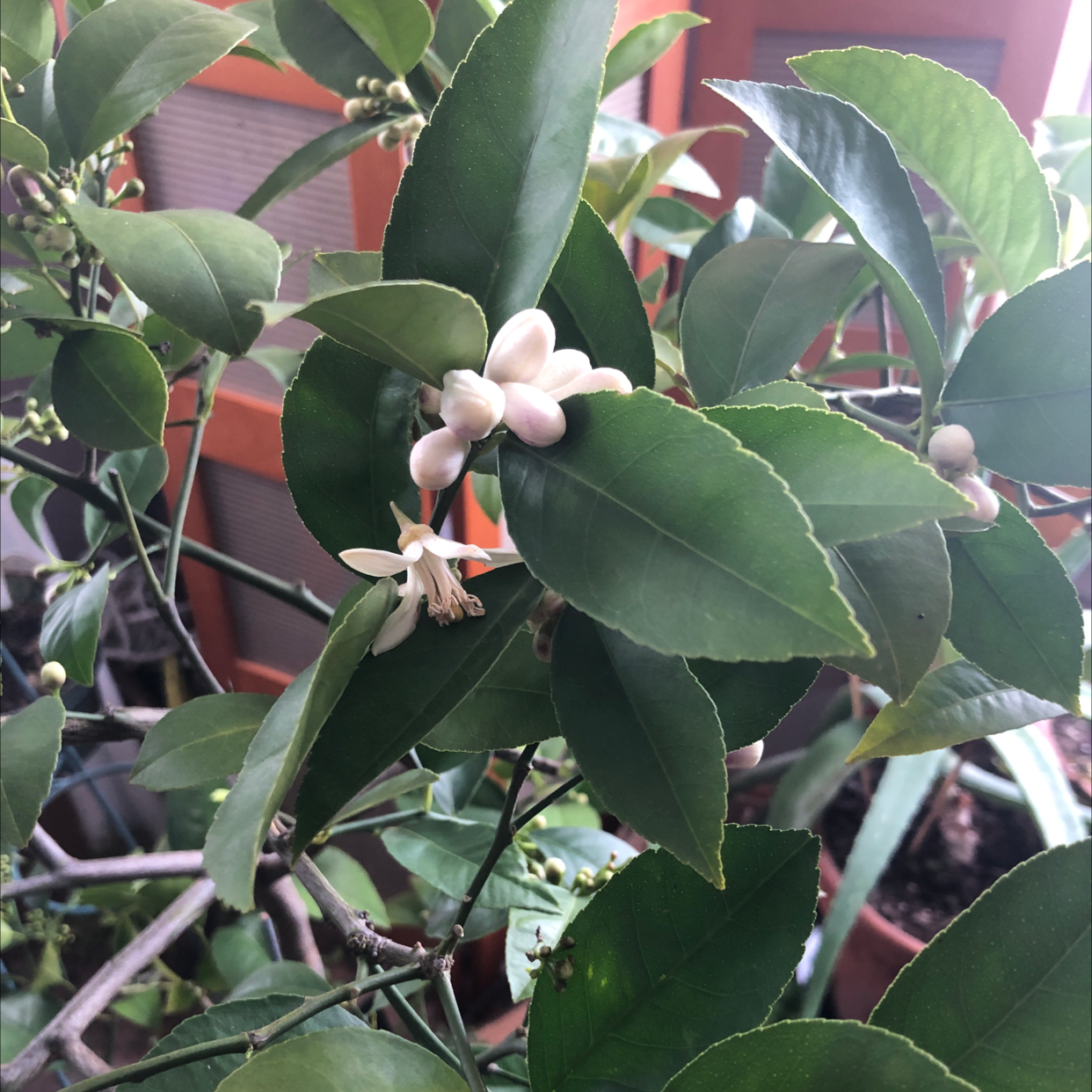
How to Water Lemon
Citrus x limon
Reviewed by Kiersten Rankel M.S.
Quick Answer
Water your Lemon tree every 7–10 days from May through September, when the top 2 inches of soil are dry. Stretch to every 14–21 days from late November through February.
Soak the whole rootball, drain fully. Lemons hate inconsistent watering and drop leaves in response.

Stay on top of plant care
Get seasonal reminders for watering and fertilizing — personalized for your plants.
How Often and How Much to Water
Adjust the sliders below for your pot size, light, and setting. The numbers assume a chunky well-draining mix with perlite or pumice and a pot with drainage.
Setting
Every
9days
Use
1cup
Your Watering Rhythm Across the Year
Soil dries faster in the growing season, which varies by region. Slow down watering in the off-season to avoid overwatering.
Pacific
Mountain
Midwest
Northeast
Southeast
JFMAMJJASOND
Growing season
Growing season
9days
Resting season
3–4weeks
How to Water Your Lemon
Soak deeply, drain fully. Lemons want a thorough drink that wets the whole rootball, then a chance for the top to dry before the next watering.
1
Pour room-temperature water at the soil line. Cold tap water in winter can stress citrus roots and slow recovery.
2
Soak slowly until water runs out the bottom of the pot. That tells you the whole rootball is wet.
3
For outdoor trees water in the morning so the foliage and trunk base dry by night. Wet bark and overnight damp invite root and trunk rot.
4
Empty the saucer after 10 minutes. Lemons sitting in standing water rot fast.
Should You Water Your Lemon Today?
Always check before you pour. Lemons drop leaves and fruit from both extremes, so the goal is steady soak-dry-soak with no soggy stretches.
Hold off
Soil 2 inches down still feels damp
Leaves look glossy and firm
New growth flushes look fresh
Branches hold their fruit firmly
Pot feels heavy when you lift it
Ready for water
Top 2 inches of soil are dry
Leaves looking dull and starting to curl
Whole tree drooping at midday
Visible gap between soil and pot wall
Pot feels light when lifted
If Something Looks Off
Underwater and overwater both make Lemons drop leaves and fruit. The soil moisture and the speed of decline tell them apart.
Underwatered
Soil
Bone-dry through the pot and pulled away from the sides
Leaves
Older leaves yellow and curl inward then drop
Pace
Slow decline that begins to recover within a day of a deep soak
Next steps
Set the pot in a basin of room-temperature water for 30 minutes
Drain fully and return to its usual sunny spot
Expect leaves to firm up over 24 to 48 hours
Existing dropped fruit and yellowed leaves won't return, but the tree photosynthesizes from healthy leaves. Wait for new growth before fertilizing
Overwatered
Soil
Stays dark and damp for over a week with a sour smell
Stem
Bark softening or browning near the soil line
Leaves
Lower leaves yellow then drop while still firm
Pace
Sudden leaf drop that worsens even after you stop watering. You may also see fungus gnats around the soil
Next steps
Stop watering immediately and move to the brightest airiest spot you have
Pop out of the pot and trim any dark mushy roots back to firm white tissue
Repot in fresh chunky citrus mix with extra perlite in a clean pot
Wait until the top 3 inches of soil are dry before the first watering
Remove any leaves that have already dropped and any branches that have died back to brown wood
Got More Questions?
Why is my Lemon tree dropping leaves?
Sudden leaf drop almost always traces to a watering swing. Either the soil dried out too far for too long or it stayed soggy after several quick waterings.
Check the top 2 inches with your finger. If bone-dry, do a deep slow soak. If wet, hold off and improve drainage. Steady soak-dry-soak in a sunny spot stops the drop within 2 to 3 weeks.
How does watering change for a Lemon I bring inside in winter?
An indoor Lemon drinks far less than an outdoor one. The plant slows down, the indoor air is cooler near the window, and the soil takes longer to dry.
Stretch to every 14 to 21 days indoors and only water when the top 2 inches are fully dry. Place near a bright south window and run a small fan for airflow. Most indoor citrus losses are root rot disguised as cold stress.
Should I water my Lemon more when it has fruit on it?
Yes, slightly. Trees carrying fruit drink a bit more than trees that aren't. The fruit pulls a steady stream of water through the plant and inconsistent watering during fruit development causes splitting and drop.
Keep up the soak-dry-soak rhythm and lean toward the shorter end of the cadence range during the heaviest fruiting weeks.
Is tap water OK for Lemons?
Tap water is fine for most homes. Lemons tolerate average chlorine and fluoride levels well. If your tap water is very hard or you see mineral crust building on the soil, switch to filtered water every few months to flush the soil.
How long can my Lemon go without water if I'm on vacation?
An established Lemon in an 8 inch or larger pot handles 10 to 14 days in summer if you deep-soak it and move it out of the harshest afternoon sun before you leave.
In winter you can comfortably leave it for 3 weeks. For trips longer than 2 weeks during fruit set, ask someone to check the soil weekly so the fruit doesn't drop.
Why are the new leaves on my Lemon yellow with green veins?
That is iron or magnesium chlorosis, usually a sign that the soil pH has drifted too high or that the tree needs feeding rather than a watering issue. It often follows long stretches with hard tap water.
Water deeply with rain or filtered water once a month to flush the soil, and feed with a citrus-specific fertilizer that includes iron and micronutrients during the growing season.
Stay on top of plant care
Get seasonal reminders for watering and fertilizing — personalized for your plants.
About This Article

Kiersten Rankel M.S.
Botanical Data Lead at Greg · Plant Scientist
Editorial Process
Watering guidance verified against Citrus x limon growth data from Greg's botanical database, cross-referenced with USDA hardiness zone data and published horticultural research.
670+ Greg users growing this plant
USDA hardiness zones 9a–11b