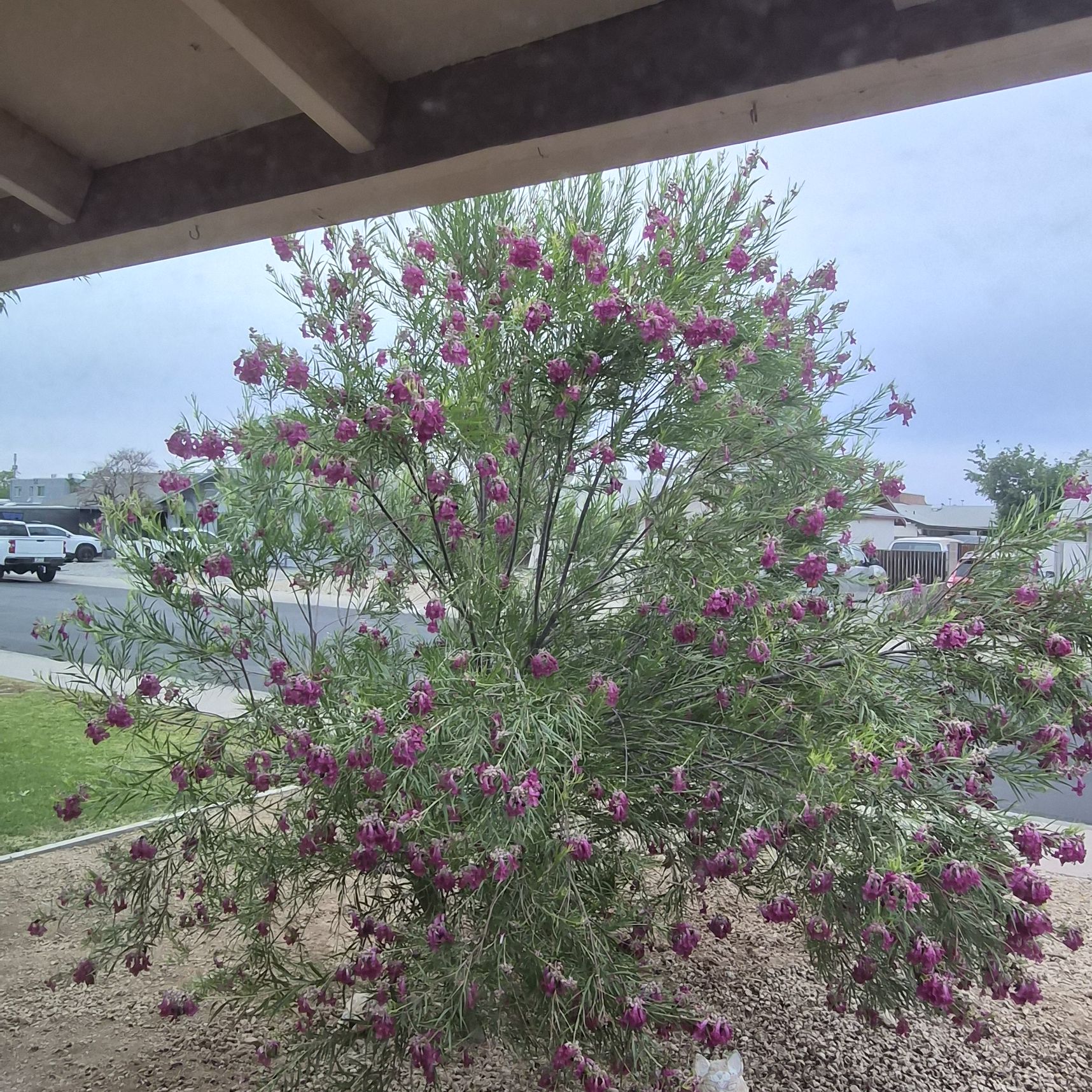
How to Water Desert Willow
Chilopsis linearis
Reviewed by Kiersten Rankel M.S.
Quick Answer
Water your Desert willow deeply but rarely. In the ground, soak the root zone every 10–14 days the first season, then taper to every 3–4 weeks once established. Containers want water every 7–10 days in summer.
Desert willows are drought-tolerant natives. Frequent shallow watering trains lazy surface roots.

Stay on top of plant care
Get seasonal reminders for watering and fertilizing — personalized for your plants.
How Often and How Much to Water
Adjust the sliders below for your pot size, light, and setting. The numbers assume a gritty fast-draining mix and a pot or site with drainage.
Setting
Every
9days
Use
1cup
Your Watering Rhythm Across the Year
Soil dries faster in the growing season, which varies by region. Slow down watering in the off-season to avoid overwatering.
Pacific
Mountain
Midwest
Northeast
Southeast
JFMAMJJASOND
Growing season
Growing season
9days
Resting season
3–4weeks
How to Water Your Desert Willow
Soak deeply, then leave it alone. Desert willows reward long deep waterings spaced far apart over light frequent ones.
1
For a tree in the ground, run a slow hose at the drip line for 30 to 60 minutes so the water reaches a foot or more down. Shallow watering trains lazy surface roots.
2
For a potted tree, pour at the soil line until water runs from the drainage holes, then stop. Drain the saucer after 15 minutes.
3
Water early in the morning so the soil drinks fully before the afternoon heat and any splashed leaves dry by evening.
4
Wait for the soil to dry to a depth of 4 to 6 inches before the next watering. A long screwdriver or a moisture probe makes this easy in the ground.
Should You Water Your Desert Willow Today?
Always check before you pour. Desert willows are far more likely to suffer from too-frequent watering than too-little, especially once established.
Hold off
Leaves long and supple
Flowers opening on schedule and lasting their normal length
Soil at 4 inches still feels cool and slightly damp
Soil sits tight around the trunk
No leaf droop in the morning
Ready for water
Soil dry to a depth of 4 to 6 inches
Leaves looking dull or curling along the midrib
Flower buds dropping before opening
Visible cracks in the soil near the trunk
Pot feels noticeably light if container-grown
If Something Looks Off
Desert willows are far more often killed by overwatering than by drought. Read the soil at depth, not the surface, before adjusting your cadence.
Underwatered
Soil
Cracked and powdery 6 inches down
Leaves
Curled along the midrib and crispy at the tips
Pace
Slow decline that recovers within a day or two of a deep soak
Next steps
Run a slow hose at the drip line for 45 to 60 minutes so water penetrates deeply
If container-grown, set the pot in a basin of water for 30 minutes
Wait at least 2 weeks before the next watering and check soil at depth before pouring
Wait for new leaves before resuming any fertilizer
Overwatered
Soil
Stays dark and damp 4 inches down for more than 2 weeks
Stem
Bark soft or peeling near the soil line on younger trees
Leaves
Yellow leaves drop in waves with green ones still attached
Pace
Sudden decline that worsens even after you stop watering
Next steps
Stop watering completely until the soil dries to at least 4 inches down
Check for standing water around the trunk and improve drainage if the site stays soggy after rain
For container trees, repot in fresh gritty mix in a pot with drainage
Wait at least 3 weeks before the next watering once you resume
Pull off any leaves that have fully yellowed or already detached
Got More Questions?
How often should I water a newly planted Desert willow?
Through the first growing season, soak the root zone every 10 to 14 days. The goal is to encourage roots to chase moisture downward.
After the first full year, stretch to every 3 to 4 weeks in summer and rely on rainfall the rest of the year. Established trees need almost no supplemental water in zone 7 and warmer.
Why are my Desert willow’s flowers dropping early?
Heat plus inconsistent moisture is the usual cause. Each bloom only lasts a few days normally, but stress from a dry stretch followed by a flood will cut that short.
Set a steady deep cadence rather than a frequent shallow one. Mulch around the base to even out soil moisture in summer.
Should I water my Desert willow in winter?
Rarely if ever, in zones 7 and warmer. The tree drops its leaves and goes dormant, and its water needs drop to almost nothing.
A single deep watering during a dry winter month is fine. Otherwise, leave it to natural rainfall and resume cadence as new growth appears in spring.
How long can I leave a Desert willow while I’m on vacation?
Easily several weeks for an established tree, even in summer. Younger trees in their first year need a deep soak before you leave and may want a check after 10 days for trips longer than 2 weeks.
Container-grown trees dry faster and want a deep watering the morning you leave.
Are self-watering pots a good idea for a potted Desert willow?
Hard no. Desert willows want long dry stretches between waterings. A constant reservoir is the surest way to rot the roots.
Use a regular container with a gritty fast-draining mix and rely on lifting the pot or probing the soil to time your waterings.
Why does my Desert willow look stressed in monsoon season?
Heavy summer rains can saturate the root zone faster than the soil drains, especially in clay or compacted ground. Yellowing leaves and bud drop after a rainy week usually point to too much water, not too little.
Check drainage around the trunk and add more grit or pull soil away if water pools. Skip your scheduled watering until the soil dries down at depth.
Stay on top of plant care
Get seasonal reminders for watering and fertilizing — personalized for your plants.
About This Article

Kiersten Rankel M.S.
Botanical Data Lead at Greg · Plant Scientist
Editorial Process
Watering guidance verified against Chilopsis linearis growth data from Greg's botanical database, cross-referenced with USDA hardiness zone data and published horticultural research.
165+ Greg users growing this plant
USDA hardiness zones 7a–11b