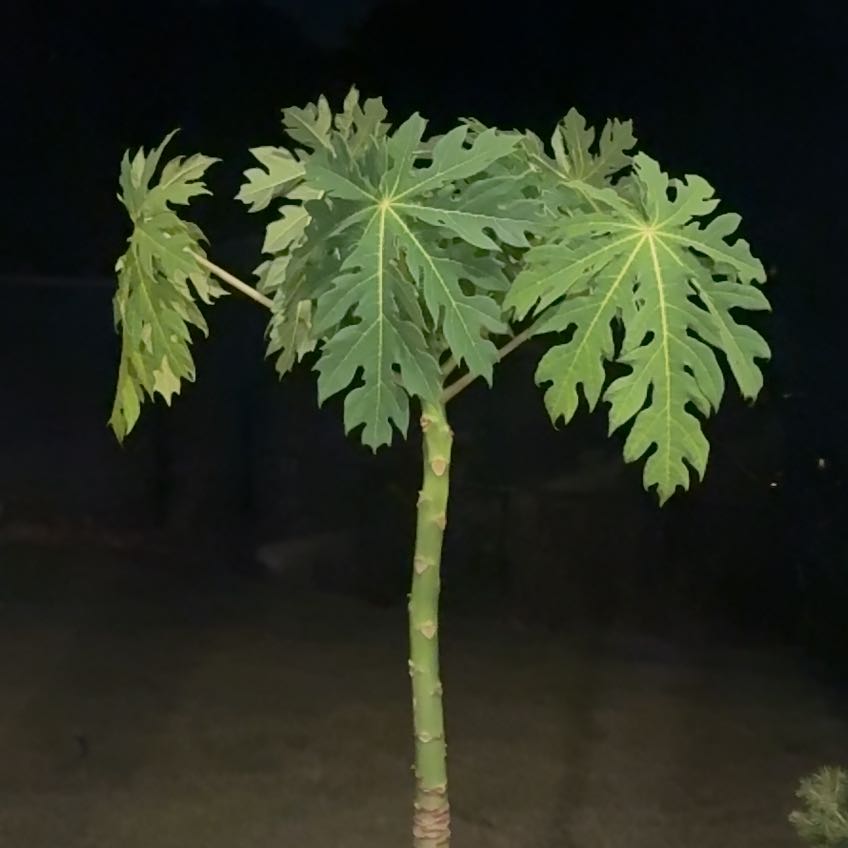
How to Water Papaya
Carica papaya
Reviewed by Kiersten Rankel M.S.
Quick Answer
Water your Papaya every 4 to 7 days during the growing season when the top inch of soil is dry. Stretch to every 8 to 12 days in cooler months when growth slows.
Soak deeply, drain fast, and water in the morning. Papayas are thirsty tropical fruit trees but their fleshy trunks rot quickly if the soil stays soggy.

Stay on top of plant care
Get seasonal reminders for watering and fertilizing — personalized for your plants.
How Often and How Much to Water
Adjust the sliders below for your pot size, light, and setting. The numbers assume a chunky well-draining mix with perlite or pumice and a pot or site with drainage.
Setting
Every
9days
Use
1cup
Your Watering Rhythm Across the Year
Soil dries faster in the growing season, which varies by region. Slow down watering in the off-season to avoid overwatering.
Pacific
Mountain
Midwest
Northeast
Southeast
JFMAMJJASOND
Growing season
Growing season
9days
Resting season
3–4weeks
How to Water Your Papaya
Water deeply, then let the top inch dry before the next round. Papayas drink fast in heat and grow at lightning speed, but their hollow stems rot at the soil line if water sits there too long.
1
Water at the soil line in the morning, never against the trunk. Wet trunk bases plus humidity invite stem rot in this species.
2
Pour slowly and steadily until water streams out the drainage holes or has soaked deep into the bed.
3
Empty saucers after 10 minutes for potted plants. Standing water at the trunk base is the number one papaya killer.
4
Use room-temperature water in cooler months. Cold tap water can slow this tropical species when temperatures already dip below 70 F.
Should You Water Your Papaya Today?
Always check before you water. Papayas wilt fast in heat but recover almost as fast, while a soggy soil failure shows up as a sudden trunk collapse you cannot reverse.
Hold off
Leaves feel firm and held outward
Trunk base firm and dry to the touch
Top inch of soil still feels damp
Soil sits tight against the pot wall
Pot feels heavy when lifted
Ready for water
Leaves drooping during the heat of the day
Leaf stems softening and folding down
Top inch of soil dry to the touch
Visible gap between soil and pot wall
Pot feels light when lifted
If Something Looks Off
Underwater and overwater both show as droopy leaves on a Papaya. The trunk base and how fast the plant goes downhill tell you which one is happening.
Underwatered
Soil
Dry deep into the pot or several inches into the ground
Stem
Stays firm and dry at the base
Leaves
Drooping during the day with edges yellowing on lower leaves first
Pace
Daily wilt that bounces back within hours of a soak
Next steps
Soak deeply, watering until water reaches the bottom of the pot or 6 inches into the ground
Move potted plants out of the hottest afternoon sun for a day while they recover
Expect leaves to lift back up within 6 to 12 hours
Existing yellow leaves may drop. Wait for new top growth before fertilizing
Overwatered
Soil
Stays dark and soggy for over 3 days with a sour smell
Stem
Soft, darkening, or collapsing at the trunk base
Leaves
Whole canopy yellowing and limping all at once
Pace
Sudden collapse that often kills the plant within days
Next steps
Stop watering immediately and move potted plants to a sunny airy spot
For potted plants slide out and inspect roots, trimming dark mushy parts back to firm white tissue
Repot in fresh chunky well-draining mix with extra perlite in a clean pot
Wait until the top 2 inches are bone-dry before watering again, then water lightly
If the trunk has gone soft at the base, the plant rarely recovers. Remove it before the rot spreads to nearby plants
Got More Questions?
Why are the leaves on my Papaya drooping in the afternoon?
Daytime droop in hot weather is normal even with damp soil. Papayas use water faster than the roots can pull it on a hot afternoon and bounce back as the day cools.
If leaves stay limp into the next morning, that is a real watering problem. Check the soil and the trunk base before adding water.
How much water does a Papaya need to fruit?
A lot during fruit set and swell, then steady through ripening. Drought during fruit development causes drop and shrunken fruit. Soggy soil causes split fruit and trunk rot.
Aim for soil that stays evenly moist but never wet. A 2-inch mulch around the base helps buffer the swings in summer heat.
Can I grow Papaya in a pot?
Yes, dwarf varieties do fine in 14 inch or larger pots. Use a chunky well-draining mix and a deep container, since papaya roots want depth.
Watering is more frequent than for in-ground plants and you will need to feed every 4 to 6 weeks during summer to keep up with the plant's pace.
Do little flies in the soil mean I am overwatering?
Yes. Fungus gnats need consistently damp topsoil to breed. On a papaya in a pot, they signal a cadence that is too tight or a mix that is too peaty.
Let the top inch dry between waterings, top the soil with a thin layer of horticultural sand, and the gnats clear out within two weeks.
How long can my Papaya go without water?
About 5 to 7 days for a mature in-ground plant in summer, less for a potted one. Papayas are thirsty and lose fruit fast if they go truly dry during the growing season.
For a 4-day trip, a deep soak before you leave and pulling potted plants back from the harshest sun usually covers it.
Why is my Papaya trunk turning soft?
A softening trunk is almost always stem rot from too much water at the base. It can also come from a fungal infection that snuck in through a wound.
Stop watering, check the roots, and replant in fresher drier soil. If the soft area is more than a couple of inches up the trunk, the plant rarely recovers and you should pull it before the rot spreads.
Stay on top of plant care
Get seasonal reminders for watering and fertilizing — personalized for your plants.
About This Article

Kiersten Rankel M.S.
Botanical Data Lead at Greg · Plant Scientist
Editorial Process
Watering guidance verified against Carica papaya growth data from Greg's botanical database, cross-referenced with USDA hardiness zone data and published horticultural research.
842+ Greg users growing this plant
USDA hardiness zones 9a–12b